

19th Century French Mother-of-Pearl Carnet de Bal / Dance Cards with Silver and Ivory
19th Century French Mother-of-Pearl Carnet de Bal / Dance Cards with Silver and Ivory
No se pudo cargar la disponibilidad de retiro
Compartir
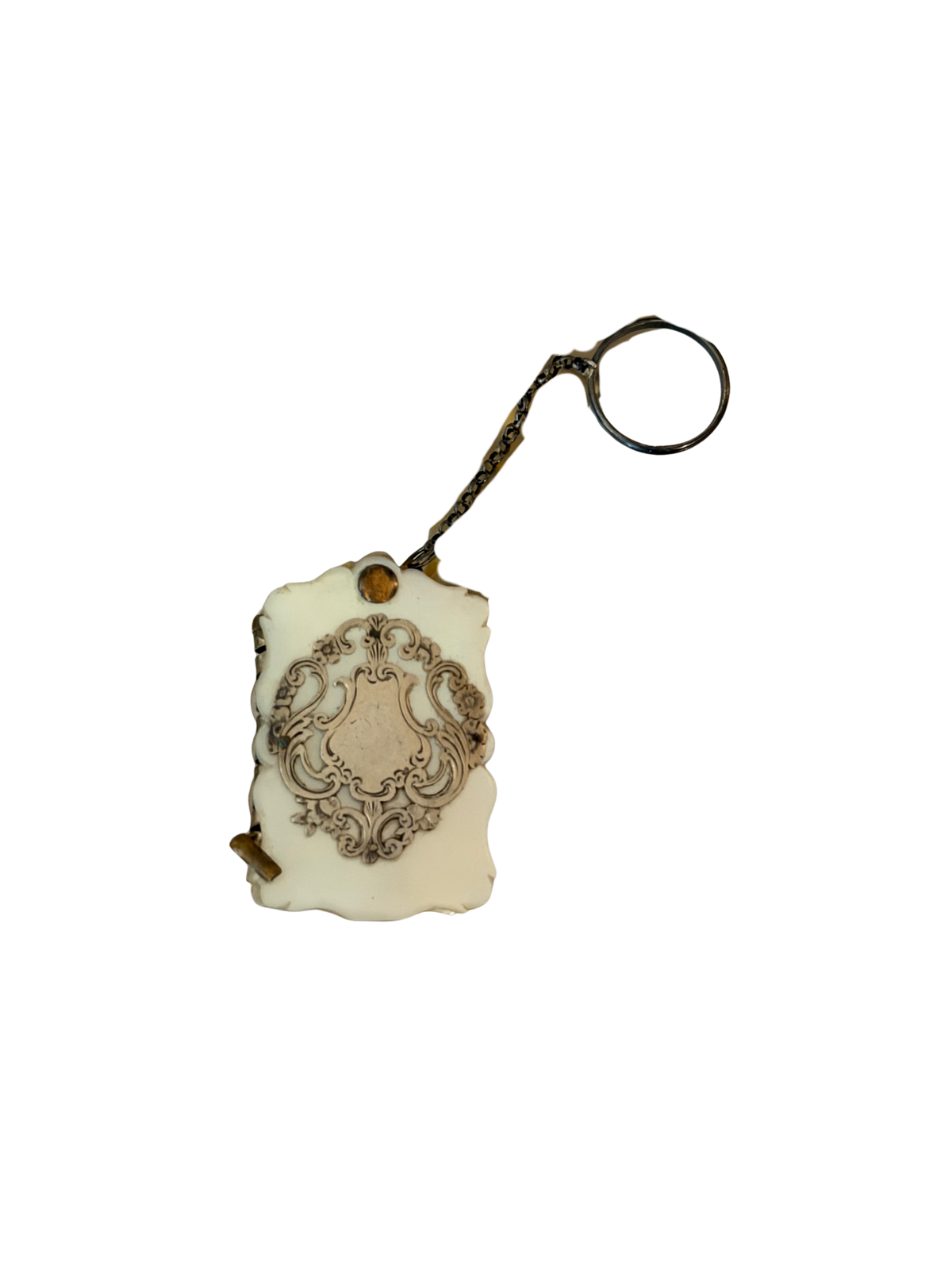
A particularly charming 19th-century French carnet de bal, or dance card, made from shaped mother-of-pearl and fitted with a series of small hinged writing leaves used to record dance partners during a formal ball.
The front is decorated with an ornate silver-tone rococo cartouche of scrolling foliate form, centered by a blank shield that could have been engraved with the owner’s initials. The pearlescent body is softly iridescent, and a small chain terminates in a finger ring, allowing the carnet to be conveniently carried during an evening of dancing.
Opening the carnet reveals a fan-like series of small leaves with handwritten dance headings and numbered spaces for partners. Particularly wonderful is the surviving page labeled:
“Lancier”
with numbered lines beneath and “Cotillon” written below.
Other leaves preserve additional numbered dance entries, making the object unusually evocative of its original social function.
Era
Circa 1870–1900
Late 19th century / Belle Époque period.
History
The carnet de bal, literally “ball notebook,” was an essential accessory at fashionable 19th-century dances and soirées.
A lady could record the names of gentlemen to whom she had promised particular dances, avoiding social confusion as the evening progressed. These miniature objects were frequently fitted with a ring, chain, or pencil so they could be carried easily while dancing.
This example is particularly interesting because its original handwritten dance program survives. The word “Lancier” refers to Les Lanciers / The Lancers, a hugely popular 19th-century quadrille danced in sets of couples. The cotillon, or cotillion, was another important social dance associated with formal balls.
The numbered spaces beneath each dance title were intended for the names of individual dance partners.
Unlike an empty carnet, this piece preserves direct evidence of how the object was actually used at a ball.
Provenance
Sourced in France.
Likely French manufacture.
Materials
Mother-of-pearl
Silver-tone metal appliqué and fittings
Brass-tone pivot stud
Paper or card dance leaves
Metal chain and finger ring
The silver-tone metal has not been tested and should not be described as sterling or solid silver without confirmation.
Dance Program
The surviving handwritten leaves include:
Lancier
Numbered partner spaces
Cotillon
Additional numbered dance entries on adjoining leaves
The handwriting appears original to the period.
Dimensions
Please provide the exact closed height and width and I can insert them.
From scale, approximately 2.5–3 inches tall excluding the chain and ring.
Condition
Good antique condition with wear consistent with age and use.
The mother-of-pearl shows small edge chips, nicks, surface wear, and minor losses. The metal ornament has age-related tarnish, rubbing, and oxidation. The original paper dance leaves show toning, staining, edge wear, and handwritten entries.
The chain and finger ring remain present, which is an especially desirable feature.
The central cartouche appears unengraved.
Please review all photographs closely for condition.
Disclaimers
Antique and vintage items may exhibit wear, patina, small losses, staining, scratches, repairs, and other imperfections consistent with their age and history. Mother-of-pearl is a natural material and may display variations in color and surface texture.
A particularly charming 19th-century French carnet de bal, or dance card, made from shaped mother-of-pearl and fitted with a series of small hinged writing leaves used to record dance partners during a formal ball.
The front is decorated with an ornate silver-tone rococo cartouche of scrolling foliate form, centered by a blank shield that could have been engraved with the owner’s initials. The pearlescent body is softly iridescent, and a small chain terminates in a finger ring, allowing the carnet to be conveniently carried during an evening of dancing.
Opening the carnet reveals a fan-like series of small leaves with handwritten dance headings and numbered spaces for partners. Particularly wonderful is the surviving page labeled:
“Lancier”
with numbered lines beneath and “Cotillon” written below.
Other leaves preserve additional numbered dance entries, making the object unusually evocative of its original social function.
Era
Circa 1870–1900
Late 19th century / Belle Époque period.
History
The carnet de bal, literally “ball notebook,” was an essential accessory at fashionable 19th-century dances and soirées.
A lady could record the names of gentlemen to whom she had promised particular dances, avoiding social confusion as the evening progressed. These miniature objects were frequently fitted with a ring, chain, or pencil so they could be carried easily while dancing.
This example is particularly interesting because its original handwritten dance program survives. The word “Lancier” refers to Les Lanciers / The Lancers, a hugely popular 19th-century quadrille danced in sets of couples. The cotillon, or cotillion, was another important social dance associated with formal balls.
The numbered spaces beneath each dance title were intended for the names of individual dance partners.
Unlike an empty carnet, this piece preserves direct evidence of how the object was actually used at a ball.
Provenance
Sourced in France.
Likely French manufacture.
Materials
Mother-of-pearl
Silver-tone metal appliqué and fittings
Brass-tone pivot stud
Paper or card dance leaves
Metal chain and finger ring
The silver-tone metal has not been tested and should not be described as sterling or solid silver without confirmation.
Dance Program
The surviving handwritten leaves include:
Lancier
Numbered partner spaces
Cotillon
Additional numbered dance entries on adjoining leaves
The handwriting appears original to the period.
Dimensions
Please provide the exact closed height and width and I can insert them.
From scale, approximately 2.5–3 inches tall excluding the chain and ring.
Condition
Good antique condition with wear consistent with age and use.
The mother-of-pearl shows small edge chips, nicks, surface wear, and minor losses. The metal ornament has age-related tarnish, rubbing, and oxidation. The original paper dance leaves show toning, staining, edge wear, and handwritten entries.
The chain and finger ring remain present, which is an especially desirable feature.
The central cartouche appears unengraved.
Please review all photographs closely for condition.
Disclaimers
Antique and vintage items may exhibit wear, patina, small losses, staining, scratches, repairs, and other imperfections consistent with their age and history. Mother-of-pearl is a natural material and may display variations in color and surface texture.