


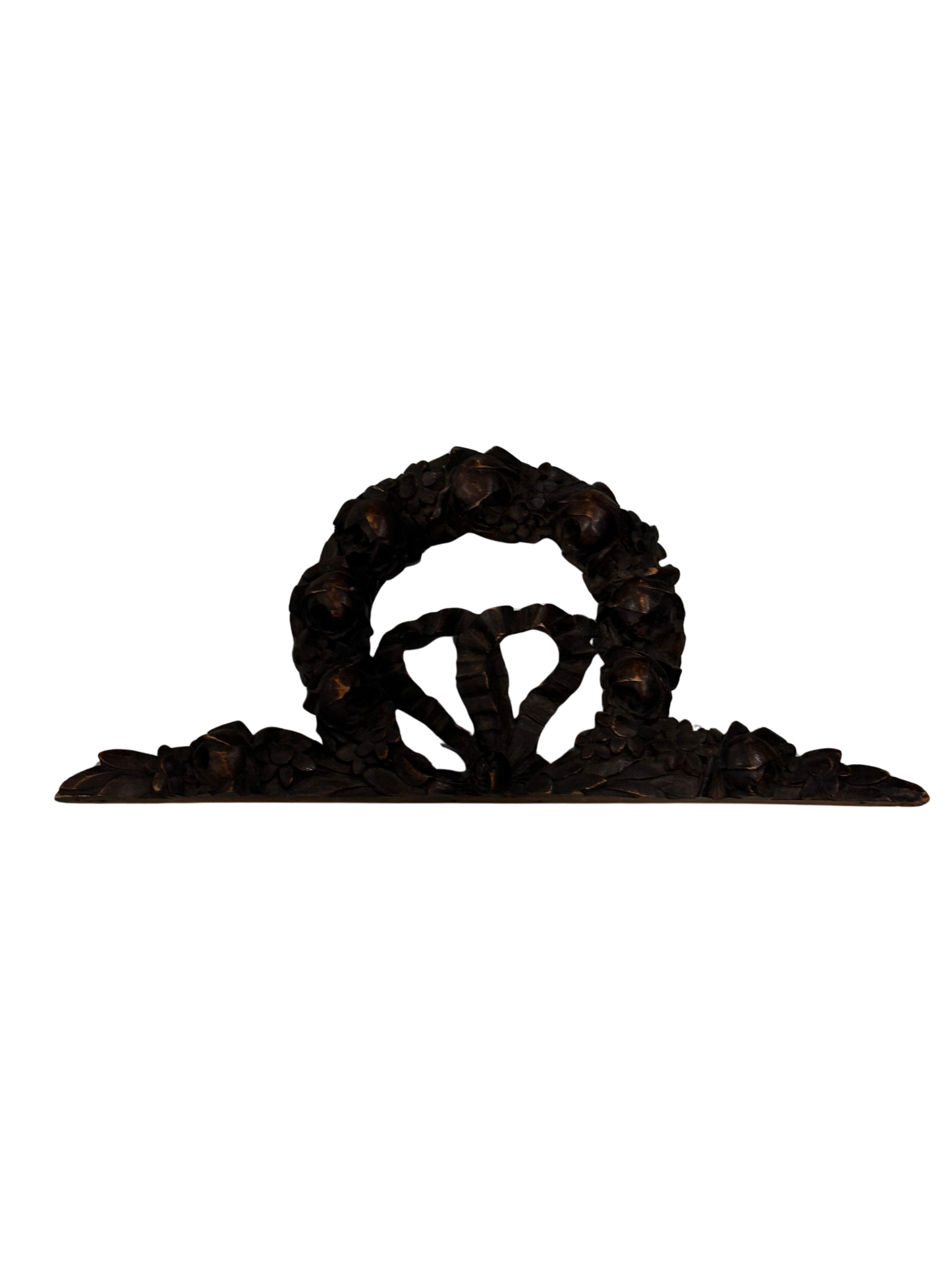
19th Century Hand-Carved Wooden Floral Wreath Pediment Fragment
19th Century Hand-Carved Wooden Floral Wreath Pediment Fragment
No se pudo cargar la disponibilidad de retiro
Compartir
Additional Description:
Striking carved wooden architectural fragment featuring a central circular wreath composed of deeply carved rose blossoms and layered foliage, flanked by a horizontal base and centered with a stylized ribbon or heart-form motif. The carving displays strong dimensionality, with undercut petals and clustered floral groupings that create rich shadow and depth. The surface retains remnants of a darkened, possibly originally gilt or painted finish, now worn to a warm, aged patina with highlights along raised areas.
The form suggests it was once the crest or pediment element from a larger piece of furniture or architectural feature—possibly a mirror, overdoor panel, or cabinet. The reverse shows a flat, hand-worked surface with tool marks and age, consistent with traditional 19th-century carving techniques. The symmetry and romantic floral composition point toward Continental decorative traditions, particularly French or Italian influence.
Era:
19th century
History:
Carved pediment fragments such as this were commonly used to crown mirrors, armoires, buffets, and architectural panels in the 18th and 19th centuries. Floral wreaths symbolized abundance, beauty, and classical refinement, while ribbon or heart motifs often added a romantic or neoclassical element. As furniture and interiors evolved, many larger pieces were dismantled or lost, leaving behind decorative fragments that are now appreciated as standalone works of art.
In the decorative arts market today, these fragments are highly sought after for wall display, layered styling, or incorporation into gallery walls, offering authentic period craftsmanship and sculptural presence.
Provenance:
Likely Continental European (French or Italian)
Materials:
Hand-carved wood with remnants of painted or gilt surface
Dimensions:
Not provided
Disclaimers/Condition:
Displays significant age-related wear consistent with use as an architectural element. Surface wear, losses, and softening to carved details, particularly along edges and high points. Areas of cracking, minor losses, and old repairs may be present. Finish is worn and uneven, with remnants of original surface treatment. Structurally stable for display but should be handled with care due to fragile carved elements.
Additional Description:
Striking carved wooden architectural fragment featuring a central circular wreath composed of deeply carved rose blossoms and layered foliage, flanked by a horizontal base and centered with a stylized ribbon or heart-form motif. The carving displays strong dimensionality, with undercut petals and clustered floral groupings that create rich shadow and depth. The surface retains remnants of a darkened, possibly originally gilt or painted finish, now worn to a warm, aged patina with highlights along raised areas.
The form suggests it was once the crest or pediment element from a larger piece of furniture or architectural feature—possibly a mirror, overdoor panel, or cabinet. The reverse shows a flat, hand-worked surface with tool marks and age, consistent with traditional 19th-century carving techniques. The symmetry and romantic floral composition point toward Continental decorative traditions, particularly French or Italian influence.
Era:
19th century
History:
Carved pediment fragments such as this were commonly used to crown mirrors, armoires, buffets, and architectural panels in the 18th and 19th centuries. Floral wreaths symbolized abundance, beauty, and classical refinement, while ribbon or heart motifs often added a romantic or neoclassical element. As furniture and interiors evolved, many larger pieces were dismantled or lost, leaving behind decorative fragments that are now appreciated as standalone works of art.
In the decorative arts market today, these fragments are highly sought after for wall display, layered styling, or incorporation into gallery walls, offering authentic period craftsmanship and sculptural presence.
Provenance:
Likely Continental European (French or Italian)
Materials:
Hand-carved wood with remnants of painted or gilt surface
Dimensions:
Not provided
Disclaimers/Condition:
Displays significant age-related wear consistent with use as an architectural element. Surface wear, losses, and softening to carved details, particularly along edges and high points. Areas of cracking, minor losses, and old repairs may be present. Finish is worn and uneven, with remnants of original surface treatment. Structurally stable for display but should be handled with care due to fragile carved elements.