


Antique Carved Wood Wall Shelf with Figural Mask
Antique Carved Wood Wall Shelf with Figural Mask
No se pudo cargar la disponibilidad de retiro
Compartir
Additional Description:
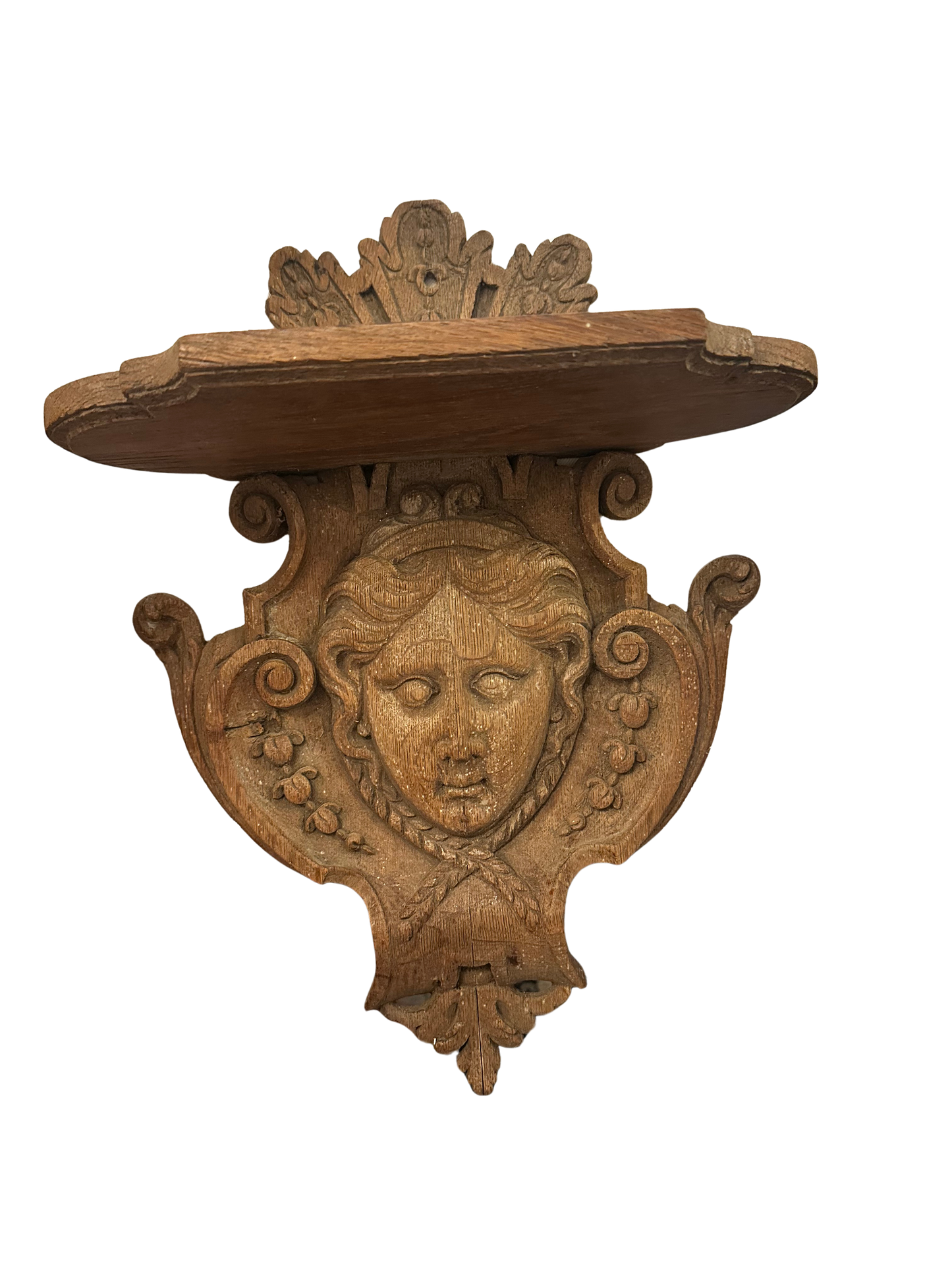
A richly carved antique wooden wall shelf featuring a central figural mask, likely inspired by the “Green Man” or classical foliate face motif. The composition is centered around a serene, almost classical face framed by stylized scrolls, floral garlands, and symmetrical decorative elements. The carving shows strong hand-worked character, with visible gouge marks, textured hair detailing, and expressive facial modeling.
Above the mask sits a shaped display shelf with softly scalloped edges, supported by carved scroll brackets. The crest above the shelf features a fan-like arrangement of foliage or acanthus leaves, adding vertical presence and elegance. The entire piece is carved from a single or joined wood construction with a warm, aged patina that enhances the depth of the carving.
The back reveals hand-worked surfaces and tool marks, along with mounting holes indicating it was designed to be wall-hung—likely for displaying a small decorative object, religious item, or personal keepsake. The aesthetic blends elements of Renaissance Revival and folk carving, suggesting it may be Continental European or possibly Black Forest-inspired in style.
Era:
Late 19th century to early 20th century
History:
Wall brackets and small decorative shelves such as this were popular throughout the 19th century, particularly during the Renaissance Revival and Gothic Revival periods. These pieces were often used to display busts, clocks, religious icons, or treasured objects in parlors and salons. The figural mask motif—sometimes associated with the “Green Man”—has roots in medieval and Renaissance ornamentation, symbolizing nature, renewal, or classical beauty depending on interpretation.
Carved wooden decorative elements like this were produced both by skilled artisans and regional workshops, especially in areas known for decorative carving such as Switzerland, Germany (Black Forest), France, and Austria. The slightly rustic execution and visible tool marks suggest a hand-carved origin rather than later machine production.
Provenance:
Likely Continental European; exact origin unknown. Acquired as a standalone decorative wall shelf.
Materials:
Carved wood (likely hardwood), original aged finish
Dimensions:
Leave blank
Disclaimers:
Wear consistent with age, including surface dryness, minor losses, small chips to carved edges, and visible tool marks throughout. There are mounting holes present from prior wall use. The shelf surface shows wear and minor discoloration from use. Possible age-related cracking or separation to the wood, particularly visible on the reverse. No maker’s mark observed. Attribution to specific region (e.g., Black Forest) is stylistic and not definitive.
Additional Description:
A richly carved antique wooden wall shelf featuring a central figural mask, likely inspired by the “Green Man” or classical foliate face motif. The composition is centered around a serene, almost classical face framed by stylized scrolls, floral garlands, and symmetrical decorative elements. The carving shows strong hand-worked character, with visible gouge marks, textured hair detailing, and expressive facial modeling.
Above the mask sits a shaped display shelf with softly scalloped edges, supported by carved scroll brackets. The crest above the shelf features a fan-like arrangement of foliage or acanthus leaves, adding vertical presence and elegance. The entire piece is carved from a single or joined wood construction with a warm, aged patina that enhances the depth of the carving.
The back reveals hand-worked surfaces and tool marks, along with mounting holes indicating it was designed to be wall-hung—likely for displaying a small decorative object, religious item, or personal keepsake. The aesthetic blends elements of Renaissance Revival and folk carving, suggesting it may be Continental European or possibly Black Forest-inspired in style.
Era:
Late 19th century to early 20th century
History:
Wall brackets and small decorative shelves such as this were popular throughout the 19th century, particularly during the Renaissance Revival and Gothic Revival periods. These pieces were often used to display busts, clocks, religious icons, or treasured objects in parlors and salons. The figural mask motif—sometimes associated with the “Green Man”—has roots in medieval and Renaissance ornamentation, symbolizing nature, renewal, or classical beauty depending on interpretation.
Carved wooden decorative elements like this were produced both by skilled artisans and regional workshops, especially in areas known for decorative carving such as Switzerland, Germany (Black Forest), France, and Austria. The slightly rustic execution and visible tool marks suggest a hand-carved origin rather than later machine production.
Provenance:
Likely Continental European; exact origin unknown. Acquired as a standalone decorative wall shelf.
Materials:
Carved wood (likely hardwood), original aged finish
Dimensions:
Leave blank
Disclaimers:
Wear consistent with age, including surface dryness, minor losses, small chips to carved edges, and visible tool marks throughout. There are mounting holes present from prior wall use. The shelf surface shows wear and minor discoloration from use. Possible age-related cracking or separation to the wood, particularly visible on the reverse. No maker’s mark observed. Attribution to specific region (e.g., Black Forest) is stylistic and not definitive.