



Antique Carved Wooden Furniture Fragment with Claw-and-Ball Motif
Antique Carved Wooden Furniture Fragment with Claw-and-Ball Motif
No se pudo cargar la disponibilidad de retiro
Compartir


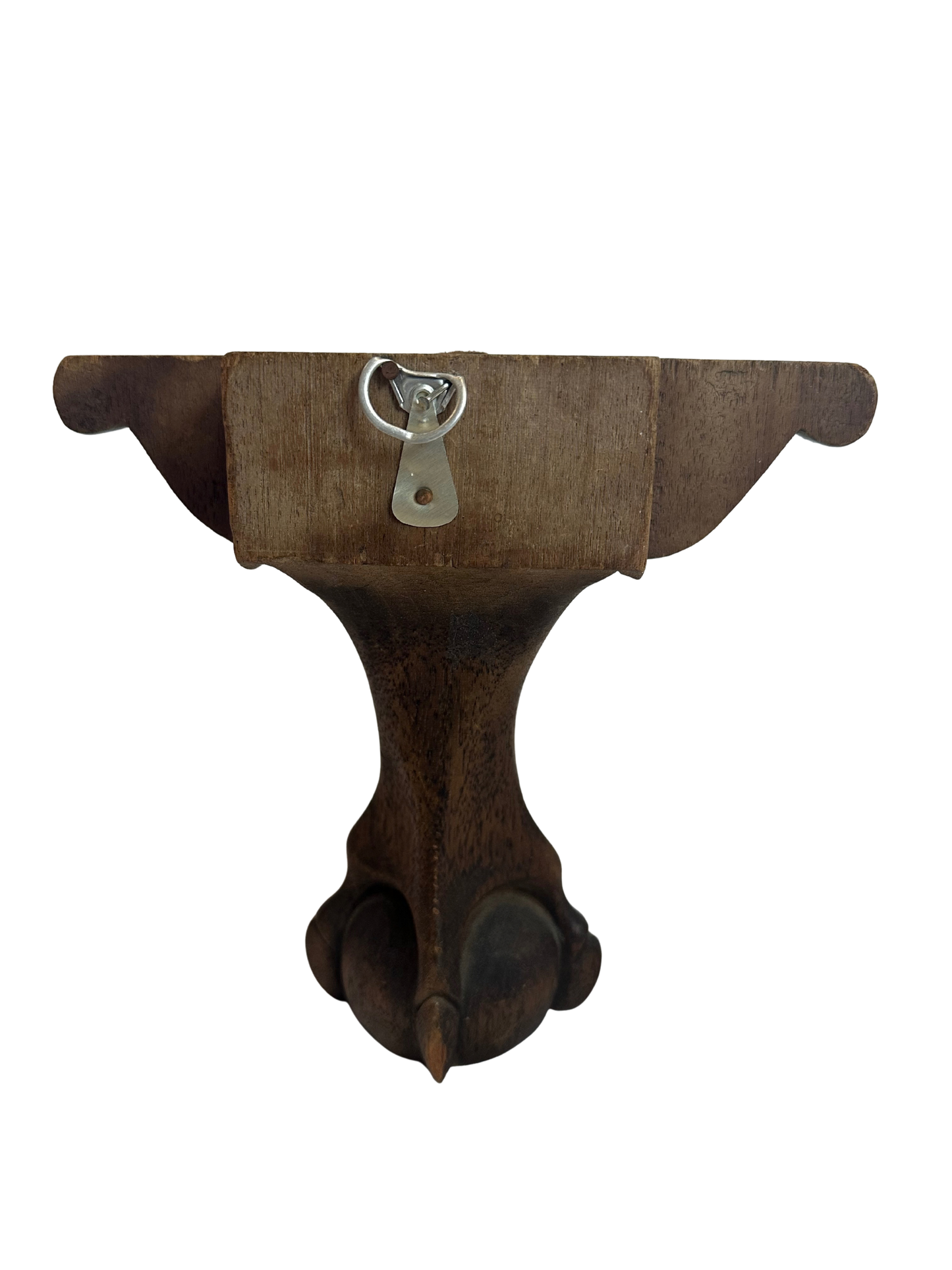
An antique hand-carved wooden furniture element, likely originating as a leg or lower support from a larger European piece of furniture. The form features scrolling foliate carving above a boldly carved claw-and-ball foot, a classic furniture motif associated with high-quality craftsmanship and formal furnishings.
The carving shows confident hand-tool work with softened edges, surface wear, and deep patination developed over time. The claw-and-ball terminal is well-modeled and proportionate, serving as a visual anchor for the piece. The upper section retains a squared attachment area, indicating it was once integrated into a larger furniture structure.
Evidence of earlier attachment is visible on the reverse, along with later-added hanging hardware, suggesting the piece was removed from its original context and adapted for decorative display. Today, it reads as a sculptural furniture fragment with strong presence and historical character.
An antique hand-carved wooden furniture element, likely originating as a leg or lower support from a larger European piece of furniture. The form features scrolling foliate carving above a boldly carved claw-and-ball foot, a classic furniture motif associated with high-quality craftsmanship and formal furnishings.
The carving shows confident hand-tool work with softened edges, surface wear, and deep patination developed over time. The claw-and-ball terminal is well-modeled and proportionate, serving as a visual anchor for the piece. The upper section retains a squared attachment area, indicating it was once integrated into a larger furniture structure.
Evidence of earlier attachment is visible on the reverse, along with later-added hanging hardware, suggesting the piece was removed from its original context and adapted for decorative display. Today, it reads as a sculptural furniture fragment with strong presence and historical character.
8"w x 3.25"d x 7.5"h
8"w x 3.25"d x 7.5"h
Claw-and-ball feet were widely used in European furniture from the late Baroque period through the 18th century, symbolizing strength and craftsmanship while providing a visually grounded termination to furniture legs. Such elements were commonly found on console tables, cabinets, and formal furnishings intended for prominent interior settings.
As furniture styles evolved or pieces were dismantled, carved elements were often salvaged and preserved, later appreciated as decorative fragments in their own right.
Claw-and-ball feet were widely used in European furniture from the late Baroque period through the 18th century, symbolizing strength and craftsmanship while providing a visually grounded termination to furniture legs. Such elements were commonly found on console tables, cabinets, and formal furnishings intended for prominent interior settings.
As furniture styles evolved or pieces were dismantled, carved elements were often salvaged and preserved, later appreciated as decorative fragments in their own right.
18th–Early 19th Century Circa 1750–1820
18th–Early 19th Century Circa 1750–1820
Hand-carved hardwood
Natural aged surface and patina
Later hanging hardware added
Hand-carved hardwood
Natural aged surface and patina
Later hanging hardware added
Continental Europe
Continental Europe
Antique furniture fragment; no longer part of original piece
Age-related wear, shrinkage, and surface variation consistent with period
Later hanging hardware present
Structurally stable for decorative use
Antique furniture fragment; no longer part of original piece
Age-related wear, shrinkage, and surface variation consistent with period
Later hanging hardware present
Structurally stable for decorative use