


Antique Continental Painted X-Frame Curule Stool with Embroidered & Tufted Velvet Seat, Late 19th Century
Antique Continental Painted X-Frame Curule Stool with Embroidered & Tufted Velvet Seat, Late 19th Century
No se pudo cargar la disponibilidad de retiro
Compartir


A romantic late 19th-century Continental curule or X-frame stool, combining a softly painted neoclassical frame with richly colored velvet and floral needlework upholstery.
The square upholstered seat is arranged around a cream textile center embroidered with a delicate floral bouquet in muted rose, green, gold, and blue tones. Deep crimson velvet panels occupy the four corners, each button-tufted with contrasting pale buttons and edged along the lower perimeter with decorative nailhead trim.
The frame is formed in the classical X or curule configuration, with opposing curved supports crossing at the center and terminating in outward-scrolling feet. A small carved rosette accents the central intersection, while slender turned supports beneath the seat provide additional structure. The frame retains a distressed cream-painted finish with remnants of gilt or warm-toned detailing.
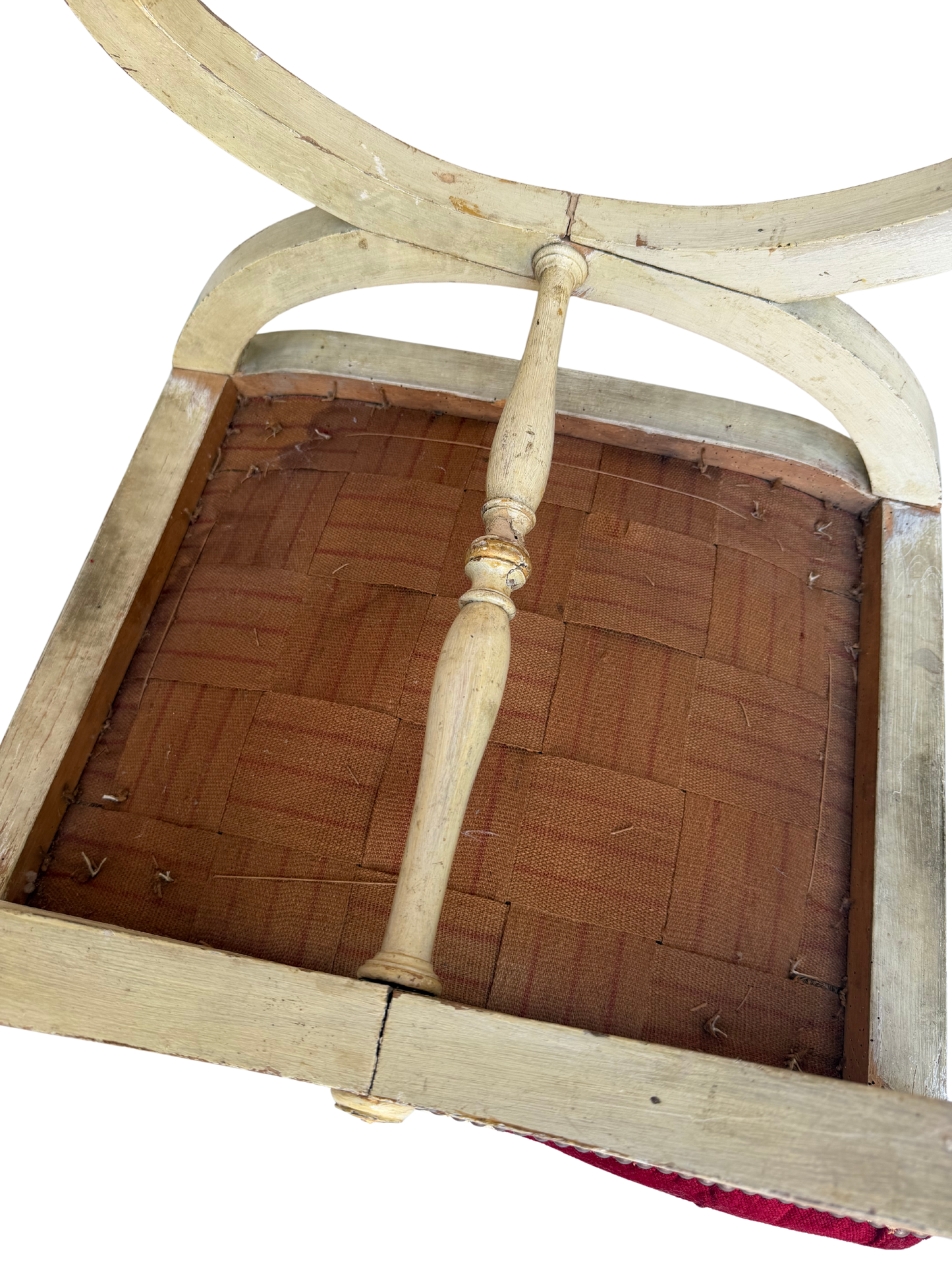
Viewed from below, the traditional wooden seat construction and naturally aged surfaces reinforce the stool’s antique character.
A wonderfully decorative occasional stool with a distinctly romantic European sensibility, equally suited to a bedroom, dressing room, salon, or layered collected interior.
A romantic late 19th-century Continental curule or X-frame stool, combining a softly painted neoclassical frame with richly colored velvet and floral needlework upholstery.
The square upholstered seat is arranged around a cream textile center embroidered with a delicate floral bouquet in muted rose, green, gold, and blue tones. Deep crimson velvet panels occupy the four corners, each button-tufted with contrasting pale buttons and edged along the lower perimeter with decorative nailhead trim.
The frame is formed in the classical X or curule configuration, with opposing curved supports crossing at the center and terminating in outward-scrolling feet. A small carved rosette accents the central intersection, while slender turned supports beneath the seat provide additional structure. The frame retains a distressed cream-painted finish with remnants of gilt or warm-toned detailing.
Viewed from below, the traditional wooden seat construction and naturally aged surfaces reinforce the stool’s antique character.
A wonderfully decorative occasional stool with a distinctly romantic European sensibility, equally suited to a bedroom, dressing room, salon, or layered collected interior.
15.75"h x 24"w x 20.5"d
15.75"h x 24"w x 20.5"d
The X-frame or curule stool is among the oldest forms of ceremonial seating, its ancestry extending back to antiquity. The Roman sella curulis was an X-shaped seat associated with magistrates and public authority, and the form was repeatedly revived in later European decorative arts.
During the Neoclassical, Empire, and Regency periods, designers looked extensively to ancient Greek and Roman furniture for inspiration, bringing the curule form back into fashionable interiors. It remained popular throughout the 19th century, with Victorian and Continental makers adapting the basic crossed-leg design into upholstered stools, benches, and occasional seating.
Period examples survive in painted and gilt finishes as well as walnut, mahogany, and rosewood. A documented early-19th-century painted X-frame stool at Harewood House retains a red velvet cushion, while later 19th-century examples were produced throughout Britain and Continental Europe with similarly decorative painted frames and upholstered seats.
This example is especially appealing for the contrast between its restrained cream-painted frame and the unusually rich combination of crimson tufted velvet and floral embroidery.
The X-frame or curule stool is among the oldest forms of ceremonial seating, its ancestry extending back to antiquity. The Roman sella curulis was an X-shaped seat associated with magistrates and public authority, and the form was repeatedly revived in later European decorative arts.
During the Neoclassical, Empire, and Regency periods, designers looked extensively to ancient Greek and Roman furniture for inspiration, bringing the curule form back into fashionable interiors. It remained popular throughout the 19th century, with Victorian and Continental makers adapting the basic crossed-leg design into upholstered stools, benches, and occasional seating.
Period examples survive in painted and gilt finishes as well as walnut, mahogany, and rosewood. A documented early-19th-century painted X-frame stool at Harewood House retains a red velvet cushion, while later 19th-century examples were produced throughout Britain and Continental Europe with similarly decorative painted frames and upholstered seats.
This example is especially appealing for the contrast between its restrained cream-painted frame and the unusually rich combination of crimson tufted velvet and floral embroidery.
Continental European, late 19th century, circa 1870–1900
Continental European, late 19th century, circa 1870–1900
Painted wood and secondary woods; velvet; woven textile; hand-worked floral embroidery or needlework; upholstery; decorative nailheads.
Painted wood and secondary woods; velvet; woven textile; hand-worked floral embroidery or needlework; upholstery; decorative nailheads.
Private collection. No maker's mark or identifying label observed in the photographs provided. Acquired via Austin auction house.
Private collection. No maker's mark or identifying label observed in the photographs provided. Acquired via Austin auction house.
Antique condition consistent with age and use. The painted wooden frame exhibits substantial intentional and age-related distressing, including rubbing, losses to the painted and gilt surfaces, scratches, abrasions, discoloration, exposed wood, and scattered surface marks.
The upholstery exhibits age-related wear including variations in pile, scattered marks, minor staining, loose or worn fibers, and small areas of loss. The crimson velvet shows scattered pale spots and wear consistent with age. The central embroidered panel displays light discoloration and age-related textile wear.
The underside retains exposed antique construction and shows surface wear, staining, and oxidation to upholstery hardware. Minor movement or looseness may be present at traditional furniture joints.
This is an antique occasional stool; care should be exercised before using it for regular weight-bearing seating.
Please review all photographs carefully, as they form an important part of the condition description.
Antique condition consistent with age and use. The painted wooden frame exhibits substantial intentional and age-related distressing, including rubbing, losses to the painted and gilt surfaces, scratches, abrasions, discoloration, exposed wood, and scattered surface marks.
The upholstery exhibits age-related wear including variations in pile, scattered marks, minor staining, loose or worn fibers, and small areas of loss. The crimson velvet shows scattered pale spots and wear consistent with age. The central embroidered panel displays light discoloration and age-related textile wear.
The underside retains exposed antique construction and shows surface wear, staining, and oxidation to upholstery hardware. Minor movement or looseness may be present at traditional furniture joints.
This is an antique occasional stool; care should be exercised before using it for regular weight-bearing seating.
Please review all photographs carefully, as they form an important part of the condition description.