

Antique Georgian-Style Mahogany Tea Caddy with Twin Compartments
Antique Georgian-Style Mahogany Tea Caddy with Twin Compartments
No se pudo cargar la disponibilidad de retiro
Compartir
Additional Description:
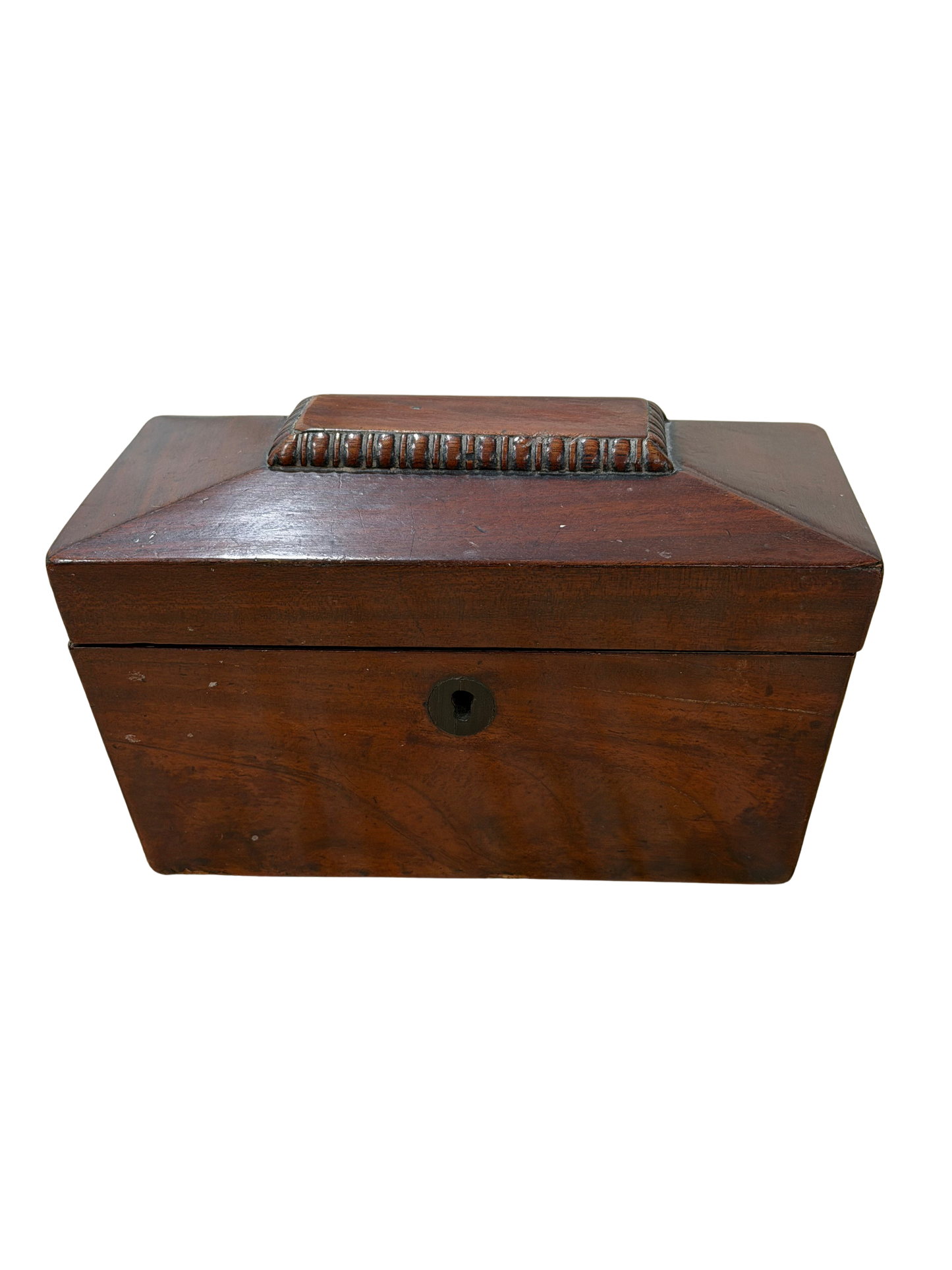
A refined antique wooden tea caddy of classic rectangular form, crafted in richly toned mahogany with a warm, lustrous patina. The lid features a distinctive raised and molded handle detail, adding subtle architectural interest while maintaining a restrained elegance. The front is fitted with an escutcheon (key absent), and the hinged lid opens to reveal a beautifully preserved red-lined interior.
Inside, the caddy retains its original dual-lidded compartment configuration, each fitted with small turned bone or ivory knobs. Beneath one compartment, a hidden lower section is visible, a typical feature of quality tea caddies designed to store loose tea leaves or sugar. The interior lining in vivid red creates a striking contrast against the polished wood and speaks to its original purpose as a prized household object.
The clean lines and balanced proportions reflect Georgian design sensibilities, while the construction and materials suggest a piece made for both function and quiet refinement.
Era:
Likely early to mid-19th century (Georgian style, possibly late Georgian to early Victorian period)
History:
Tea caddies were essential luxury items in 18th and early 19th-century Europe, particularly in England, where tea was an expensive imported commodity. These boxes were designed to securely store and protect tea leaves, often kept under lock and key due to their value. Dual compartments allowed for storage of different tea varieties, such as black and green tea, while hidden compartments could store sugar or other accompaniments. Over time, tea caddies became status symbols, crafted from fine woods like mahogany and often lined with vibrant materials to enhance their visual appeal. This example reflects the enduring appeal of Georgian craftsmanship and domestic ritual.
Provenance:
Likely English or Continental European
Materials:
Mahogany; red fabric or paper lining; bone or ivory knobs; brass hinges; escutcheon
Dimensions:
Leave blank
Disclaimers:
Surface wear consistent with age and use, including scratches, small dents, and finish wear throughout. Interior shows wear, particularly to lining and edges. One compartment reveals internal wear and aging to wood surfaces. Lock present but key is missing; working condition not guaranteed. Possible minor warping or separation typical of age. Material of knobs should be described cautiously (bone or ivory) unless confirmed.
Additional Description:
A refined antique wooden tea caddy of classic rectangular form, crafted in richly toned mahogany with a warm, lustrous patina. The lid features a distinctive raised and molded handle detail, adding subtle architectural interest while maintaining a restrained elegance. The front is fitted with an escutcheon (key absent), and the hinged lid opens to reveal a beautifully preserved red-lined interior.
Inside, the caddy retains its original dual-lidded compartment configuration, each fitted with small turned bone or ivory knobs. Beneath one compartment, a hidden lower section is visible, a typical feature of quality tea caddies designed to store loose tea leaves or sugar. The interior lining in vivid red creates a striking contrast against the polished wood and speaks to its original purpose as a prized household object.
The clean lines and balanced proportions reflect Georgian design sensibilities, while the construction and materials suggest a piece made for both function and quiet refinement.
Era:
Likely early to mid-19th century (Georgian style, possibly late Georgian to early Victorian period)
History:
Tea caddies were essential luxury items in 18th and early 19th-century Europe, particularly in England, where tea was an expensive imported commodity. These boxes were designed to securely store and protect tea leaves, often kept under lock and key due to their value. Dual compartments allowed for storage of different tea varieties, such as black and green tea, while hidden compartments could store sugar or other accompaniments. Over time, tea caddies became status symbols, crafted from fine woods like mahogany and often lined with vibrant materials to enhance their visual appeal. This example reflects the enduring appeal of Georgian craftsmanship and domestic ritual.
Provenance:
Likely English or Continental European
Materials:
Mahogany; red fabric or paper lining; bone or ivory knobs; brass hinges; escutcheon
Dimensions:
Leave blank
Disclaimers:
Surface wear consistent with age and use, including scratches, small dents, and finish wear throughout. Interior shows wear, particularly to lining and edges. One compartment reveals internal wear and aging to wood surfaces. Lock present but key is missing; working condition not guaranteed. Possible minor warping or separation typical of age. Material of knobs should be described cautiously (bone or ivory) unless confirmed.