

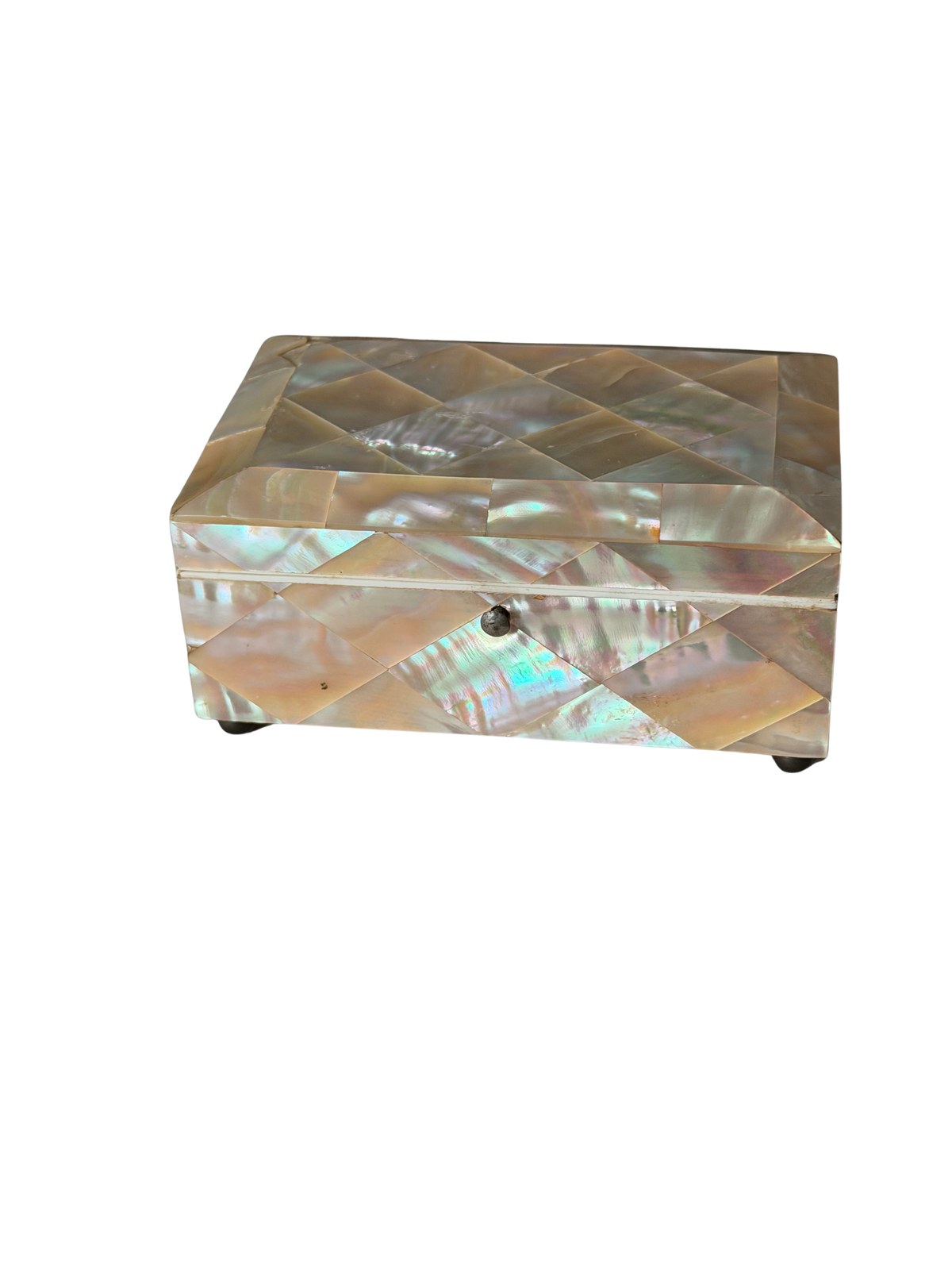
Antique Victorian Mother-of-Pearl Parquetry Jewelry Casket with Lavender Silk Interior, Circa 1880–1900
Antique Victorian Mother-of-Pearl Parquetry Jewelry Casket with Lavender Silk Interior, Circa 1880–1900
No se pudo cargar la disponibilidad de retiro
Compartir
Additional Description
An elegant antique rectangular jewelry casket adorned with luminous mother-of-pearl veneer arranged in an intricate geometric parquetry design. The exterior features alternating diamond-shaped and triangular sections of iridescent shell, creating a beautiful interplay of soft ivory, champagne, pink, and pale green reflections.
The hinged lid displays an elaborate geometric pattern, framed by angled mother-of-pearl borders that continue around the sides of the casket. A small metal button-style clasp decorates the front, while four rounded metal feet elevate the box.
Opening the lid reveals a delicate light lavender silk-lined interior, providing a soft resting place for treasured jewelry, personal keepsakes, or small heirlooms.
The combination of lustrous natural shell, carefully arranged geometric ornamentation, and pastel silk lining gives this charming casket a refined, romantic character.
Era
Late Victorian Period, circa 1880–1900.
An early 20th-century production date remains possible.
History
Mother-of-pearl was a highly prized decorative material throughout the 19th century, admired for its naturally iridescent surface and association with refined luxury.
Craftsmen used thin sections of polished nacre to ornament jewelry boxes, sewing caskets, writing accessories, and other personal objects. Geometric parquetry arrangements were particularly attractive because they allowed the changing colors of the shell to produce an elaborate decorative effect without additional painted embellishment.
During the Victorian period, jewelry and keepsake caskets became fashionable accessories for dressing tables and private interiors. Many were fitted with silk or velvet linings to protect delicate contents.
The present example reflects this tradition of decorative craftsmanship, combining geometric mother-of-pearl veneer with a softly colored silk interior.
Provenance
Likely European manufacture, possibly British or Continental.
Specific maker and original place of manufacture have not been established.
Materials
- Natural mother-of-pearl shell veneer
- Wood or composite underlying structure
- Light lavender silk interior lining
- Metal hinge, clasp, and rounded feet
Dimensions
Measurements to be confirmed.
Condition/Disclaimers
Antique condition consistent with age and use.
The mother-of-pearl exterior retains attractive iridescence, with variations in coloration characteristic of natural shell. Several sections of mother-of-pearl veneer are missing from the upper lid, with additional minor surface wear and visible joins between individual veneer pieces.
The light lavender silk lining remains present, showing age-related wear and minor discoloration. The metal fittings exhibit some patination.
The hinged lid opens to reveal the lined compartment. The closure has not been independently tested.
Please review all photographs carefully, particularly those illustrating the veneer losses on the lid.