


English Regency Mahogany Sarcophagus-Form Sewing and Work Box
English Regency Mahogany Sarcophagus-Form Sewing and Work Box
No se pudo cargar la disponibilidad de retiro
Compartir


A handsome English Regency sewing or work box of architectural sarcophagus form, crafted in richly figured mahogany veneer and dating to the early 19th century.
The rectangular box is surmounted by a distinctive sloping, paneled lid centered by a raised rectangular tablet bordered in deeply carved gadrooned decoration. The strong geometric construction and restrained classical ornament are characteristic of the Regency fascination with ancient architectural forms.
The box rests upon four small turned bun feet and retains unusual turned wooden carrying handles to either side, composed of a central spherical grip flaked by shaped finials. A small diamond-form escutcheon ornaments the front.
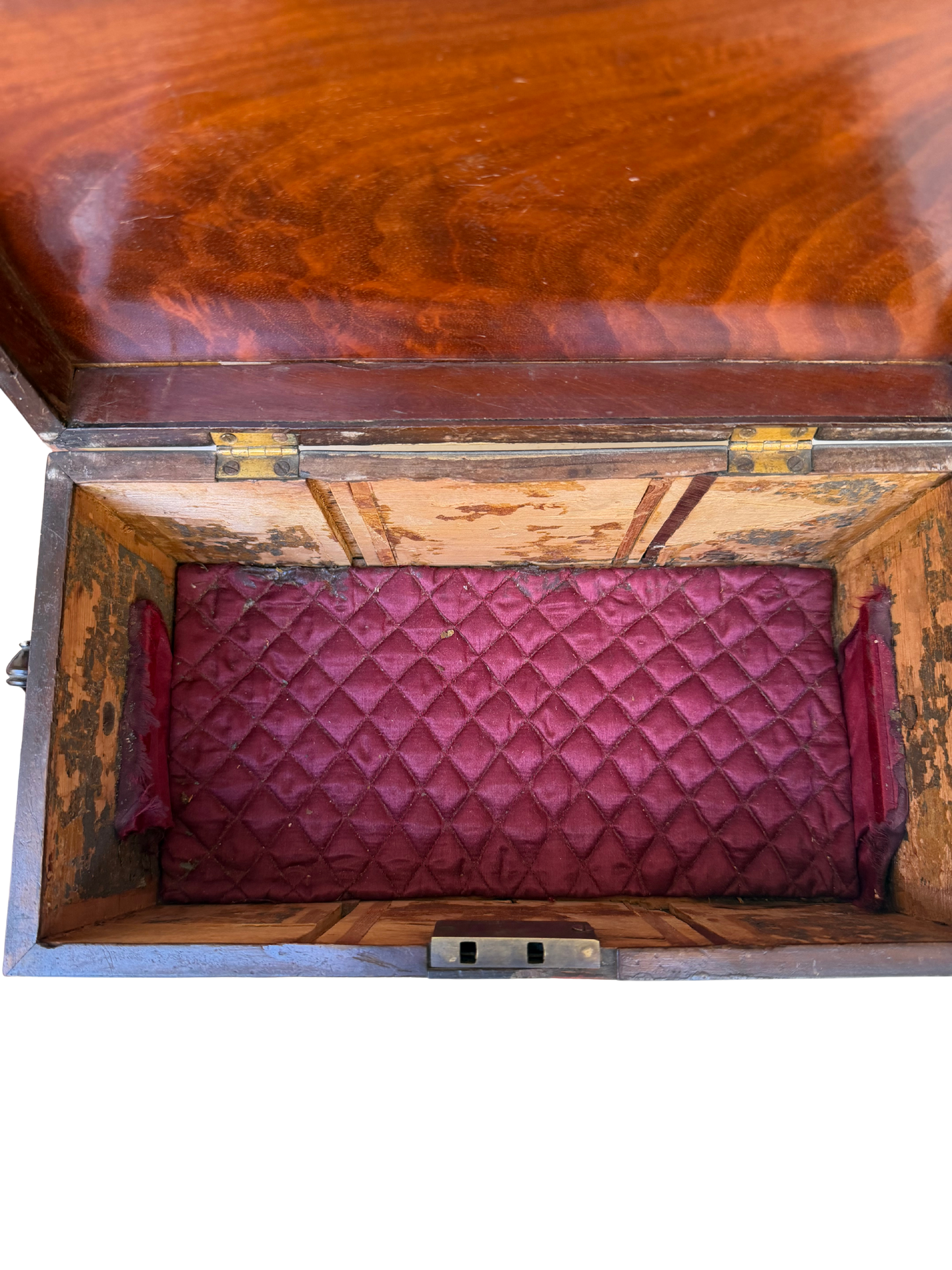
Opening the hinged lid reveals a removable wooden organizing tray divided into two compartments. Beneath the tray is a deeper storage cavity retaining an old burgundy quilted textile lining, likely intended for sewing materials, fabric, ribbons, or other needlework accessories. The juxtaposition of specialized upper compartments with a larger textile-lined lower chamber is characteristic of the portable work boxes used by ladies for needlework and personal effects during the Regency period.
Particularly appealing is the extensive use of figured mahogany across the lid, front, sides, and interior of the lid, where the natural grain provides much of the box's decoration
A handsome English Regency sewing or work box of architectural sarcophagus form, crafted in richly figured mahogany veneer and dating to the early 19th century.
The rectangular box is surmounted by a distinctive sloping, paneled lid centered by a raised rectangular tablet bordered in deeply carved gadrooned decoration. The strong geometric construction and restrained classical ornament are characteristic of the Regency fascination with ancient architectural forms.
The box rests upon four small turned bun feet and retains unusual turned wooden carrying handles to either side, composed of a central spherical grip flaked by shaped finials. A small diamond-form escutcheon ornaments the front.
Opening the hinged lid reveals a removable wooden organizing tray divided into two compartments. Beneath the tray is a deeper storage cavity retaining an old burgundy quilted textile lining, likely intended for sewing materials, fabric, ribbons, or other needlework accessories. The juxtaposition of specialized upper compartments with a larger textile-lined lower chamber is characteristic of the portable work boxes used by ladies for needlework and personal effects during the Regency period.
Particularly appealing is the extensive use of figured mahogany across the lid, front, sides, and interior of the lid, where the natural grain provides much of the box's decoration
7.5"h x 14"w x 6.5"d
7.5"h x 14"w x 6.5"d
Decorative sewing and work boxes became fashionable personal objects during the late Georgian and Regency periods, when needlework remained an important domestic and social pursuit among women of the middle and upper classes.
By the early 19th century, box makers increasingly adopted the fashionable sarcophagus form, drawing inspiration from ancient Greek, Roman, and Egyptian architecture. Comparable Regency work boxes were frequently executed in mahogany or rosewood and raised on small feet, with fitted or removable trays above larger storage compartments. Surviving period examples also frequently incorporate silk, velvet, paper, or padded textile linings.
The pronounced gadrooned molding surrounding the raised panel of the present example lends the otherwise restrained mahogany case an especially architectural quality. Gadrooned details appear on documented Regency boxes of circa 1820-1825 and were used to heighten their neoclassical character.
Decorative sewing and work boxes became fashionable personal objects during the late Georgian and Regency periods, when needlework remained an important domestic and social pursuit among women of the middle and upper classes.
By the early 19th century, box makers increasingly adopted the fashionable sarcophagus form, drawing inspiration from ancient Greek, Roman, and Egyptian architecture. Comparable Regency work boxes were frequently executed in mahogany or rosewood and raised on small feet, with fitted or removable trays above larger storage compartments. Surviving period examples also frequently incorporate silk, velvet, paper, or padded textile linings.
The pronounced gadrooned molding surrounding the raised panel of the present example lends the otherwise restrained mahogany case an especially architectural quality. Gadrooned details appear on documented Regency boxes of circa 1820-1825 and were used to heighten their neoclassical character.
English Regency, circa 1820-1830
English Regency, circa 1820-1830
Figured mahogany veneer and secondary woods; carved and turned wood; brass hinges and lock hardware; removable wooden fitted tray; quilted burgundy textile lining.
Figured mahogany veneer and secondary woods; carved and turned wood; brass hinges and lock hardware; removable wooden fitted tray; quilted burgundy textile lining.
No maker's label or identifying marks. Likely English/Continental European. Acquired from an Austin,TX estate.
No maker's label or identifying marks. Likely English/Continental European. Acquired from an Austin,TX estate.
Antique condition consistent with approximately 200 years of age and use. The box retains a warm, naturally aged surface with scattered scratches, abrasions, finish variation, discoloration, small veneer losses, lifting and separation, and localized losses particularly around the corners and edges of the lid. Evidence of previous repairs and/or finish restoration may be present.
The interior shows substantial age-related wear, including losses and deterioration to the original interior coverings, staining and residue to the secondary woods, and considerable wear to the burgundy quilted lining. The removable organizing tray is present and shows age-related marks and losses. Brass hinges and lock components are present; functionality of the lock is not guaranteed.
These imperfections are considered part of the object's antique character and history. Please review all photographs carefully as they form an important part of the condition description.
Antique condition consistent with approximately 200 years of age and use. The box retains a warm, naturally aged surface with scattered scratches, abrasions, finish variation, discoloration, small veneer losses, lifting and separation, and localized losses particularly around the corners and edges of the lid. Evidence of previous repairs and/or finish restoration may be present.
The interior shows substantial age-related wear, including losses and deterioration to the original interior coverings, staining and residue to the secondary woods, and considerable wear to the burgundy quilted lining. The removable organizing tray is present and shows age-related marks and losses. Brass hinges and lock components are present; functionality of the lock is not guaranteed.
These imperfections are considered part of the object's antique character and history. Please review all photographs carefully as they form an important part of the condition description.