

Equestrian Brass Horse Head Walking Stick Handle
Equestrian Brass Horse Head Walking Stick Handle
No se pudo cargar la disponibilidad de retiro
Compartir
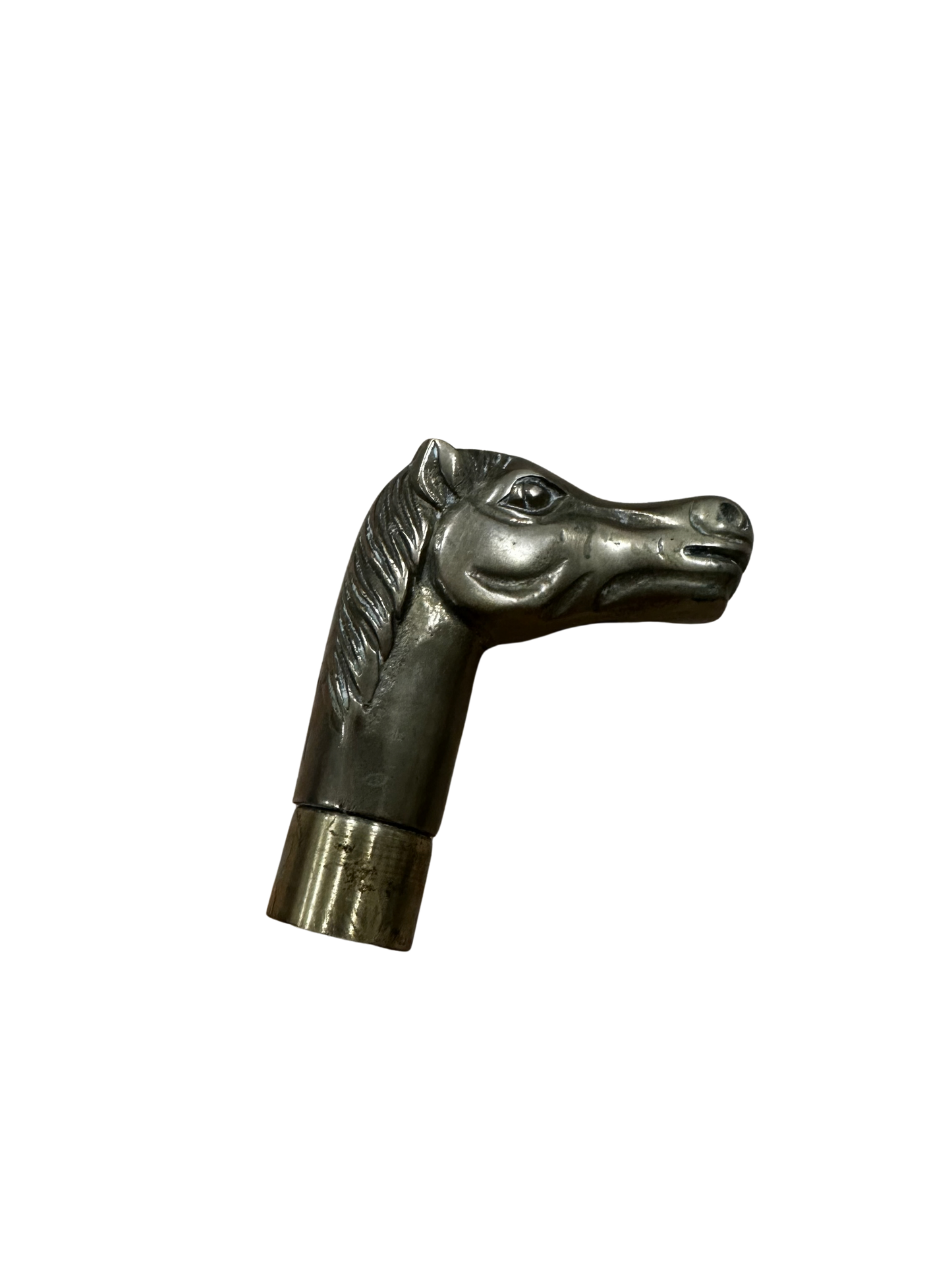
Additional Description: A solid cast brass horse head handle, designed as the grip for a walking stick, riding crop, or gentleman's cane. The handle is sculpted in the form of a horse's head with stylized mane and expressive eyes, a motif closely associated with equestrian culture and English country sporting traditions.
The underside features a threaded socket, indicating it original screwed onto a wooden cane shaft or riding crop handle. This typoe of threaded connection became common in the late 19th and early 20th centuries as interchangeable cand handles and novelty walking sticks became fashionable accessories.
Horse-head handles were especially popular among riders, hunters, and members of riding clubs, symbolizing the importance of the horse in sporting life. Pieces like this were often sold through British and Continental sporting goods shops, as well as luxury outfitters supplying riding equipment.
The sculptural form and weight of the brass sugest is was meant to be both decorative and functional, providing a comfortable grip while also displaying equestrian taste.
Era: Likely late 19th to early 20th century (circa 1880-1920)
History: Decorative walking sticks and riding crops were an essential accessory for well-dressed gentlemen throughout the Victorian and Edwardian periods. Handles frequently featured animals, classical busts, or sporting motifs. Equestiran designs such as horse heads were particularly common among riders and members of hunt clubs.
During this period, cane handles were sometimes sold separately so they could be fitted to replacement shafts when a stick broke or wore out.
Provenance: Austin, TX
Materials: Cast brass
Dimensions: TBD
Disclaimers: Minor surface wear and light verdigris consistent with age. Threaded interior shows expected wear from previous attachment to a shaft. Sold as decorative antique cane handle.
Additional Description: A solid cast brass horse head handle, designed as the grip for a walking stick, riding crop, or gentleman's cane. The handle is sculpted in the form of a horse's head with stylized mane and expressive eyes, a motif closely associated with equestrian culture and English country sporting traditions.
The underside features a threaded socket, indicating it original screwed onto a wooden cane shaft or riding crop handle. This typoe of threaded connection became common in the late 19th and early 20th centuries as interchangeable cand handles and novelty walking sticks became fashionable accessories.
Horse-head handles were especially popular among riders, hunters, and members of riding clubs, symbolizing the importance of the horse in sporting life. Pieces like this were often sold through British and Continental sporting goods shops, as well as luxury outfitters supplying riding equipment.
The sculptural form and weight of the brass sugest is was meant to be both decorative and functional, providing a comfortable grip while also displaying equestrian taste.
Era: Likely late 19th to early 20th century (circa 1880-1920)
History: Decorative walking sticks and riding crops were an essential accessory for well-dressed gentlemen throughout the Victorian and Edwardian periods. Handles frequently featured animals, classical busts, or sporting motifs. Equestiran designs such as horse heads were particularly common among riders and members of hunt clubs.
During this period, cane handles were sometimes sold separately so they could be fitted to replacement shafts when a stick broke or wore out.
Provenance: Austin, TX
Materials: Cast brass
Dimensions: TBD
Disclaimers: Minor surface wear and light verdigris consistent with age. Threaded interior shows expected wear from previous attachment to a shaft. Sold as decorative antique cane handle.