

Monumental Bronze Art Nouveau Figural Architectural Caryatid Mount
Monumental Bronze Art Nouveau Figural Architectural Caryatid Mount
No se pudo cargar la disponibilidad de retiro
Compartir
Item: Monumental Bronze Art Nouveau Figural Architectural Caryatid Mount
Additional Description:
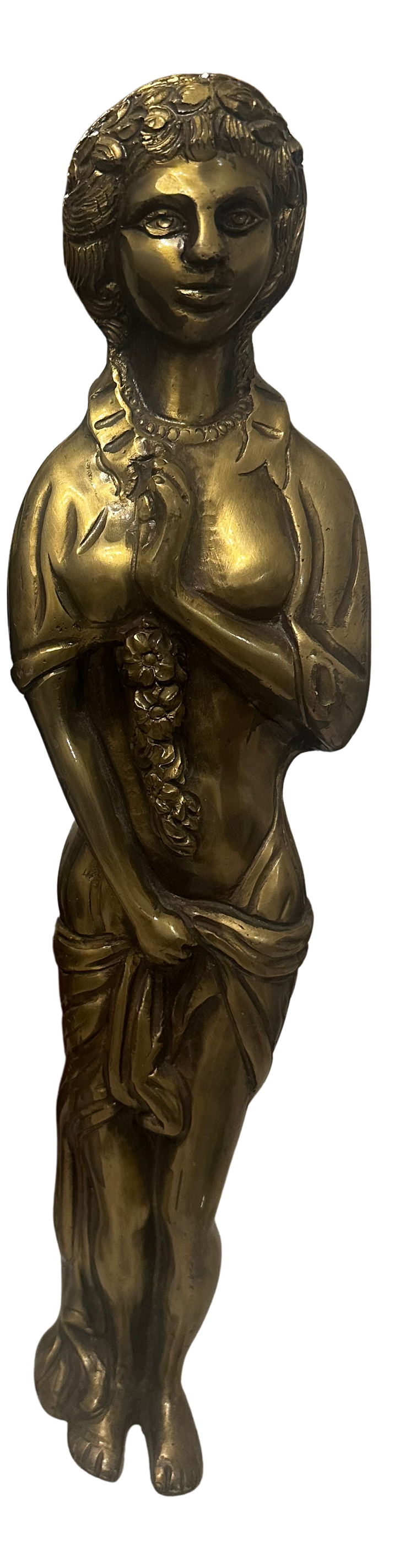
An extraordinary and highly sculptural pair of monumental Art Nouveau figural mounts or architectural appliqués depicting stylized female nude caryatid figures draped in flowing classical textiles and adorned with floral garlands. Each figure stands in an elegant contrapposto pose with elongated proportions, stylized facial features, and sinuous organic modeling characteristic of the Art Nouveau movement’s fascination with the female form and naturalistic line.
The figures appear to have originally functioned as large-scale architectural or furniture mounts — possibly from an elaborate cabinet, overmantel, monumental mirror, bed surround, theater décor, or custom interior installation. Their deeply hollowed reverse construction and long threaded mounting rods indicate they were intended to be mechanically affixed to a substantial vertical structure.
The surfaces retain a warm gilt-bronze toned finish with darker patinated recesses emphasizing the sculptural contours and floral detailing. The expressive modeling — particularly in the hair, elongated limbs, and stylized drapery folds — evokes Continental Art Nouveau decorative arts influences seen in French and Belgian interiors from the late 19th to early 20th century.
The reverse construction suggests cast composition material, spelter, plaster composite, or resin-bound decorative casting rather than solid bronze. The rough hollow backs and integrated mounting hardware reinforce their intended architectural decorative use rather than freestanding sculpture.
Remarkable for their scale, dramatic presence, and highly decorative silhouette, these would make exceptional statement wall-mounted decorative objects or could potentially be reincorporated into an interior design installation.
Era:
Late 19th century to early 20th century, circa 1890–1920.
History:
During the Art Nouveau period, designers throughout France, Belgium, Austria, and broader Europe embraced organic forms, flowing female figures, and symbolic natural motifs in architecture and decorative arts. Female caryatid forms became especially popular as ornamental supports and applied decorative mounts for furniture, mirrors, fireplaces, architectural panels, and luxury interiors.
These figures reflect the movement’s blending of classical inspiration with modern sensuality and stylized line. Their elongated anatomy and integrated floral motifs align with the aesthetic language associated with fin-de-siècle decorative arts and architectural ornamentation.
Large decorative mounts such as these were often custom-made for grand interiors, hotels, theaters, salons, or monumental furniture commissions.
Provenance:
Likely Continental European, possibly French or Belgian origin. Acquired through the secondary antiques market.
Materials:
Cast composite material or spelter with gilt and patinated surface finish; threaded metal mounting rods.
Dimensions:
Each: 27.5” H x 5” W x 5” D
Disclaimers:
Surface wear, rubbing, oxidation, finish loss, casting irregularities, and age-related wear throughout consistent with use and age. Reverse surfaces unfinished as made. Mounting rods likely later replacements or modified hardware from prior installation. Minor surface abrasions, edge wear, and scattered losses present.
Item: Monumental Bronze Art Nouveau Figural Architectural Caryatid Mount
Additional Description:
An extraordinary and highly sculptural pair of monumental Art Nouveau figural mounts or architectural appliqués depicting stylized female nude caryatid figures draped in flowing classical textiles and adorned with floral garlands. Each figure stands in an elegant contrapposto pose with elongated proportions, stylized facial features, and sinuous organic modeling characteristic of the Art Nouveau movement’s fascination with the female form and naturalistic line.
The figures appear to have originally functioned as large-scale architectural or furniture mounts — possibly from an elaborate cabinet, overmantel, monumental mirror, bed surround, theater décor, or custom interior installation. Their deeply hollowed reverse construction and long threaded mounting rods indicate they were intended to be mechanically affixed to a substantial vertical structure.
The surfaces retain a warm gilt-bronze toned finish with darker patinated recesses emphasizing the sculptural contours and floral detailing. The expressive modeling — particularly in the hair, elongated limbs, and stylized drapery folds — evokes Continental Art Nouveau decorative arts influences seen in French and Belgian interiors from the late 19th to early 20th century.
The reverse construction suggests cast composition material, spelter, plaster composite, or resin-bound decorative casting rather than solid bronze. The rough hollow backs and integrated mounting hardware reinforce their intended architectural decorative use rather than freestanding sculpture.
Remarkable for their scale, dramatic presence, and highly decorative silhouette, these would make exceptional statement wall-mounted decorative objects or could potentially be reincorporated into an interior design installation.
Era:
Late 19th century to early 20th century, circa 1890–1920.
History:
During the Art Nouveau period, designers throughout France, Belgium, Austria, and broader Europe embraced organic forms, flowing female figures, and symbolic natural motifs in architecture and decorative arts. Female caryatid forms became especially popular as ornamental supports and applied decorative mounts for furniture, mirrors, fireplaces, architectural panels, and luxury interiors.
These figures reflect the movement’s blending of classical inspiration with modern sensuality and stylized line. Their elongated anatomy and integrated floral motifs align with the aesthetic language associated with fin-de-siècle decorative arts and architectural ornamentation.
Large decorative mounts such as these were often custom-made for grand interiors, hotels, theaters, salons, or monumental furniture commissions.
Provenance:
Likely Continental European, possibly French or Belgian origin. Acquired through the secondary antiques market.
Materials:
Cast composite material or spelter with gilt and patinated surface finish; threaded metal mounting rods.
Dimensions:
Each: 27.5” H x 5” W x 5” D
Disclaimers:
Surface wear, rubbing, oxidation, finish loss, casting irregularities, and age-related wear throughout consistent with use and age. Reverse surfaces unfinished as made. Mounting rods likely later replacements or modified hardware from prior installation. Minor surface abrasions, edge wear, and scattered losses present.