


Monumental Hand-Carved Architectural Fragment with Ribbon Crest Motif
Monumental Hand-Carved Architectural Fragment with Ribbon Crest Motif
No se pudo cargar la disponibilidad de retiro
Compartir
Additional Description:
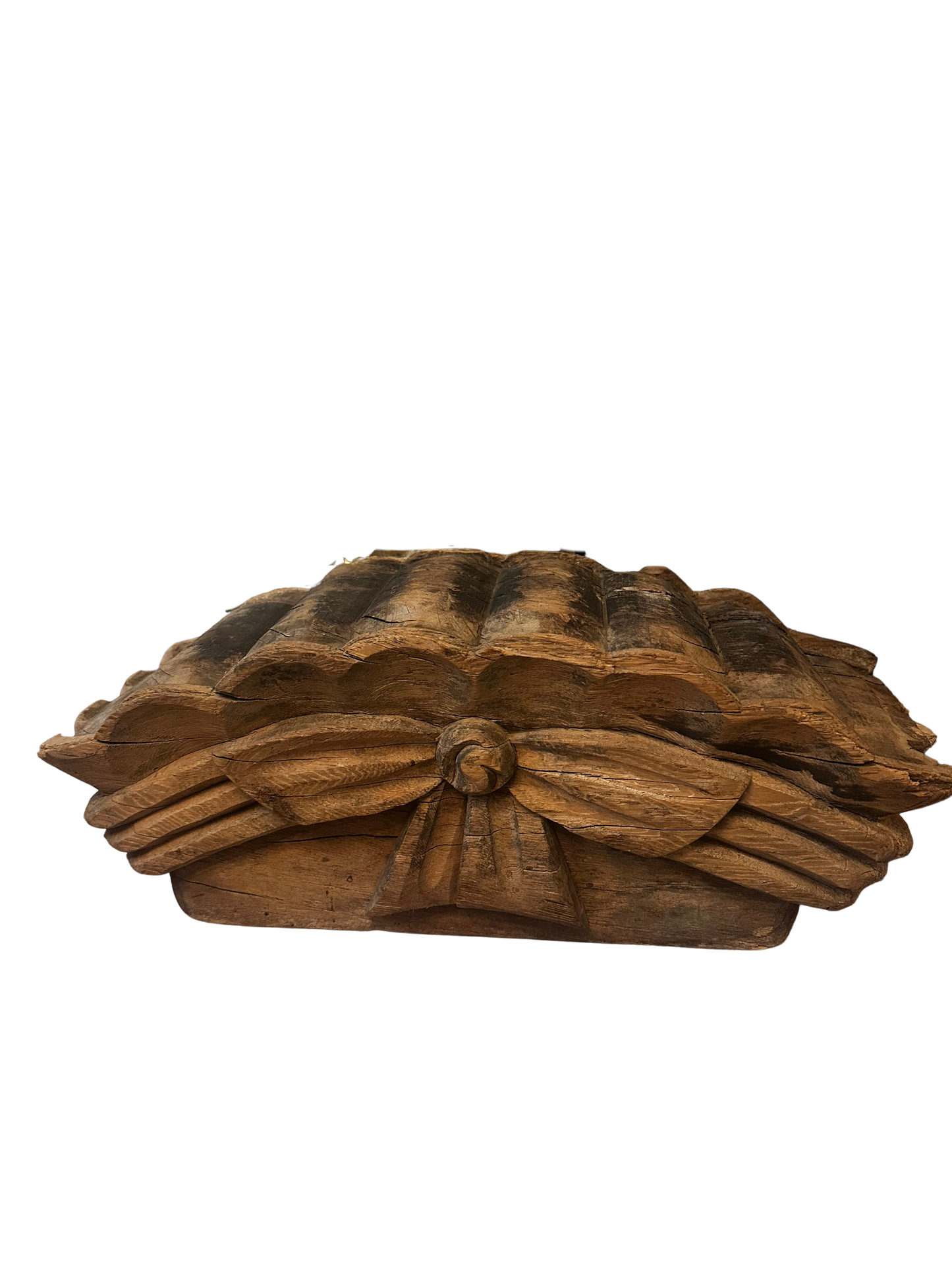
A striking monumental carved wooden architectural fragment modeled in the form of overlapping barrel roof tiles surmounted by an elaborate ribbon or bow motif centered with a carved rosette. This substantial decorative element was likely once mounted as an exterior or interior architectural embellishment, possibly from a grand European building, garden structure, theatrical façade, or large-scale furniture/canopy element.
The carving displays strong sculptural depth and highly expressive hand-tool work throughout. The simulated roof tiles are deeply rounded and rhythmically carved, creating dramatic shadow lines across the surface. Beneath them sits an elegant tied ribbon carving with layered folds radiating outward from a central knop, suggesting Baroque or Rococo influence interpreted through rustic architectural carving traditions.
The reverse reveals extensive age, hand-hewn tool marks, oxidation, shrinkage cracks, and old mounting evidence, strongly supporting genuine age and architectural use rather than modern decorative production. The weathered surface and darkened patina indicate prolonged exposure and natural aging over many decades.
Its scale and bold silhouette make it an exceptional decorative statement piece for use atop doorways, incorporated into gallery walls, or displayed as sculptural architectural salvage in grand interiors.
Era:
Likely 18th to 19th Century
History:
Large carved wooden architectural ornaments such as this were commonly used throughout Europe to embellish rooflines, overdoors, pavilions, cabinetry, ecclesiastical furnishings, and theatrical or garden architecture. Stylized roof tile motifs often referenced vernacular architecture while ribbon and rosette carvings reflected Baroque and Rococo decorative vocabulary that remained influential well into the 19th century.
Architectural salvage of this nature has become increasingly desirable among collectors, interior designers, and restoration specialists due to its sculptural presence and irreplaceable hand-carved character.
Provenance:
Architectural salvage from a private estate collection.
Materials:
Hand-carved hardwood with heavily aged surface and natural patina.
Dimensions:
[Insert Dimensions]
Disclaimers:
Extensive age-related wear throughout including shrinkage cracks, surface losses, weathering, abrasions, darkened oxidation, and possible historic repairs or mounting alterations consistent with architectural use. Structurally heavy and substantial. Wear consistent with centuries of age and exposure enhances the authenticity and sculptural character of the piece.
Additional Description:
A striking monumental carved wooden architectural fragment modeled in the form of overlapping barrel roof tiles surmounted by an elaborate ribbon or bow motif centered with a carved rosette. This substantial decorative element was likely once mounted as an exterior or interior architectural embellishment, possibly from a grand European building, garden structure, theatrical façade, or large-scale furniture/canopy element.
The carving displays strong sculptural depth and highly expressive hand-tool work throughout. The simulated roof tiles are deeply rounded and rhythmically carved, creating dramatic shadow lines across the surface. Beneath them sits an elegant tied ribbon carving with layered folds radiating outward from a central knop, suggesting Baroque or Rococo influence interpreted through rustic architectural carving traditions.
The reverse reveals extensive age, hand-hewn tool marks, oxidation, shrinkage cracks, and old mounting evidence, strongly supporting genuine age and architectural use rather than modern decorative production. The weathered surface and darkened patina indicate prolonged exposure and natural aging over many decades.
Its scale and bold silhouette make it an exceptional decorative statement piece for use atop doorways, incorporated into gallery walls, or displayed as sculptural architectural salvage in grand interiors.
Era:
Likely 18th to 19th Century
History:
Large carved wooden architectural ornaments such as this were commonly used throughout Europe to embellish rooflines, overdoors, pavilions, cabinetry, ecclesiastical furnishings, and theatrical or garden architecture. Stylized roof tile motifs often referenced vernacular architecture while ribbon and rosette carvings reflected Baroque and Rococo decorative vocabulary that remained influential well into the 19th century.
Architectural salvage of this nature has become increasingly desirable among collectors, interior designers, and restoration specialists due to its sculptural presence and irreplaceable hand-carved character.
Provenance:
Architectural salvage from a private estate collection.
Materials:
Hand-carved hardwood with heavily aged surface and natural patina.
Dimensions:
[Insert Dimensions]
Disclaimers:
Extensive age-related wear throughout including shrinkage cracks, surface losses, weathering, abrasions, darkened oxidation, and possible historic repairs or mounting alterations consistent with architectural use. Structurally heavy and substantial. Wear consistent with centuries of age and exposure enhances the authenticity and sculptural character of the piece.