


Napoleon III French Boulle-Style Fitted Dressing Case with Minerva Silver Appointments and Monogrammed Cartouche
Napoleon III French Boulle-Style Fitted Dressing Case with Minerva Silver Appointments and Monogrammed Cartouche
No se pudo cargar la disponibilidad de retiro
Compartir


An elegant and complete mid-19th century French vanity/dressing case, executed in the richly decorative Napoleon III taste. The exterior is finished in ebonized wood with refined brass stringing and a central boulle-style cartouche featuring intricate gilt scrollwork set against a tortoiseshell ground, centered with the monogram “GN.”
The hinged lid opens to reveal a fitted interior with mirror and a finely organized arrangement of silver-mounted toiletry implements. The set includes multiple engine-turned silver lids and boxes, each decorated with rococo-style cartouches, along with original glass bottles and jars. Beneath the upper tray, the case retains hidden compartments and drawers lined in deep red velvet, demonstrating the sophisticated utility and craftsmanship expected of high-quality French travel necessaires of the period.
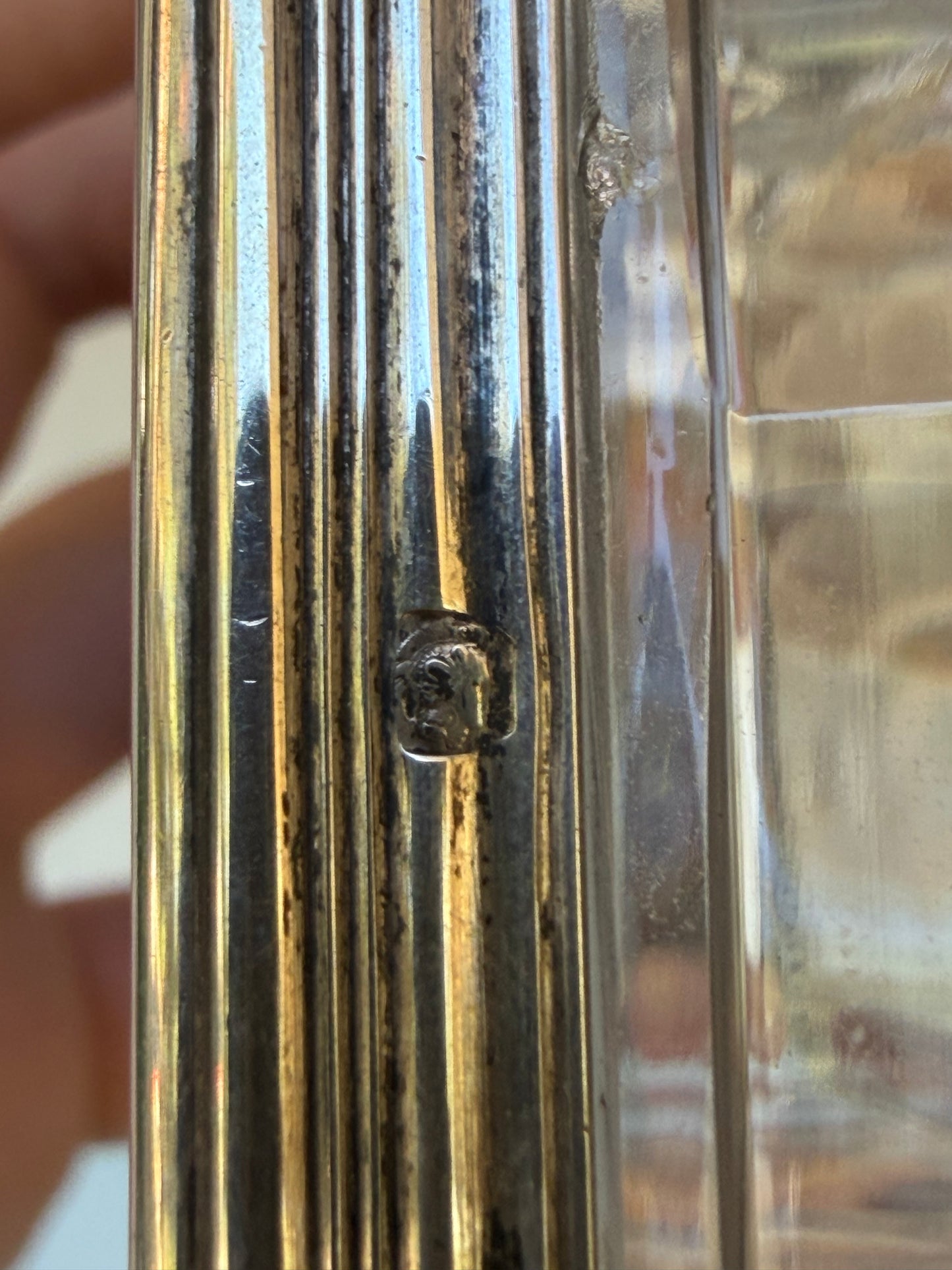
The silver elements are struck with the French Minerva hallmark, confirming solid silver content.
Also included is a later addition: a compact leather-clad lighter by P. Hamm of Paris, dating to the early 20th century, reflecting the continued use and evolution of the case across generations.
A refined and highly displayable object, combining craftsmanship, functionality, and historical charm—ideal for collectors of French decorative arts or luxury travel accessories.
An elegant and complete mid-19th century French vanity/dressing case, executed in the richly decorative Napoleon III taste. The exterior is finished in ebonized wood with refined brass stringing and a central boulle-style cartouche featuring intricate gilt scrollwork set against a tortoiseshell ground, centered with the monogram “GN.”
The hinged lid opens to reveal a fitted interior with mirror and a finely organized arrangement of silver-mounted toiletry implements. The set includes multiple engine-turned silver lids and boxes, each decorated with rococo-style cartouches, along with original glass bottles and jars. Beneath the upper tray, the case retains hidden compartments and drawers lined in deep red velvet, demonstrating the sophisticated utility and craftsmanship expected of high-quality French travel necessaires of the period.
The silver elements are struck with the French Minerva hallmark, confirming solid silver content.
Also included is a later addition: a compact leather-clad lighter by P. Hamm of Paris, dating to the early 20th century, reflecting the continued use and evolution of the case across generations.
A refined and highly displayable object, combining craftsmanship, functionality, and historical charm—ideal for collectors of French decorative arts or luxury travel accessories.
5.5"h x 11.25"w x 8.75"d
5.5"h x 11.25"w x 8.75"d
Dressing/vanity cases such as this were essential travel companions for well-appointed gentlemen and women of the 19th century, particularly during the Second Empire in France. Designed for both practicality and elegance, these cases often featured bespoke fittings and luxurious materials. The use of boulle-style decoration reflects the revival of earlier 18th-century techniques popularized under Napoleon III, while the inclusion of Minerva-marked silver attests to regulated French production standards following 1838.
The later addition of a Parisian P. Hamm lighter illustrates the continued life of the object into the Belle Époque, when such cases remained in use and were occasionally updated with modern conveniences.
Dressing/vanity cases such as this were essential travel companions for well-appointed gentlemen and women of the 19th century, particularly during the Second Empire in France. Designed for both practicality and elegance, these cases often featured bespoke fittings and luxurious materials. The use of boulle-style decoration reflects the revival of earlier 18th-century techniques popularized under Napoleon III, while the inclusion of Minerva-marked silver attests to regulated French production standards following 1838.
The later addition of a Parisian P. Hamm lighter illustrates the continued life of the object into the Belle Époque, when such cases remained in use and were occasionally updated with modern conveniences.
Mid–Late 19th Century, Napoleon III Period (circa 1850–1875), with later early 20th century additions
Mid–Late 19th Century, Napoleon III Period (circa 1850–1875), with later early 20th century additions
Ebonized wood, brass inlay, tortoiseshell, mirror plate, velvet lining, glass, solid silver (Minerva hallmark), leather (lighter)
Ebonized wood, brass inlay, tortoiseshell, mirror plate, velvet lining, glass, solid silver (Minerva hallmark), leather (lighter)
French; acquired in France
French; acquired in France
Wear consistent with age and use, including minor losses to the tortoiseshell and brass inlay, surface wear to the exterior, and age-related wear to the interior velvet lining. Silver surfaces show expected patina and light wear. Overall condition remains very good for age, with the set notably complete.
Wear consistent with age and use, including minor losses to the tortoiseshell and brass inlay, surface wear to the exterior, and age-related wear to the interior velvet lining. Silver surfaces show expected patina and light wear. Overall condition remains very good for age, with the set notably complete.