


Neoclassical Marble and Brass Pedestal Display Stand
Neoclassical Marble and Brass Pedestal Display Stand
No se pudo cargar la disponibilidad de retiro
Compartir
Item: Neoclassical Marble and Brass Pedestal Display Stand
Additional Description
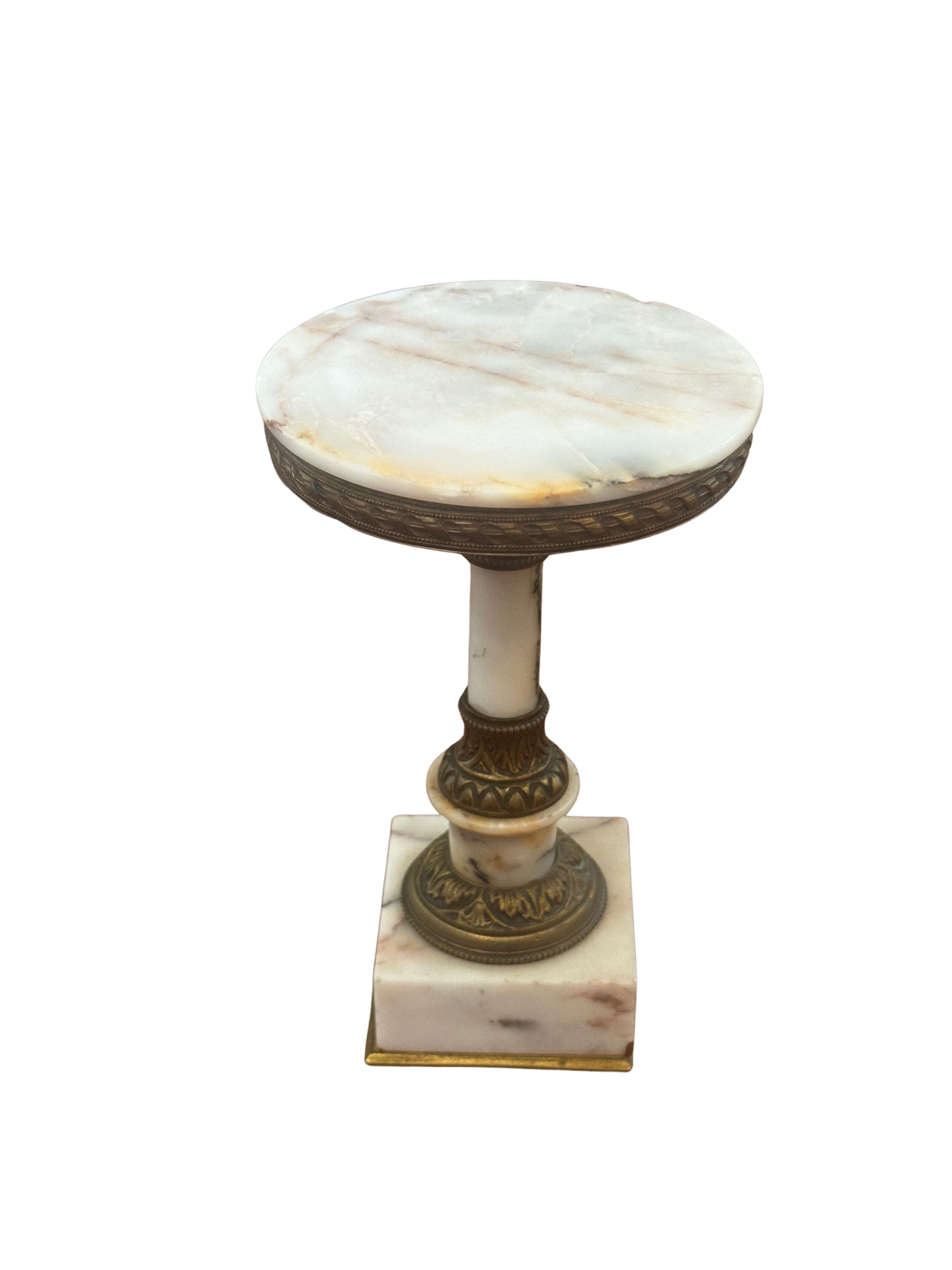
Elegant decorative pedestal crafted from white and pink-veined marble with cast brass mounts in a Neoclassical taste. The form features a circular marble platform supported by a central marble column accented with finely cast brass collars displaying anthemion and foliate motifs. The square marble plinth base is finished with a brass foot rim.
The piece was likely intended as a display stand for a small sculpture, clock garniture component, religious figure, vase, specimen, or treasured decorative object. The restrained classical styling and quality stonework make it highly adaptable within French, Empire, Louis XVI, or Grand Tour-inspired interiors.
Era
Late 19th to early 20th century (circa 1880–1920).
History
Marble and gilt-metal pedestal stands became popular decorative accessories during the late Victorian and Belle Époque periods. Drawing inspiration from Classical Greek and Roman architecture, makers produced small-scale pedestals designed to elevate bronzes, porcelain, religious figures, and other collectibles within the home.
Examples were produced in France, Italy, Belgium, and Austria and were often sold as companion pieces to marble clocks, garnitures, and cabinet displays.
Provenance
Private collection.
Materials
Marble (likely alabaster or decorative marble)
Cast brass or ormolu-style mounts
Brass-clad base
Dimensions
Dimensions not provided.
Condition
Surface wear consistent with age
Chips and losses visible along the edge of the upper marble platform
Minor discoloration and age-related staining to marble
Light oxidation and wear to brass mounts
Structurally sound and displays well
Disclaimers
Country of origin has not been confirmed. Attribution is based on construction, materials, and decorative style visible in the photographs. Marble may be decorative alabaster or marble depending upon geological composition and would require in-hand examination for definitive identification.
Item: Neoclassical Marble and Brass Pedestal Display Stand
Additional Description
Elegant decorative pedestal crafted from white and pink-veined marble with cast brass mounts in a Neoclassical taste. The form features a circular marble platform supported by a central marble column accented with finely cast brass collars displaying anthemion and foliate motifs. The square marble plinth base is finished with a brass foot rim.
The piece was likely intended as a display stand for a small sculpture, clock garniture component, religious figure, vase, specimen, or treasured decorative object. The restrained classical styling and quality stonework make it highly adaptable within French, Empire, Louis XVI, or Grand Tour-inspired interiors.
Era
Late 19th to early 20th century (circa 1880–1920).
History
Marble and gilt-metal pedestal stands became popular decorative accessories during the late Victorian and Belle Époque periods. Drawing inspiration from Classical Greek and Roman architecture, makers produced small-scale pedestals designed to elevate bronzes, porcelain, religious figures, and other collectibles within the home.
Examples were produced in France, Italy, Belgium, and Austria and were often sold as companion pieces to marble clocks, garnitures, and cabinet displays.
Provenance
Private collection.
Materials
Marble (likely alabaster or decorative marble)
Cast brass or ormolu-style mounts
Brass-clad base
Dimensions
Dimensions not provided.
Condition
Surface wear consistent with age
Chips and losses visible along the edge of the upper marble platform
Minor discoloration and age-related staining to marble
Light oxidation and wear to brass mounts
Structurally sound and displays well
Disclaimers
Country of origin has not been confirmed. Attribution is based on construction, materials, and decorative style visible in the photographs. Marble may be decorative alabaster or marble depending upon geological composition and would require in-hand examination for definitive identification.