

Pair of 18th C Baroque Polychromed Carved Wood Architectural Fragments
Pair of 18th C Baroque Polychromed Carved Wood Architectural Fragments
No se pudo cargar la disponibilidad de retiro
Compartir
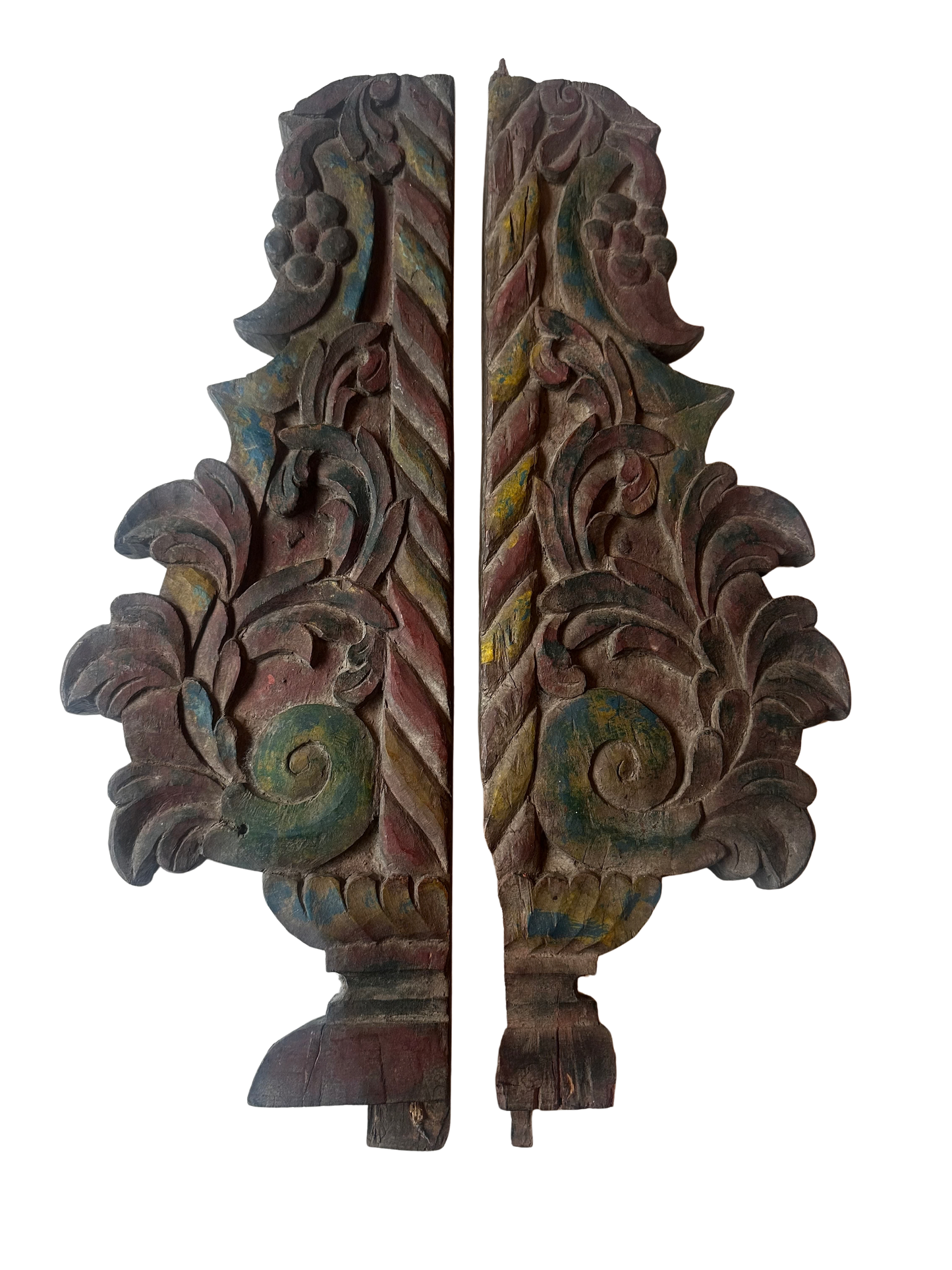
Additional Description: A striking pair of Baroque carved wood architectural fragments retaining traces of their original polychrome decoration. The panels feature deeply carved acanthus scrollwork flanking a twisted Solomonic-style central band, a motif commonly associated with Baroque altar and retable architecture of the late 17th and early 18th centuries.
The carvings display layered traces of historic pigments—including iron red, ochre yellow, verdigris green, and mineral blue—applied directly to the carved surface. Over centuries these pigments have oxidized and softened into a beautifully muted patina, giving the panels remarkable depth and visual texture.
Each piece was originally part of a larger architectural structure, likely an altar surround, column decoration, or ecclesiastical retable element. Evidence of old joinery and hand-hewn construction can still be seen on the reverse, including early tool marks and remnants of mounting points where the carvings would have been affixed to a larger framework.
The scrolling acanthus ornament and twisted banding are characteristic of Baroque decorative vocabulary, particularly within Southern European church interiors where richly carved and painted wood elements were used extensively to frame altars, statues, and tabernacles.
Today these fragments function beautifully as decorative wall objects, offering both sculptural presence and historical character.
Era: Late 17th – Early 18th Century (Baroque Period)
History: Baroque churches and altarpieces were often richly ornamented with carved wood elements that were then painted in multiple colors or gilded. This technique, known as polychromy, was widely used across Southern Europe—including Spain, Italy, and Portugal—to bring sculptural architectural decoration to life within dimly lit church interiors.
Over time many Baroque retables and altar structures were dismantled during renovations or architectural changes in the 19th and early 20th centuries. Surviving fragments such as these are often preserved as individual decorative pieces, valued for both their craftsmanship and their historical connection to ecclesiastical architecture.
The twisted band motif seen on these panels recalls the Solomonic column form that became popular in Baroque altar design following the influential baldachin created by Gian Lorenzo Bernini in St. Peter’s Basilica.
Provenance: Austin, TX / Likely Southern Europe
Materials: Hand-carved wood with remnants of original polychrome paint.
Dimensions; 18"h x 6.25" (Each)
Disclaimers: Wear consistent with age and use. Losses to original paint and areas of historic surface wear are present and expected for architectural elements of this age. Minor structural losses to mounting areas on the reverse from their original installation.
Additional Description: A striking pair of Baroque carved wood architectural fragments retaining traces of their original polychrome decoration. The panels feature deeply carved acanthus scrollwork flanking a twisted Solomonic-style central band, a motif commonly associated with Baroque altar and retable architecture of the late 17th and early 18th centuries.
The carvings display layered traces of historic pigments—including iron red, ochre yellow, verdigris green, and mineral blue—applied directly to the carved surface. Over centuries these pigments have oxidized and softened into a beautifully muted patina, giving the panels remarkable depth and visual texture.
Each piece was originally part of a larger architectural structure, likely an altar surround, column decoration, or ecclesiastical retable element. Evidence of old joinery and hand-hewn construction can still be seen on the reverse, including early tool marks and remnants of mounting points where the carvings would have been affixed to a larger framework.
The scrolling acanthus ornament and twisted banding are characteristic of Baroque decorative vocabulary, particularly within Southern European church interiors where richly carved and painted wood elements were used extensively to frame altars, statues, and tabernacles.
Today these fragments function beautifully as decorative wall objects, offering both sculptural presence and historical character.
Era: Late 17th – Early 18th Century (Baroque Period)
History: Baroque churches and altarpieces were often richly ornamented with carved wood elements that were then painted in multiple colors or gilded. This technique, known as polychromy, was widely used across Southern Europe—including Spain, Italy, and Portugal—to bring sculptural architectural decoration to life within dimly lit church interiors.
Over time many Baroque retables and altar structures were dismantled during renovations or architectural changes in the 19th and early 20th centuries. Surviving fragments such as these are often preserved as individual decorative pieces, valued for both their craftsmanship and their historical connection to ecclesiastical architecture.
The twisted band motif seen on these panels recalls the Solomonic column form that became popular in Baroque altar design following the influential baldachin created by Gian Lorenzo Bernini in St. Peter’s Basilica.
Provenance: Austin, TX / Likely Southern Europe
Materials: Hand-carved wood with remnants of original polychrome paint.
Dimensions; 18"h x 6.25" (Each)
Disclaimers: Wear consistent with age and use. Losses to original paint and areas of historic surface wear are present and expected for architectural elements of this age. Minor structural losses to mounting areas on the reverse from their original installation.