


Polychromed Carved Wooden Figure of a Franciscan Saint
Polychromed Carved Wooden Figure of a Franciscan Saint
No se pudo cargar la disponibilidad de retiro
Compartir
Item: Polychromed Carved Wooden Figure of a Franciscan Saint
Additional Description
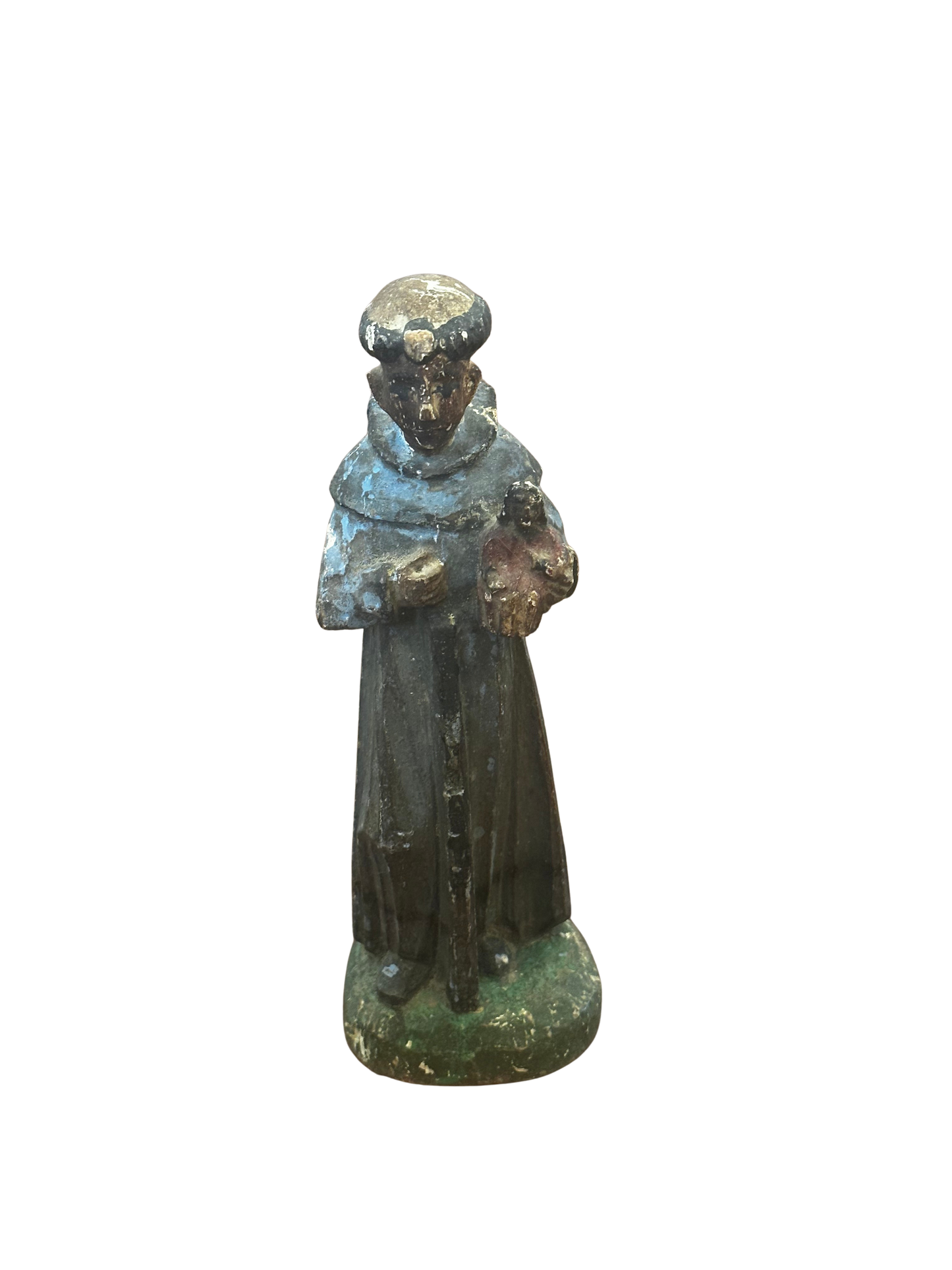
Hand-carved devotional sculpture depicting a Franciscan friar standing in traditional habit and holding a small religious figure, likely the Christ Child. The saint is shown with a tonsured hairstyle, long robe, and simple corded habit characteristic of Franciscan iconography. Traces of the original polychrome decoration survive throughout, including black, blue-gray, red, green, and gilt accents. The carving possesses a charming folk-art quality with simplified facial features and strong vertical drapery folds.
The figure was likely intended for a domestic shrine, chapel setting, or religious display rather than a formal church altar.
Era
Likely 19th century, possibly late 18th to early 19th century.
History
Franciscan devotional figures were widely produced throughout Catholic Europe and Latin America, particularly in regions influenced by Franciscan missionary activity. Saints such as St. Anthony of Padua are frequently depicted carrying the Christ Child, symbolizing visions associated with the saint's life. Folk devotional carvings often prioritized spiritual expression over academic realism, resulting in highly distinctive regional styles.
Based on the simplified carving, surviving polychromy, and construction, this example appears more consistent with a provincial devotional carving than a later decorative reproduction.
Provenance
Private collection.
Materials
Hand-carved wood
Polychrome painted surface
Traces of gilt decoration
Dimensions
Dimensions not provided.
Condition
Significant surface wear and paint loss throughout
Age-related cracking and shrinkage to the wood
Losses to carved details and extremities
Heavy wear to the base
Stable overall with attractive aged surface and patina
Disclaimers
Identification as a Franciscan saint, potentially St. Anthony of Padua, is based on iconographic characteristics visible in the photographs. Exact saint attribution, region of origin, and date cannot be guaranteed without further examination. Evidence of age, wear, and surviving original polychromy support an antique devotional origin.
Item: Polychromed Carved Wooden Figure of a Franciscan Saint
Additional Description
Hand-carved devotional sculpture depicting a Franciscan friar standing in traditional habit and holding a small religious figure, likely the Christ Child. The saint is shown with a tonsured hairstyle, long robe, and simple corded habit characteristic of Franciscan iconography. Traces of the original polychrome decoration survive throughout, including black, blue-gray, red, green, and gilt accents. The carving possesses a charming folk-art quality with simplified facial features and strong vertical drapery folds.
The figure was likely intended for a domestic shrine, chapel setting, or religious display rather than a formal church altar.
Era
Likely 19th century, possibly late 18th to early 19th century.
History
Franciscan devotional figures were widely produced throughout Catholic Europe and Latin America, particularly in regions influenced by Franciscan missionary activity. Saints such as St. Anthony of Padua are frequently depicted carrying the Christ Child, symbolizing visions associated with the saint's life. Folk devotional carvings often prioritized spiritual expression over academic realism, resulting in highly distinctive regional styles.
Based on the simplified carving, surviving polychromy, and construction, this example appears more consistent with a provincial devotional carving than a later decorative reproduction.
Provenance
Private collection.
Materials
Hand-carved wood
Polychrome painted surface
Traces of gilt decoration
Dimensions
Dimensions not provided.
Condition
Significant surface wear and paint loss throughout
Age-related cracking and shrinkage to the wood
Losses to carved details and extremities
Heavy wear to the base
Stable overall with attractive aged surface and patina
Disclaimers
Identification as a Franciscan saint, potentially St. Anthony of Padua, is based on iconographic characteristics visible in the photographs. Exact saint attribution, region of origin, and date cannot be guaranteed without further examination. Evidence of age, wear, and surviving original polychromy support an antique devotional origin.