

Rococo Revival Brass Double Inkwell Desk Stand with Heraldic Griffins and Maskaron Mount
Rococo Revival Brass Double Inkwell Desk Stand with Heraldic Griffins and Maskaron Mount
No se pudo cargar la disponibilidad de retiro
Compartir
Additional Description:
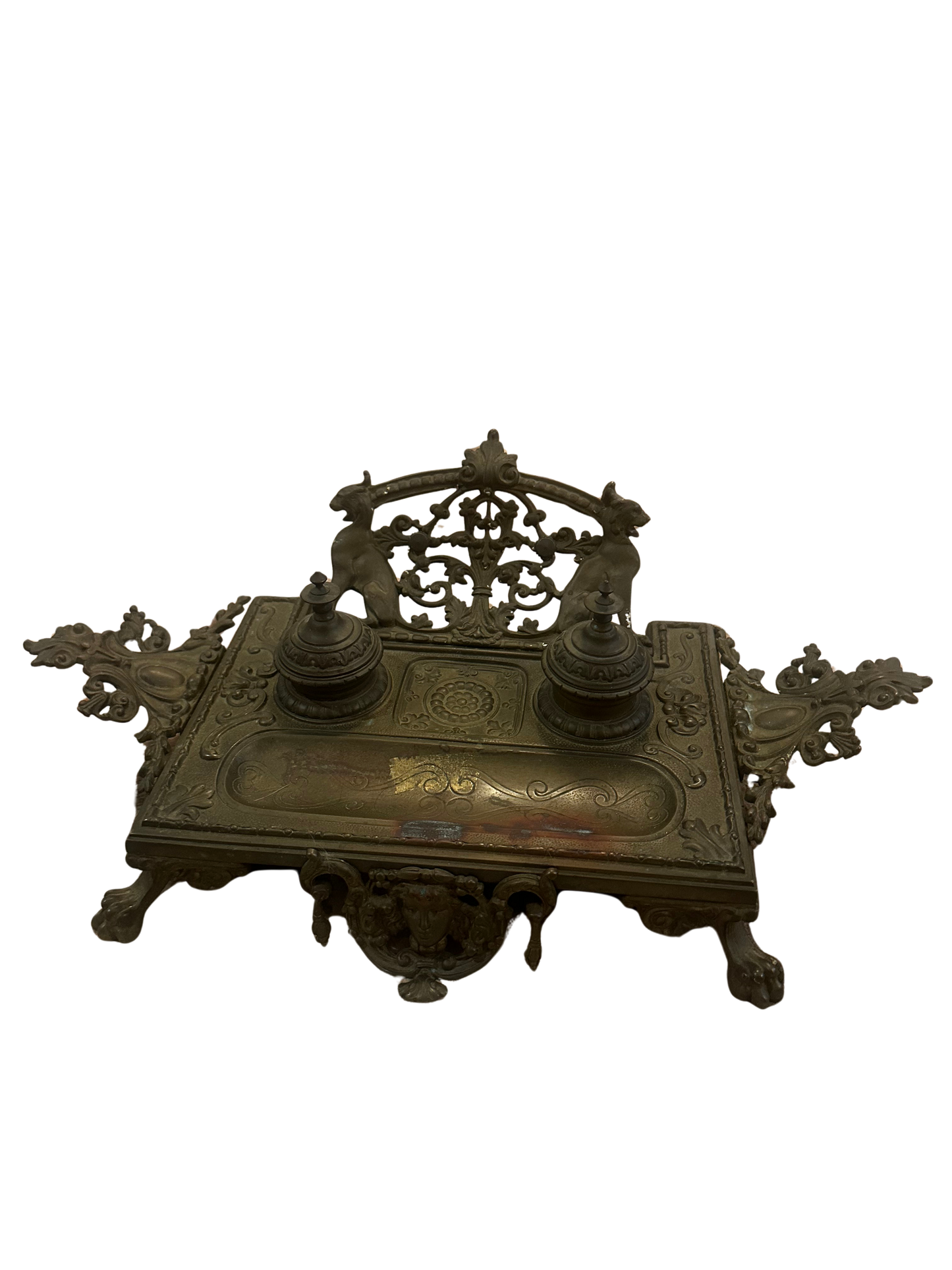
An exceptionally ornate and visually commanding Rococo Revival double inkwell stand or writing desk set, executed in richly cast bronze or brass with elaborate scrolling ornament throughout. The rectangular base is lavishly decorated with deeply modeled foliate scrollwork, textured grounds, and molded borders, supported by expressive paw feet and centered with a dramatic female maskaron mount to the front apron.
The rear gallery features an extraordinary pierced crest with symmetrical scrolling foliage surmounted by two opposing heraldic griffins or mythical beasts posed in profile. This architectural backplate creates a striking silhouette and strongly evokes the theatrical decorative arts of the Napoleon III period.
The fitted top retains two lidded inkwells with matching domed covers and classical detailing. The center appears to contain a pen rest or blotter support area, while the flanking openwork side handles or extensions add additional decorative grandeur and balance to the composition.
The piece displays a beautiful aged surface with warm brown-bronze patination throughout, accompanied by remnants of earlier gilding or lacquered finish. Particularly notable is the sculptural quality of the casting — from the crisp acanthus ornament to the expressive mask and heraldic beasts — giving the piece an architectural presence beyond that of a standard desk accessory.
This is a highly decorative statement object equally suitable for display in maximalist interiors, gothic revival collections, grand libraries, or curated antique desk arrangements.
Era:
Mid to Late 19th Century
circa 1860–1890
Napoleon III / Rococo Revival Period
History:
During the 19th century, elaborate writing stands and desk garnitures became important decorative elements in affluent European interiors. French and continental workshops produced increasingly theatrical examples during the Napoleon III era, drawing inspiration from Rococo, Gothic Revival, Renaissance Revival, and Baroque precedents.
Luxury inkwells of this type were intended for formal studies, libraries, salons, and executive desks, serving both practical and ornamental purposes. Highly sculptural examples incorporating heraldic creatures, masks, paw feet, and pierced galleries were especially favored during the Victorian and Second Empire periods.
The combination of griffin-like creatures, rocaille ornament, and architectural openwork seen here reflects the eclectic historicism so characteristic of late 19th century decorative arts.
Provenance:
Continental European; acquired from an antique collection.
Materials:
Cast bronze or brass
Patinated metal surface
Hinged lidded inkwells
High relief cast ornamentation
Dimensions:
Dimensions not provided.
Disclaimers:
Age-related wear, oxidation, finish loss, and surface patina throughout consistent with antique use.
Residue, discoloration, and scattered surface wear visible to top surfaces.
One or more internal inserts may be later, missing, or incomplete.
Sold as a decorative antique desk accessory and display object.
Exact maker attribution unknown.
Additional Description:
An exceptionally ornate and visually commanding Rococo Revival double inkwell stand or writing desk set, executed in richly cast bronze or brass with elaborate scrolling ornament throughout. The rectangular base is lavishly decorated with deeply modeled foliate scrollwork, textured grounds, and molded borders, supported by expressive paw feet and centered with a dramatic female maskaron mount to the front apron.
The rear gallery features an extraordinary pierced crest with symmetrical scrolling foliage surmounted by two opposing heraldic griffins or mythical beasts posed in profile. This architectural backplate creates a striking silhouette and strongly evokes the theatrical decorative arts of the Napoleon III period.
The fitted top retains two lidded inkwells with matching domed covers and classical detailing. The center appears to contain a pen rest or blotter support area, while the flanking openwork side handles or extensions add additional decorative grandeur and balance to the composition.
The piece displays a beautiful aged surface with warm brown-bronze patination throughout, accompanied by remnants of earlier gilding or lacquered finish. Particularly notable is the sculptural quality of the casting — from the crisp acanthus ornament to the expressive mask and heraldic beasts — giving the piece an architectural presence beyond that of a standard desk accessory.
This is a highly decorative statement object equally suitable for display in maximalist interiors, gothic revival collections, grand libraries, or curated antique desk arrangements.
Era:
Mid to Late 19th Century
circa 1860–1890
Napoleon III / Rococo Revival Period
History:
During the 19th century, elaborate writing stands and desk garnitures became important decorative elements in affluent European interiors. French and continental workshops produced increasingly theatrical examples during the Napoleon III era, drawing inspiration from Rococo, Gothic Revival, Renaissance Revival, and Baroque precedents.
Luxury inkwells of this type were intended for formal studies, libraries, salons, and executive desks, serving both practical and ornamental purposes. Highly sculptural examples incorporating heraldic creatures, masks, paw feet, and pierced galleries were especially favored during the Victorian and Second Empire periods.
The combination of griffin-like creatures, rocaille ornament, and architectural openwork seen here reflects the eclectic historicism so characteristic of late 19th century decorative arts.
Provenance:
Continental European; acquired from an antique collection.
Materials:
Cast bronze or brass
Patinated metal surface
Hinged lidded inkwells
High relief cast ornamentation
Dimensions:
Dimensions not provided.
Disclaimers:
Age-related wear, oxidation, finish loss, and surface patina throughout consistent with antique use.
Residue, discoloration, and scattered surface wear visible to top surfaces.
One or more internal inserts may be later, missing, or incomplete.
Sold as a decorative antique desk accessory and display object.
Exact maker attribution unknown.