

Victorian Engraved Silverplate Biscuit Barrel on Paw Feet by Henry Wilkinson and Co.
Victorian Engraved Silverplate Biscuit Barrel on Paw Feet by Henry Wilkinson and Co.
No se pudo cargar la disponibilidad de retiro
Compartir
Additional Description:
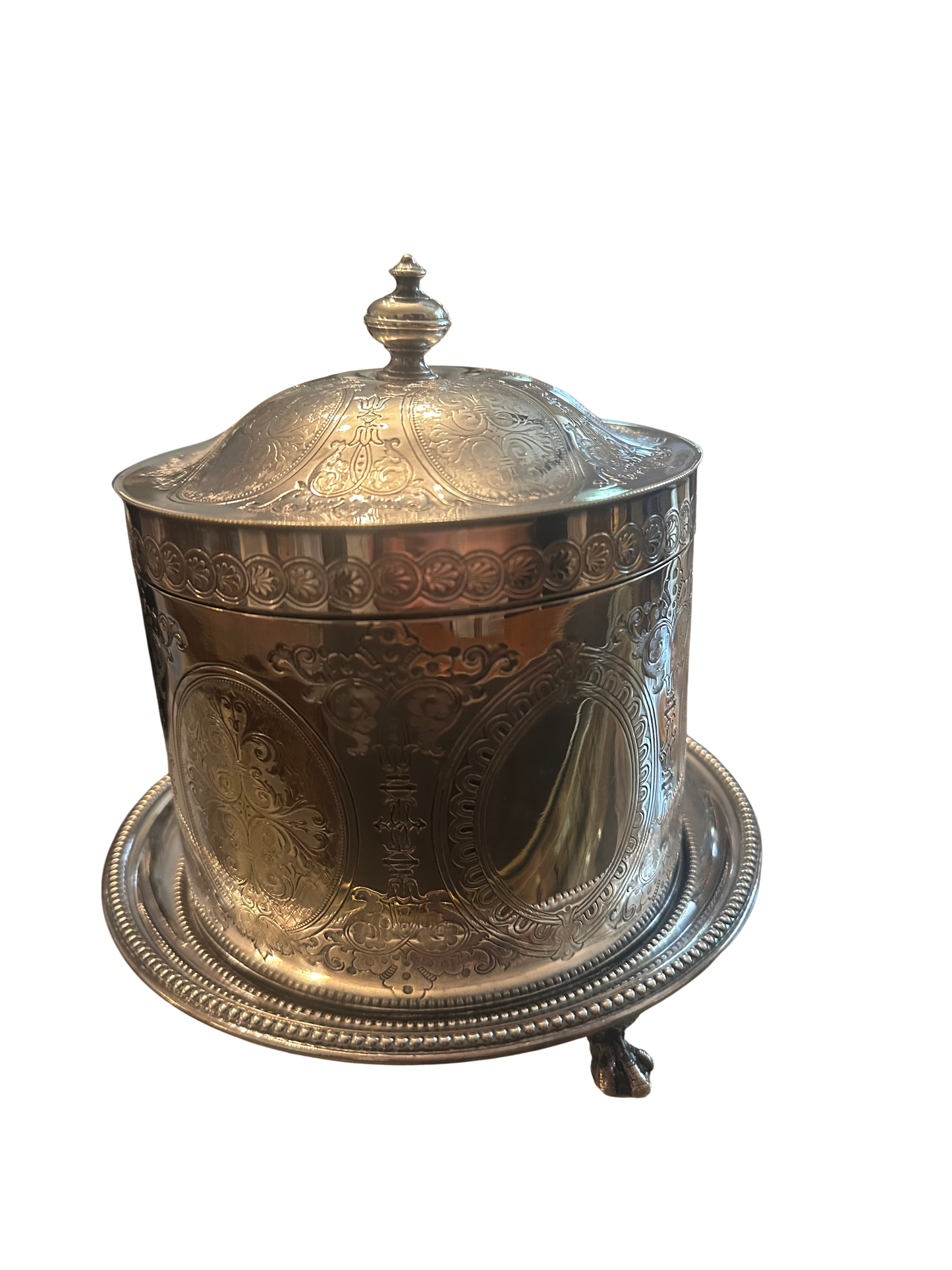
A richly ornamented Victorian silverplate biscuit barrel by Henry Wilkinson & Co., executed in an elaborate late 19th-century Renaissance Revival and Aesthetic Movement style. This handsome cylindrical form features deeply engraved decoration throughout, including scrolling foliate motifs, stylized anthemion borders, intricate engine-turned oval cartouches, and architectural-inspired ornamentation that reflects the lavish decorative arts aesthetic of the Victorian era.
The domed hinged lid is crowned with a turned finial and carries matching engraved decoration that flows seamlessly into the body below. The barrel rests within its original integrated undertray with beaded edging and distinctive animal paw feet, lending the piece both visual grandeur and stability. The engraved oval reserves and repeating decorative bands create a striking play of texture and reflected light across the polished silverplate surface.
Originally intended for serving biscuits or sweets during formal tea service, pieces such as this were central decorative objects in upper-class Victorian parlors and dining rooms. The form balances utility with highly ornamental craftsmanship, embodying the Victorian fascination with luxury domestic objects.
The underside bears English electroplate marks attributed to Henry Wilkinson & Co. of Sheffield, including “HW & Co,” decorative pseudo hallmarks, “EP” for electroplate, and a crossed keys device.
Era:
Late Victorian period, circa 1870–1890.
History:
During the Victorian era, elaborate silverplate serving wares became increasingly popular as tea culture expanded among the English middle and upper classes. Sheffield manufacturers such as Henry Wilkinson & Co. produced highly decorative electroplated wares that imitated the richness of sterling silver while remaining more accessible to affluent households. Biscuit barrels became fashionable table accessories used for serving biscuits, sweets, and confections during afternoon tea and formal entertaining.
Provenance:
Made in Sheffield, England by Henry Wilkinson & Co..
Materials:
Silverplate over metal, engraved electroplate.
Dimensions:
[Insert dimensions]
Disclaimers:
Age-related wear present including surface scratches, tarnish, areas of rubbing to the silverplate, and interior oxidation consistent with age and use. Minor imperfections and wear from handling and polishing over time. Please review photographs carefully for condition details.
Additional Description:
A richly ornamented Victorian silverplate biscuit barrel by Henry Wilkinson & Co., executed in an elaborate late 19th-century Renaissance Revival and Aesthetic Movement style. This handsome cylindrical form features deeply engraved decoration throughout, including scrolling foliate motifs, stylized anthemion borders, intricate engine-turned oval cartouches, and architectural-inspired ornamentation that reflects the lavish decorative arts aesthetic of the Victorian era.
The domed hinged lid is crowned with a turned finial and carries matching engraved decoration that flows seamlessly into the body below. The barrel rests within its original integrated undertray with beaded edging and distinctive animal paw feet, lending the piece both visual grandeur and stability. The engraved oval reserves and repeating decorative bands create a striking play of texture and reflected light across the polished silverplate surface.
Originally intended for serving biscuits or sweets during formal tea service, pieces such as this were central decorative objects in upper-class Victorian parlors and dining rooms. The form balances utility with highly ornamental craftsmanship, embodying the Victorian fascination with luxury domestic objects.
The underside bears English electroplate marks attributed to Henry Wilkinson & Co. of Sheffield, including “HW & Co,” decorative pseudo hallmarks, “EP” for electroplate, and a crossed keys device.
Era:
Late Victorian period, circa 1870–1890.
History:
During the Victorian era, elaborate silverplate serving wares became increasingly popular as tea culture expanded among the English middle and upper classes. Sheffield manufacturers such as Henry Wilkinson & Co. produced highly decorative electroplated wares that imitated the richness of sterling silver while remaining more accessible to affluent households. Biscuit barrels became fashionable table accessories used for serving biscuits, sweets, and confections during afternoon tea and formal entertaining.
Provenance:
Made in Sheffield, England by Henry Wilkinson & Co..
Materials:
Silverplate over metal, engraved electroplate.
Dimensions:
[Insert dimensions]
Disclaimers:
Age-related wear present including surface scratches, tarnish, areas of rubbing to the silverplate, and interior oxidation consistent with age and use. Minor imperfections and wear from handling and polishing over time. Please review photographs carefully for condition details.