


18th-Century French Ornamental Panel Engraving by Salembier
18th-Century French Ornamental Panel Engraving by Salembier
Couldn't load pickup availability
Share


An engraved ornamental design sheet printed in warm sanguine ink, featuring two vertically oriented decorative panels with neoclassical trophy compositions. The motifs include musical instruments, garden implements, urns, garlands, cherubs, and scrolling foliage arranged in symmetrical Louis XVI-style panel designs.
The sheet is signed in the plate at lower left:
“Salembier fecit” (Salembier made this)
A handwritten plate number “97” appears in the upper right margin.
The engraving is printed on laid paper with visible plate impression and wide margins. The reddish-brown ink and delicate ornamental linework are characteristic of late-18th-century French decorative engravings intended for designers, cabinetmakers, and interior decorators.
An engraved ornamental design sheet printed in warm sanguine ink, featuring two vertically oriented decorative panels with neoclassical trophy compositions. The motifs include musical instruments, garden implements, urns, garlands, cherubs, and scrolling foliage arranged in symmetrical Louis XVI-style panel designs.
The sheet is signed in the plate at lower left:
“Salembier fecit” (Salembier made this)
A handwritten plate number “97” appears in the upper right margin.
The engraving is printed on laid paper with visible plate impression and wide margins. The reddish-brown ink and delicate ornamental linework are characteristic of late-18th-century French decorative engravings intended for designers, cabinetmakers, and interior decorators.
14.5"h x 10"w
14.5"h x 10"w
The engraving is attributable to Jean-François Salembier (1734–1820), a French ornamental designer and engraver associated with the transition from Rococo ornament to Neoclassical decorative design during the reign of Louis XVI.
Salembier produced numerous engraved design sheets featuring: trophy ornaments, architectural panel decoration, furniture ornament, interior wall panel motifs.
These engravings functioned as pattern books for craftsmen and decorators, influencing furniture carving, boiserie panels, metalwork, and textile ornament.
The use of sanguine-colored ink printing was common for ornamental pattern engravings, as it echoed the look of red-chalk design drawings.
The engraving is attributable to Jean-François Salembier (1734–1820), a French ornamental designer and engraver associated with the transition from Rococo ornament to Neoclassical decorative design during the reign of Louis XVI.
Salembier produced numerous engraved design sheets featuring: trophy ornaments, architectural panel decoration, furniture ornament, interior wall panel motifs.
These engravings functioned as pattern books for craftsmen and decorators, influencing furniture carving, boiserie panels, metalwork, and textile ornament.
The use of sanguine-colored ink printing was common for ornamental pattern engravings, as it echoed the look of red-chalk design drawings.
Late 18th century (circa 1775–1795)
Late 18th century (circa 1775–1795)
Laid paper
Copperplate engraving in sanguine ink
Laid paper
Copperplate engraving in sanguine ink
France
France
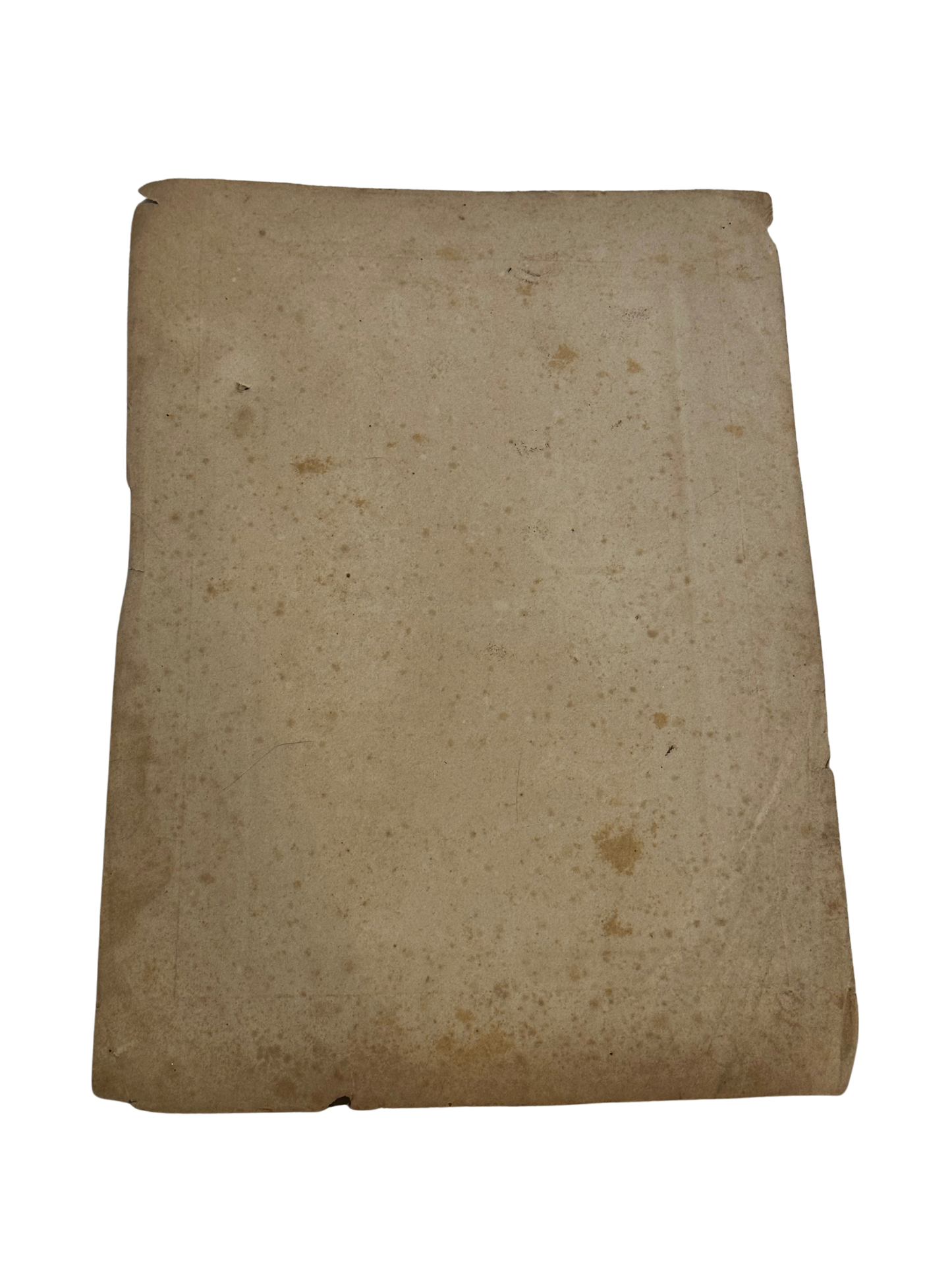
Heavy foxing and age toning throughout sheet.
Minor edge losses and corner wear visible. One minor tear on the interior.
Light creasing consistent with age and storage.
Plate impression remains visible.
Heavy foxing and age toning throughout sheet.
Minor edge losses and corner wear visible. One minor tear on the interior.
Light creasing consistent with age and storage.
Plate impression remains visible.