

19th C Antique Hollowed Book Box (Concealment Box) - Theological Volume
19th C Antique Hollowed Book Box (Concealment Box) - Theological Volume
Couldn't load pickup availability
Share
Antique Faux Book Box
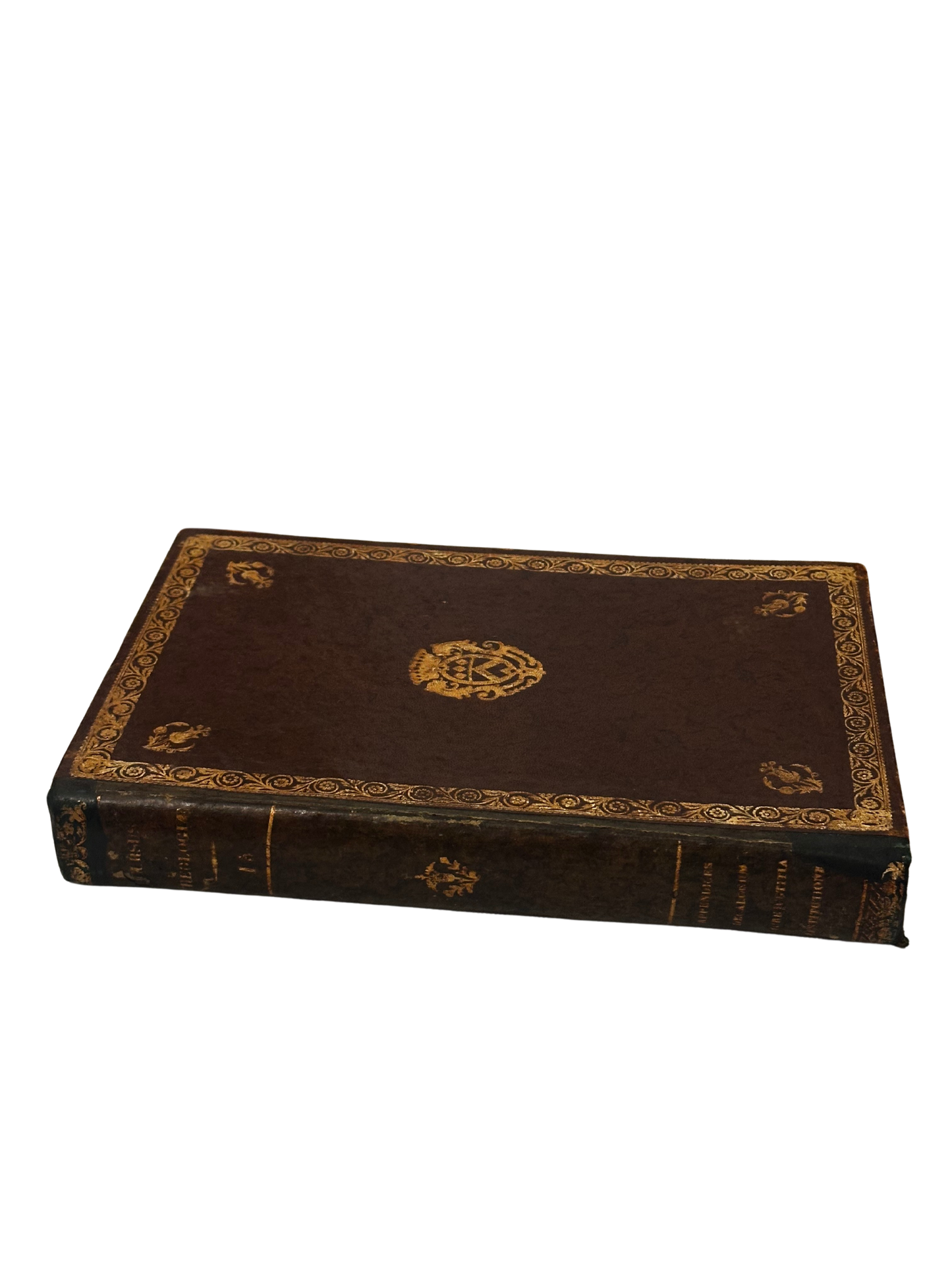
19th-century hollowed book box, originally an authentic theological volume — Theologiae Cursus Completus, published in Paris in 1839 — that has been skillfully converted into a hidden compartment, most likely in the mid- to late 19th century.
Content (original): A comprehensive treatise on moral and natural theology, with appendices on Mosaic law, Apostolic decrees, justice, and ecclesiastical institutions.
Binding: Full mottled calf leather with elaborate gilt tooling, including a heraldic coat of arms on the front cover — likely the mark of an ecclesiastical owner or noble patron.
During the 19th century, religious or academic tomes were often repurposed as concealment boxes — discreet storage for valuables, letters, or devotional objects. The heraldic stamp on the cover implies aristocratic or clerical provenance, and the Paris imprint places it within the orbit of Catholic academic presses that supplied seminaries and cathedrals.
The design — restrained but with gilt embellishment and Latin title — reflects early Louis-Philippe period bindings (1830s–1840s).
Antique Faux Book Box
19th-century hollowed book box, originally an authentic theological volume — Theologiae Cursus Completus, published in Paris in 1839 — that has been skillfully converted into a hidden compartment, most likely in the mid- to late 19th century.
Content (original): A comprehensive treatise on moral and natural theology, with appendices on Mosaic law, Apostolic decrees, justice, and ecclesiastical institutions.
Binding: Full mottled calf leather with elaborate gilt tooling, including a heraldic coat of arms on the front cover — likely the mark of an ecclesiastical owner or noble patron.
During the 19th century, religious or academic tomes were often repurposed as concealment boxes — discreet storage for valuables, letters, or devotional objects. The heraldic stamp on the cover implies aristocratic or clerical provenance, and the Paris imprint places it within the orbit of Catholic academic presses that supplied seminaries and cathedrals.
The design — restrained but with gilt embellishment and Latin title — reflects early Louis-Philippe period bindings (1830s–1840s).