
19th Century Bronze Wax Seal Stamp with Monogram “GH”
19th Century Bronze Wax Seal Stamp with Monogram “GH”
Couldn't load pickup availability
Share
Additional Description:
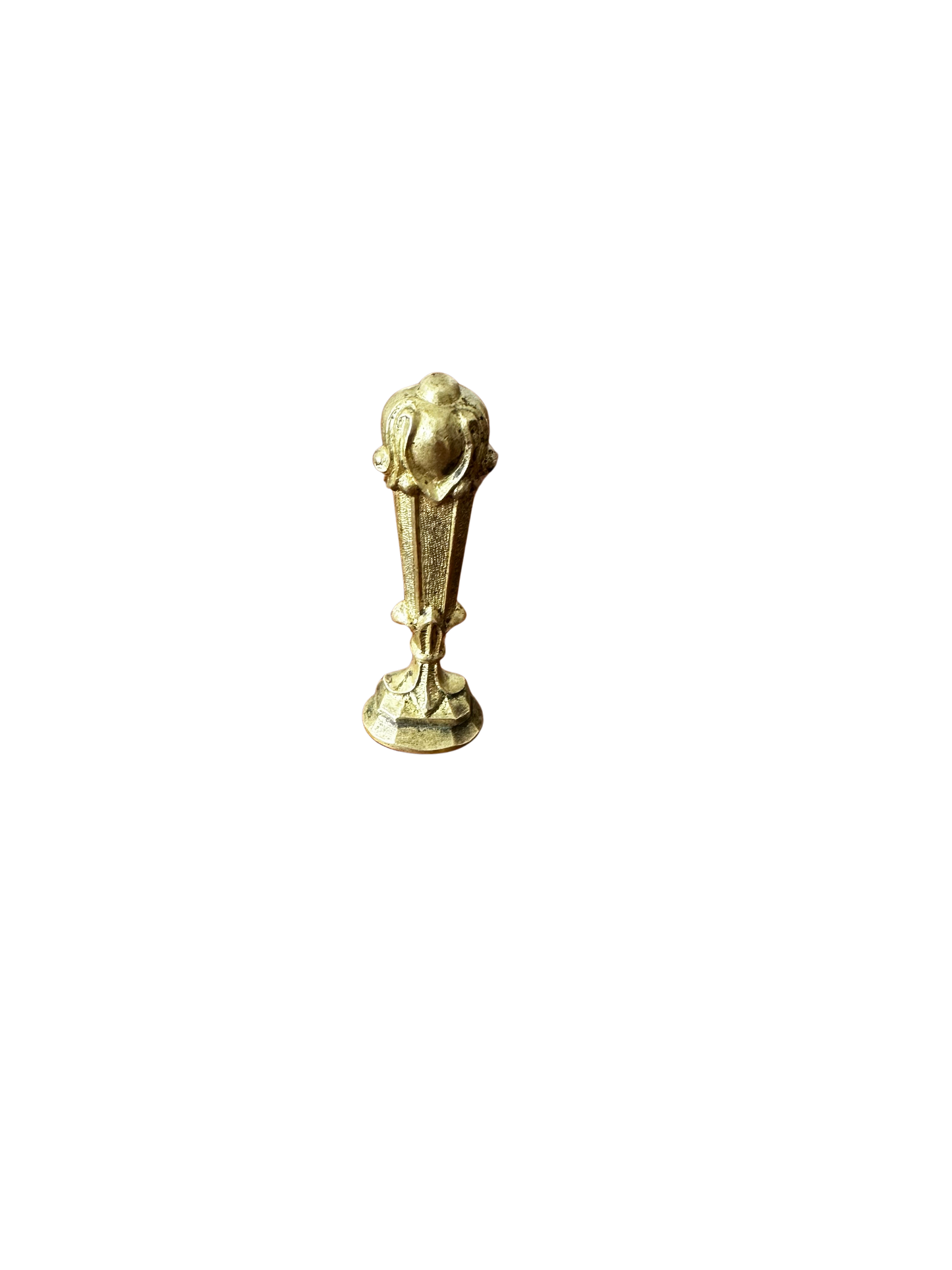
A finely cast 19th-century wax seal stamp, executed in a rich bronze (or bronze-toned alloy) with an elegant, architecturally inspired handle. The form features fluted vertical panels, a stepped pedestal base, and a decorative knop, giving the piece a sculptural presence beyond its functional purpose.
The seal matrix is engraved with a bold “GH” monogram in a clean, linear style, designed for clarity in wax impressions. The engraving remains well-defined and legible—an increasingly desirable feature among antique seals, many of which have softened with age.
The surface exhibits a deep, time-developed patina, with darker toning in recesses that enhances the dimensionality of the design. The weight and feel suggest a higher-quality casting, and the overall form aligns with mid-19th century European decorative metalwork influenced by both Neoclassical and Gothic Revival aesthetics.
A striking and usable example—equally suited for display or continued use in traditional wax sealing.
Era:
Mid to late 19th century (circa 1850–1880)
History:
Monogrammed wax seals were widely used throughout the 19th century as a mark of identity and authenticity in correspondence. Unlike heraldic seals reserved for nobility, monogram seals such as this were accessible to a broader audience, often custom-made for individuals and used in both personal and professional communication.
Decorative handles became increasingly elaborate during this period, reflecting the Victorian and Napoleon III taste for ornament in even the most utilitarian objects.
Provenance:
Likely Continental Europe or England, acquired on the secondary market.
Materials:
Bronze (or bronze-toned alloy)
Dimensions:
Leave blank
Disclaimers:
As found condition. Surface wear and patina consistent with age and use. Minor softening to engraved lines, though monogram remains clearly legible.
Additional Description:
A finely cast 19th-century wax seal stamp, executed in a rich bronze (or bronze-toned alloy) with an elegant, architecturally inspired handle. The form features fluted vertical panels, a stepped pedestal base, and a decorative knop, giving the piece a sculptural presence beyond its functional purpose.
The seal matrix is engraved with a bold “GH” monogram in a clean, linear style, designed for clarity in wax impressions. The engraving remains well-defined and legible—an increasingly desirable feature among antique seals, many of which have softened with age.
The surface exhibits a deep, time-developed patina, with darker toning in recesses that enhances the dimensionality of the design. The weight and feel suggest a higher-quality casting, and the overall form aligns with mid-19th century European decorative metalwork influenced by both Neoclassical and Gothic Revival aesthetics.
A striking and usable example—equally suited for display or continued use in traditional wax sealing.
Era:
Mid to late 19th century (circa 1850–1880)
History:
Monogrammed wax seals were widely used throughout the 19th century as a mark of identity and authenticity in correspondence. Unlike heraldic seals reserved for nobility, monogram seals such as this were accessible to a broader audience, often custom-made for individuals and used in both personal and professional communication.
Decorative handles became increasingly elaborate during this period, reflecting the Victorian and Napoleon III taste for ornament in even the most utilitarian objects.
Provenance:
Likely Continental Europe or England, acquired on the secondary market.
Materials:
Bronze (or bronze-toned alloy)
Dimensions:
Leave blank
Disclaimers:
As found condition. Surface wear and patina consistent with age and use. Minor softening to engraved lines, though monogram remains clearly legible.