

19th Century Continental Gilt Metal Crown with Paste Stones
19th Century Continental Gilt Metal Crown with Paste Stones
Couldn't load pickup availability
Share
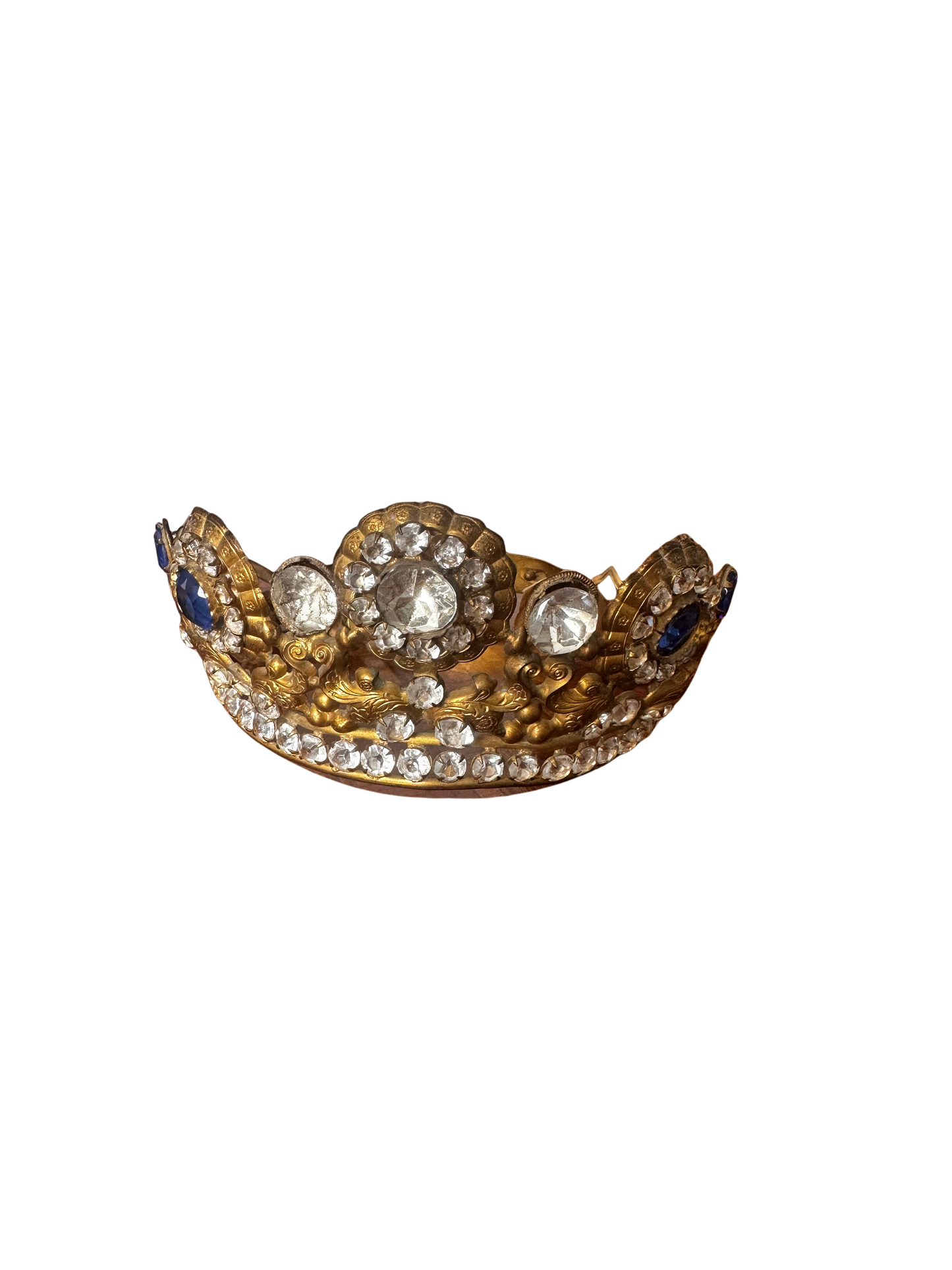
Additional Description: A striking and highly decorative 19th-century European crown, richly cast in gilt metal and adorned with an array of faceted paste stones in varying sizes. The composition features alternating raised roundels set with large central stones—clear and deep sapphire-toned—surrounded by smaller hand-cut paste, all framed within ornate scrolling mounts and foliate detailing.
The construction is finely articulated, with individually set stones and applied elements creating depth and dimensionality throughout the piece. The interior band bears a small lozenge-shaped maker’s punch—likely workshop initials rather than a registered hallmark—alongside a stamped number “602,” suggesting internal production or model identification.
The crown’s dramatic silhouette and craftsmanship strongly suggest use as either an ecclesiastical adornment—possibly for a Madonna or saint figure—or a theatrical/regalia piece from the late 19th to early 20th century. Its scale and presence lend it equally well to display as an object of curiosity, devotional art, or interior statement.
Era: Late 19th to Early 20th Century (circa 1880–1920)
History: Decorative crowns such as this were produced across France, Germany, and Austria during the 19th century for both sacred and secular use. In ecclesiastical contexts, crowns were often placed upon statues of the Virgin Mary or saints during feast days and ceremonial occasions, symbolizing divine queenship and reverence.
Simultaneously, similarly crafted examples were used in theater and opera, where elaborate costume regalia was essential to historical and royal portrayals. These pieces were typically made using gilt bronze or brass and set with paste stones to emulate the brilliance of fine jewelry under candlelight or stage illumination.
The absence of a formal assay hallmark, paired with a small workshop punch, is consistent with production by specialized decorative ateliers rather than major luxury houses.
Provenance: France
Materials: Gilt metal (likely bronze or brass)
Hand-set paste stones (clear and sapphire-toned glass)
Dimensions: TBD
Disclaimers: Good antique condition consistent with age.
Light wear and rubbing to gilt surface
Minor surface oxidation and patina throughout
Expected wear to some stones, with possible small nicks or internal inclusions typical of paste
Structurally sound and displays beautifully
Additional Description: A striking and highly decorative 19th-century European crown, richly cast in gilt metal and adorned with an array of faceted paste stones in varying sizes. The composition features alternating raised roundels set with large central stones—clear and deep sapphire-toned—surrounded by smaller hand-cut paste, all framed within ornate scrolling mounts and foliate detailing.
The construction is finely articulated, with individually set stones and applied elements creating depth and dimensionality throughout the piece. The interior band bears a small lozenge-shaped maker’s punch—likely workshop initials rather than a registered hallmark—alongside a stamped number “602,” suggesting internal production or model identification.
The crown’s dramatic silhouette and craftsmanship strongly suggest use as either an ecclesiastical adornment—possibly for a Madonna or saint figure—or a theatrical/regalia piece from the late 19th to early 20th century. Its scale and presence lend it equally well to display as an object of curiosity, devotional art, or interior statement.
Era: Late 19th to Early 20th Century (circa 1880–1920)
History: Decorative crowns such as this were produced across France, Germany, and Austria during the 19th century for both sacred and secular use. In ecclesiastical contexts, crowns were often placed upon statues of the Virgin Mary or saints during feast days and ceremonial occasions, symbolizing divine queenship and reverence.
Simultaneously, similarly crafted examples were used in theater and opera, where elaborate costume regalia was essential to historical and royal portrayals. These pieces were typically made using gilt bronze or brass and set with paste stones to emulate the brilliance of fine jewelry under candlelight or stage illumination.
The absence of a formal assay hallmark, paired with a small workshop punch, is consistent with production by specialized decorative ateliers rather than major luxury houses.
Provenance: France
Materials: Gilt metal (likely bronze or brass)
Hand-set paste stones (clear and sapphire-toned glass)
Dimensions: TBD
Disclaimers: Good antique condition consistent with age.
Light wear and rubbing to gilt surface
Minor surface oxidation and patina throughout
Expected wear to some stones, with possible small nicks or internal inclusions typical of paste
Structurally sound and displays beautifully