

19th Century French Tortoiseshell & Ivory/Bone Carnet de Bal / Dance Card
19th Century French Tortoiseshell & Ivory/Bone Carnet de Bal / Dance Card
Couldn't load pickup availability
Share
Item: 19th Century French Tortoiseshell & Ivory Carnet de Bal / Dance Card with Gilt-Metal Binding
Additional Description
A charming and highly decorative 19th-century French carnet de bal, or dance card, fashioned from richly mottled tortoiseshell and fitted with a fan of small ivory writing tablets.
The miniature rectangular case is formed from scalloped tortoiseshell covers in warm amber, caramel, and deep brown tones. The front is finely engraved with scrolling foliate ornament surrounding what appears to be the word “Bal”, while a small gilt-metal floral boss accents the upper portion.
Opening the piece reveals a series of thin ivory tablets that fan outward from the side binding. These were intended to be written upon in pencil so that a lady could record the names of her dance partners and the order of dances during a ball. The tablets are secured by an attractive gilt-metal spiral binding, while the top retains a small suspension loop with an old cord, allowing the carnet to be worn from the wrist or attached to a chatelaine.
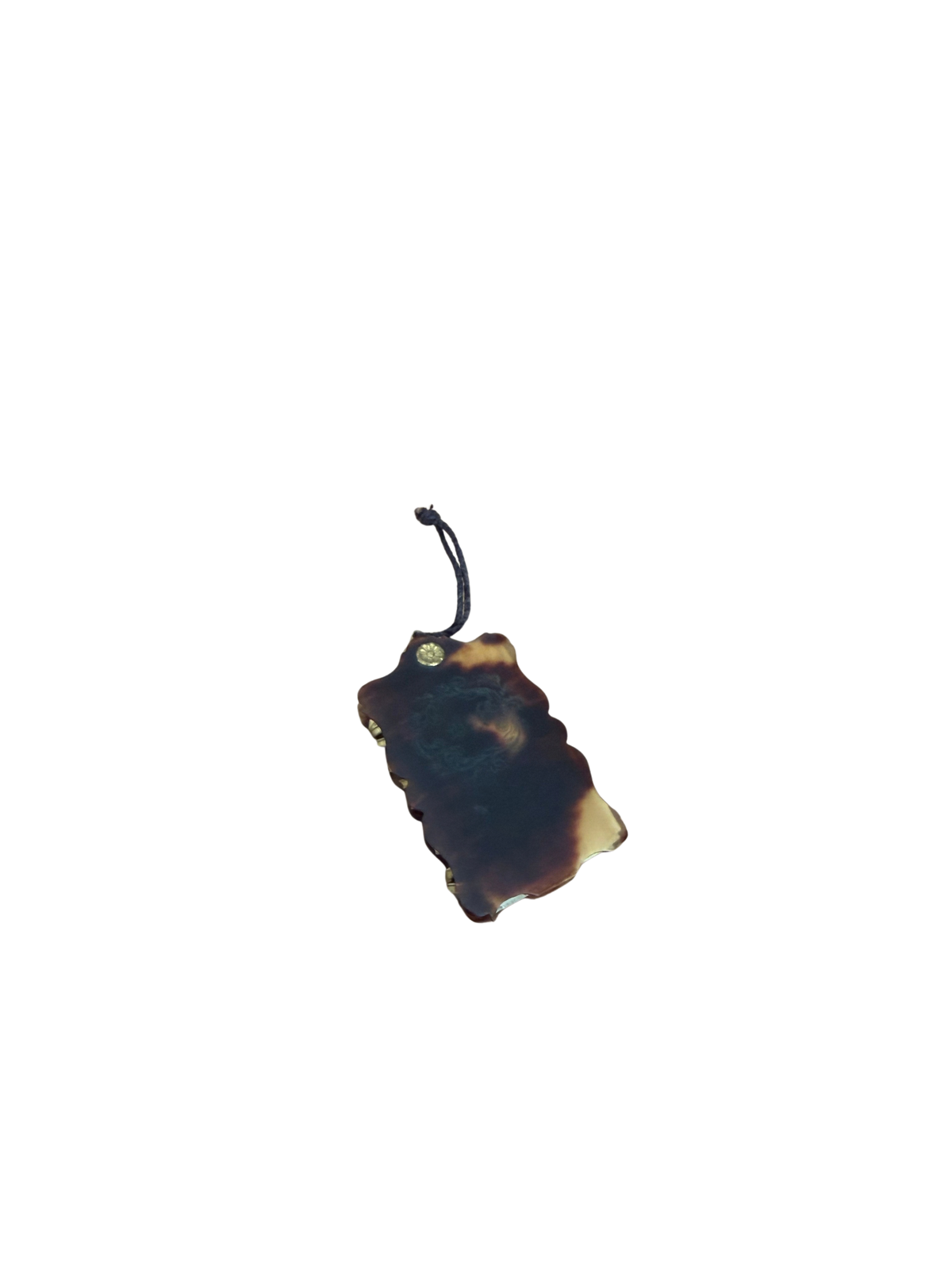
The reverse is made from particularly attractive translucent tortoiseshell with bold amber and dark brown mottling.
Era
Circa 1850–1880
Origin
France
Object Type
Carnet de bal / dance card / aide-mémoire
Materials
- Tortoiseshell
- Ivory writing tablets
- Gilt metal / brass
- Textile suspension cord
History
The carnet de bal was an essential accessory of fashionable European social life during the 18th and 19th centuries. At formal balls, a lady could use the individual tablets or pages to record the dances she had promised to particular partners.
More elaborate examples were treated almost like jewelry and were made from luxury materials including tortoiseshell, ivory, mother-of-pearl, silver, gold, enamel, and precious stones. Many were small enough to hang from the wrist by a ribbon or cord, allowing them to remain conveniently at hand while dancing.
The fan-like arrangement of erasable ivory tablets seen here is particularly characteristic of mid-19th-century dance cards and personal aides-mémoire. Pencil inscriptions could often be rubbed away so the carnet could be reused for subsequent social events.
Marks / Inscriptions
Front cover engraved with scrolling decoration surrounding what appears to read:
“Bal”
No visible maker’s mark observed in the photographs provided.
Dimensions
Please add:
___” H × ___” W × ___” D
Condition
Good antique condition considering its age and delicate construction. The tortoiseshell retains beautiful coloration and translucency with expected surface scratches, rubbing, small edge irregularities, and minor age-related wear.
The ivory tablets show toning, surface marks, old pencil traces, and light wear consistent with use. The gilt-metal spiral binding and floral mount remain present, with expected oxidation and rubbing. The old suspension cord survives but shows considerable age and wear.
Please review all photographs closely as they form part of the condition description.
Provenance
France, mid-to-late 19th century.
Disclaimers
The tortoiseshell and ivory material identifications are based on visual examination and have not been scientifically tested.
Item: 19th Century French Tortoiseshell & Ivory Carnet de Bal / Dance Card with Gilt-Metal Binding
Additional Description
A charming and highly decorative 19th-century French carnet de bal, or dance card, fashioned from richly mottled tortoiseshell and fitted with a fan of small ivory writing tablets.
The miniature rectangular case is formed from scalloped tortoiseshell covers in warm amber, caramel, and deep brown tones. The front is finely engraved with scrolling foliate ornament surrounding what appears to be the word “Bal”, while a small gilt-metal floral boss accents the upper portion.
Opening the piece reveals a series of thin ivory tablets that fan outward from the side binding. These were intended to be written upon in pencil so that a lady could record the names of her dance partners and the order of dances during a ball. The tablets are secured by an attractive gilt-metal spiral binding, while the top retains a small suspension loop with an old cord, allowing the carnet to be worn from the wrist or attached to a chatelaine.
The reverse is made from particularly attractive translucent tortoiseshell with bold amber and dark brown mottling.
Era
Circa 1850–1880
Origin
France
Object Type
Carnet de bal / dance card / aide-mémoire
Materials
- Tortoiseshell
- Ivory writing tablets
- Gilt metal / brass
- Textile suspension cord
History
The carnet de bal was an essential accessory of fashionable European social life during the 18th and 19th centuries. At formal balls, a lady could use the individual tablets or pages to record the dances she had promised to particular partners.
More elaborate examples were treated almost like jewelry and were made from luxury materials including tortoiseshell, ivory, mother-of-pearl, silver, gold, enamel, and precious stones. Many were small enough to hang from the wrist by a ribbon or cord, allowing them to remain conveniently at hand while dancing.
The fan-like arrangement of erasable ivory tablets seen here is particularly characteristic of mid-19th-century dance cards and personal aides-mémoire. Pencil inscriptions could often be rubbed away so the carnet could be reused for subsequent social events.
Marks / Inscriptions
Front cover engraved with scrolling decoration surrounding what appears to read:
“Bal”
No visible maker’s mark observed in the photographs provided.
Dimensions
Please add:
___” H × ___” W × ___” D
Condition
Good antique condition considering its age and delicate construction. The tortoiseshell retains beautiful coloration and translucency with expected surface scratches, rubbing, small edge irregularities, and minor age-related wear.
The ivory tablets show toning, surface marks, old pencil traces, and light wear consistent with use. The gilt-metal spiral binding and floral mount remain present, with expected oxidation and rubbing. The old suspension cord survives but shows considerable age and wear.
Please review all photographs closely as they form part of the condition description.
Provenance
France, mid-to-late 19th century.
Disclaimers
The tortoiseshell and ivory material identifications are based on visual examination and have not been scientifically tested.