

19th Century Grand Tour Collection of Classical Intaglio Impressions, Framed Set of 14
19th Century Grand Tour Collection of Classical Intaglio Impressions, Framed Set of 14
Couldn't load pickup availability
Share
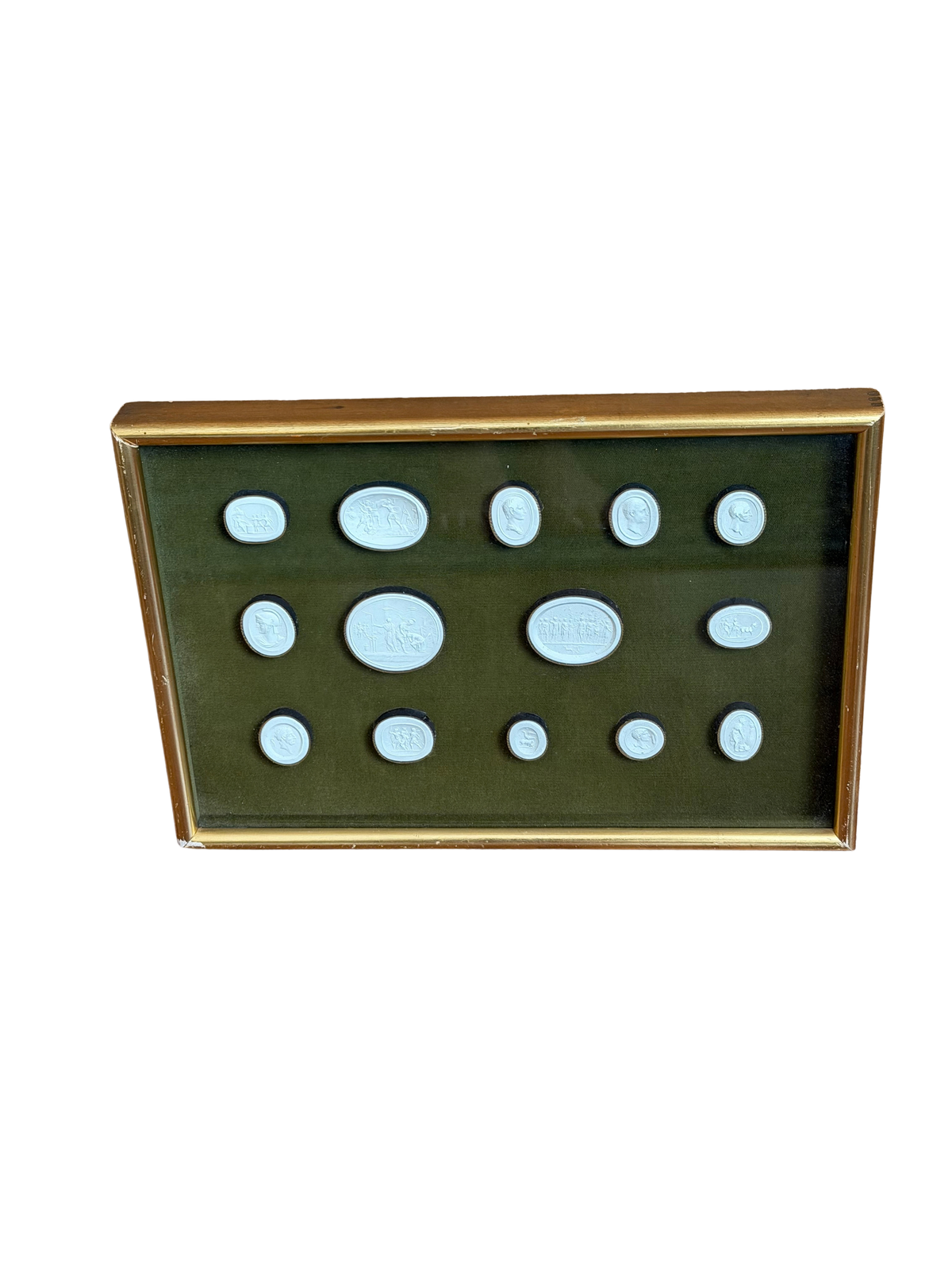
A striking 19th-century Grand Tour collection of fourteen classical intaglio impressions, individually mounted and numbered within a gilt frame against a deep olive-green ground.
The collection comprises a varied group of oval and circular white relief impressions after ancient engraved gems, including profile portraits, mythological figures, animals, and multi-figure classical scenes. Each impression is set within a narrow gilt-paper or gilt-metallic border and raised slightly from the backing, giving the collection the appearance of a miniature archaeological cabinet.
Several pieces depict identifiable classical subjects or types, including:
- Male profile portraits in the manner of Roman emperors or statesmen
- Female and male antique profile heads
- Mythological or allegorical figures
- A bull or bovine subject
- Multi-figure scenes derived from ancient glyptic compositions
- Seated and standing classical figures
- Animal and sacrificial or pastoral imagery
The impressions are individually numbered in white along their mounts, including visible examples numbered in the teens and twenties, suggesting they once formed part of a larger organized collection or educational series.
The reliefs are mounted under glass in a simple gilt frame, creating a beautifully graphic presentation that is especially evocative of the collecting culture of the European Grand Tour.
Era
Date: Circa 1820–1870
Period: 19th century / Grand Tour
Origin: Continental Europe, likely Italy
Collections of plaster, sulphur, or composition impressions after ancient engraved gems were widely sold in Italy to travelers, collectors, artists, and antiquarians during the 18th and 19th centuries.
History
During the Grand Tour, travelers visiting Rome, Naples, Florence, and other centers of classical culture avidly collected objects that reflected the art and archaeology of antiquity.
One particularly popular form was the collection of casts or impressions after ancient intaglios and cameos. These miniature reproductions allowed collectors to study famous engraved gems without owning the original stones themselves.
Workshops produced impressions in materials including:
- Plaster
- Sulphur
- Wax
- Ceramic composition
- Glass paste
- Other proprietary casting materials
These were frequently organized into numbered series and stored in boxes resembling books or portfolios. Others were later mounted into decorative frames, as appears to have happened here.
The numbered sequence visible beneath the impressions strongly supports the idea that these belonged to a larger catalogued glyptic series rather than being assembled randomly.
Subject Matter
The set includes a range of subjects associated with ancient Roman and Greek glyptic art.
Visible motifs include:
- Classical profile busts
- Male and female portrait heads
- Mythological figures
- Seated or standing figures
- Animal subjects
- Multi-figure narrative scenes
- Pastoral or sacrificial compositions
Some may reproduce known antique gems held in major European collections, while others may derive from popular 18th- and 19th-century engraved-gem compilations.
Individual subjects have not been definitively identified.
Materials
- White plaster, sulphur, or composition intaglio impressions, attributed
- Gilt-paper or gilt-metallic borders
- Olive-green fabric or paper-covered backing
- Glass
- Gilt wood or composition frame
- Paper and textile backing
The impressions have not been removed from the frame, so their exact casting material has not been confirmed.
Dimensions
Dimensions: To be added
Condition
Good antique condition with wear consistent with age.
- Fourteen intaglio impressions remain mounted and visible.
- Relief detail varies from crisp to softly worn.
- Scattered discoloration, dust, and minor surface marks to several impressions.
- Some impressions show small edge irregularities, minute losses, or age-related abrasions.
- Numbering remains visible beneath several mounts.
- Olive-green background shows minor fading, dust, and surface wear.
- Gilt borders exhibit scattered rubbing and darkening.
- Glass shows light scratches and surface dust.
- Gilt frame exhibits expected rubbing, scratches, and localized finish loss.
- Reverse retains an older paper backing with age-related tears, losses, staining, and exposed hanging wire.
- Frame appears to have been opened or rebacked during its history.
The set has not been dismantled for individual examination.
Disclaimers
All antique and vintage items are sold in as-found condition and may exhibit wear, patina, repairs, losses, alterations, fading, or other evidence of age and use.
The relief impressions are attributed as Grand Tour casts after classical intaglios based upon their form, subject matter, numbering, and presentation.
The precise casting material, maker, and source collection have not been definitively identified.
Individual classical subjects are described conservatively unless securely identifiable.
Please review all photographs carefully as they form an important part of the description.
A striking 19th-century Grand Tour collection of fourteen classical intaglio impressions, individually mounted and numbered within a gilt frame against a deep olive-green ground.
The collection comprises a varied group of oval and circular white relief impressions after ancient engraved gems, including profile portraits, mythological figures, animals, and multi-figure classical scenes. Each impression is set within a narrow gilt-paper or gilt-metallic border and raised slightly from the backing, giving the collection the appearance of a miniature archaeological cabinet.
Several pieces depict identifiable classical subjects or types, including:
- Male profile portraits in the manner of Roman emperors or statesmen
- Female and male antique profile heads
- Mythological or allegorical figures
- A bull or bovine subject
- Multi-figure scenes derived from ancient glyptic compositions
- Seated and standing classical figures
- Animal and sacrificial or pastoral imagery
The impressions are individually numbered in white along their mounts, including visible examples numbered in the teens and twenties, suggesting they once formed part of a larger organized collection or educational series.
The reliefs are mounted under glass in a simple gilt frame, creating a beautifully graphic presentation that is especially evocative of the collecting culture of the European Grand Tour.
Era
Date: Circa 1820–1870
Period: 19th century / Grand Tour
Origin: Continental Europe, likely Italy
Collections of plaster, sulphur, or composition impressions after ancient engraved gems were widely sold in Italy to travelers, collectors, artists, and antiquarians during the 18th and 19th centuries.
History
During the Grand Tour, travelers visiting Rome, Naples, Florence, and other centers of classical culture avidly collected objects that reflected the art and archaeology of antiquity.
One particularly popular form was the collection of casts or impressions after ancient intaglios and cameos. These miniature reproductions allowed collectors to study famous engraved gems without owning the original stones themselves.
Workshops produced impressions in materials including:
- Plaster
- Sulphur
- Wax
- Ceramic composition
- Glass paste
- Other proprietary casting materials
These were frequently organized into numbered series and stored in boxes resembling books or portfolios. Others were later mounted into decorative frames, as appears to have happened here.
The numbered sequence visible beneath the impressions strongly supports the idea that these belonged to a larger catalogued glyptic series rather than being assembled randomly.
Subject Matter
The set includes a range of subjects associated with ancient Roman and Greek glyptic art.
Visible motifs include:
- Classical profile busts
- Male and female portrait heads
- Mythological figures
- Seated or standing figures
- Animal subjects
- Multi-figure narrative scenes
- Pastoral or sacrificial compositions
Some may reproduce known antique gems held in major European collections, while others may derive from popular 18th- and 19th-century engraved-gem compilations.
Individual subjects have not been definitively identified.
Materials
- White plaster, sulphur, or composition intaglio impressions, attributed
- Gilt-paper or gilt-metallic borders
- Olive-green fabric or paper-covered backing
- Glass
- Gilt wood or composition frame
- Paper and textile backing
The impressions have not been removed from the frame, so their exact casting material has not been confirmed.
Dimensions
Dimensions: To be added
Condition
Good antique condition with wear consistent with age.
- Fourteen intaglio impressions remain mounted and visible.
- Relief detail varies from crisp to softly worn.
- Scattered discoloration, dust, and minor surface marks to several impressions.
- Some impressions show small edge irregularities, minute losses, or age-related abrasions.
- Numbering remains visible beneath several mounts.
- Olive-green background shows minor fading, dust, and surface wear.
- Gilt borders exhibit scattered rubbing and darkening.
- Glass shows light scratches and surface dust.
- Gilt frame exhibits expected rubbing, scratches, and localized finish loss.
- Reverse retains an older paper backing with age-related tears, losses, staining, and exposed hanging wire.
- Frame appears to have been opened or rebacked during its history.
The set has not been dismantled for individual examination.
Disclaimers
All antique and vintage items are sold in as-found condition and may exhibit wear, patina, repairs, losses, alterations, fading, or other evidence of age and use.
The relief impressions are attributed as Grand Tour casts after classical intaglios based upon their form, subject matter, numbering, and presentation.
The precise casting material, maker, and source collection have not been definitively identified.
Individual classical subjects are described conservatively unless securely identifiable.
Please review all photographs carefully as they form an important part of the description.