


Antique Carved Religious Wooden Figure, Likely Joseph, on Pedestal Base
Antique Carved Religious Wooden Figure, Likely Joseph, on Pedestal Base
Couldn't load pickup availability
Share
Additional Description:
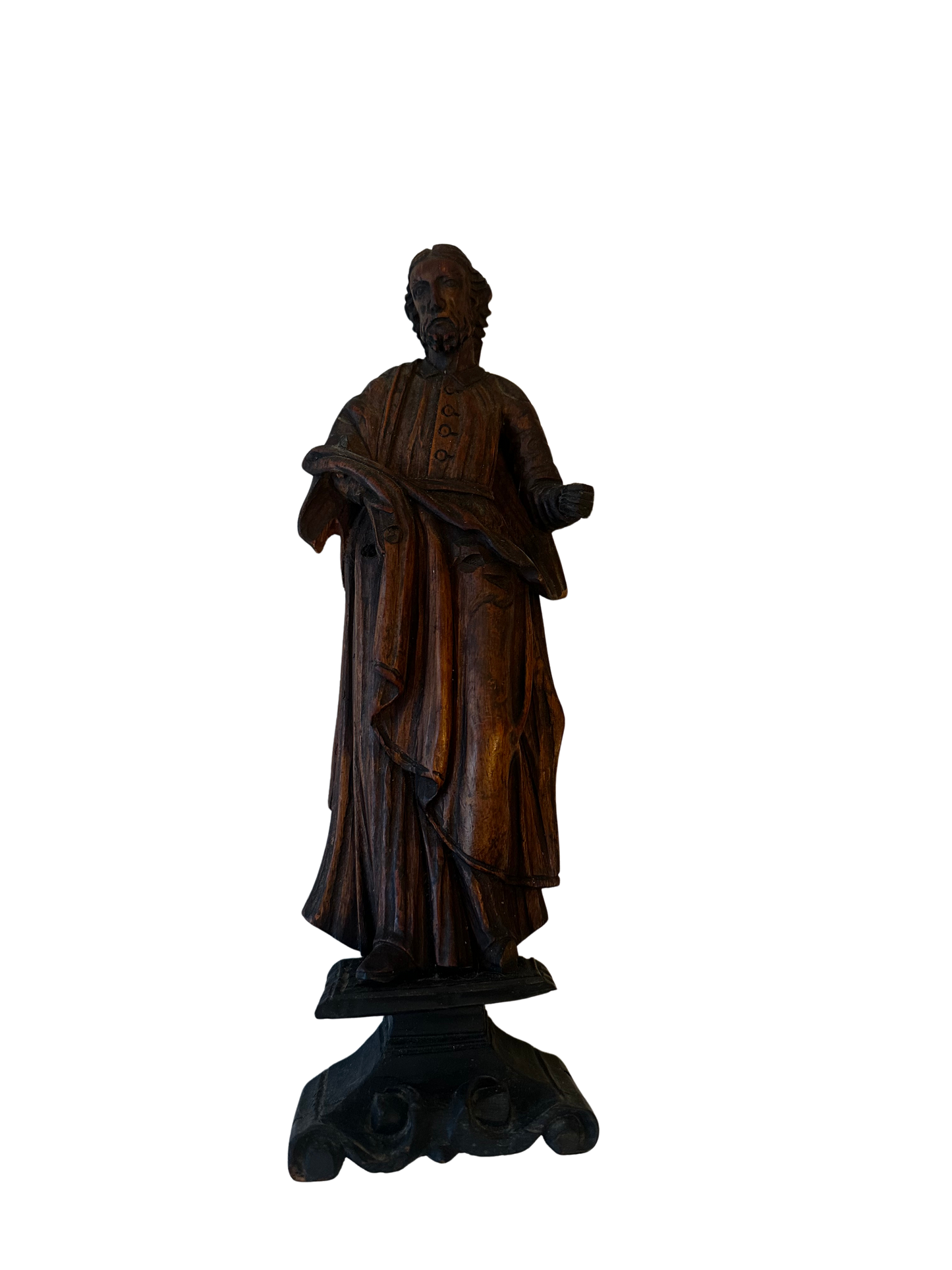
A characterful antique carved wooden figure depicting a bearded gentleman in flowing robes, likely representing a biblical/apostolic figure like Joseph. The figure is rendered with expressive facial features, deeply carved drapery, and a slightly forward stance, giving a sense of quiet movement and presence. He appears to hold or gesture with one hand, while the other is partially concealed beneath the draped garment.
The carving shows strong hand-work throughout, particularly in the folds of the robe and the facial detailing, suggesting artisan craftsmanship rather than later machine production. The figure is mounted to an integral pedestal base with scrolling feet, possibly intended as part of a larger decorative element—such as an architectural mount, ecclesiastical furnishing, or furniture embellishment (e.g., from a lectern, cabinet, or altarpiece-inspired object).
The underside reveals hollowing and age-related wear consistent with older carving practices, along with remnants of darkened finish or pitch-like residue, further supporting age. The rich surface patina and tonal variation in the wood add to its depth and authenticity.
Era:
Likely 18th to early 19th century (circa 1750–1820), with possibility of later 19th century depending on origin
History:
Carved wooden figures such as this were commonly produced across Continental Europe—particularly in France, Italy, and Spain—for both religious and decorative purposes. Figures of robed men often represent apostles, saints, scholars, or allegorical figures tied to knowledge or faith.
During the 18th and early 19th centuries, such carvings appeared in churches, private chapels, and also as ornamental elements in furniture and architectural decoration. Smaller-scale examples like this were sometimes removed from larger structures or created for domestic devotional or decorative use. The expressive carving and stylized drapery reflect a continuation of Baroque sculptural traditions into later periods.
Provenance:
Likely Continental European; exact origin and subject unconfirmed.
Materials:
Hand-carved wood with aged surface patina; possibly hardwood or fruitwood; integral carved base.
Dimensions:
Leave blank
Disclaimers:
Significant wear consistent with age, including surface abrasions, patina loss, and cracking. Underside shows heavy wear, old residue, and possible historic repairs or mounting evidence. Minor losses and softening to carved details present. Exact identity of the figure, origin, and date are not definitively confirmed.
Additional Description:
A characterful antique carved wooden figure depicting a bearded gentleman in flowing robes, likely representing a biblical/apostolic figure like Joseph. The figure is rendered with expressive facial features, deeply carved drapery, and a slightly forward stance, giving a sense of quiet movement and presence. He appears to hold or gesture with one hand, while the other is partially concealed beneath the draped garment.
The carving shows strong hand-work throughout, particularly in the folds of the robe and the facial detailing, suggesting artisan craftsmanship rather than later machine production. The figure is mounted to an integral pedestal base with scrolling feet, possibly intended as part of a larger decorative element—such as an architectural mount, ecclesiastical furnishing, or furniture embellishment (e.g., from a lectern, cabinet, or altarpiece-inspired object).
The underside reveals hollowing and age-related wear consistent with older carving practices, along with remnants of darkened finish or pitch-like residue, further supporting age. The rich surface patina and tonal variation in the wood add to its depth and authenticity.
Era:
Likely 18th to early 19th century (circa 1750–1820), with possibility of later 19th century depending on origin
History:
Carved wooden figures such as this were commonly produced across Continental Europe—particularly in France, Italy, and Spain—for both religious and decorative purposes. Figures of robed men often represent apostles, saints, scholars, or allegorical figures tied to knowledge or faith.
During the 18th and early 19th centuries, such carvings appeared in churches, private chapels, and also as ornamental elements in furniture and architectural decoration. Smaller-scale examples like this were sometimes removed from larger structures or created for domestic devotional or decorative use. The expressive carving and stylized drapery reflect a continuation of Baroque sculptural traditions into later periods.
Provenance:
Likely Continental European; exact origin and subject unconfirmed.
Materials:
Hand-carved wood with aged surface patina; possibly hardwood or fruitwood; integral carved base.
Dimensions:
Leave blank
Disclaimers:
Significant wear consistent with age, including surface abrasions, patina loss, and cracking. Underside shows heavy wear, old residue, and possible historic repairs or mounting evidence. Minor losses and softening to carved details present. Exact identity of the figure, origin, and date are not definitively confirmed.