

Antique Continental Rococo Revival Putto and Rose Adjustable Tabletop Picture Easel Frame
Antique Continental Rococo Revival Putto and Rose Adjustable Tabletop Picture Easel Frame
Couldn't load pickup availability
Share
Additional Description
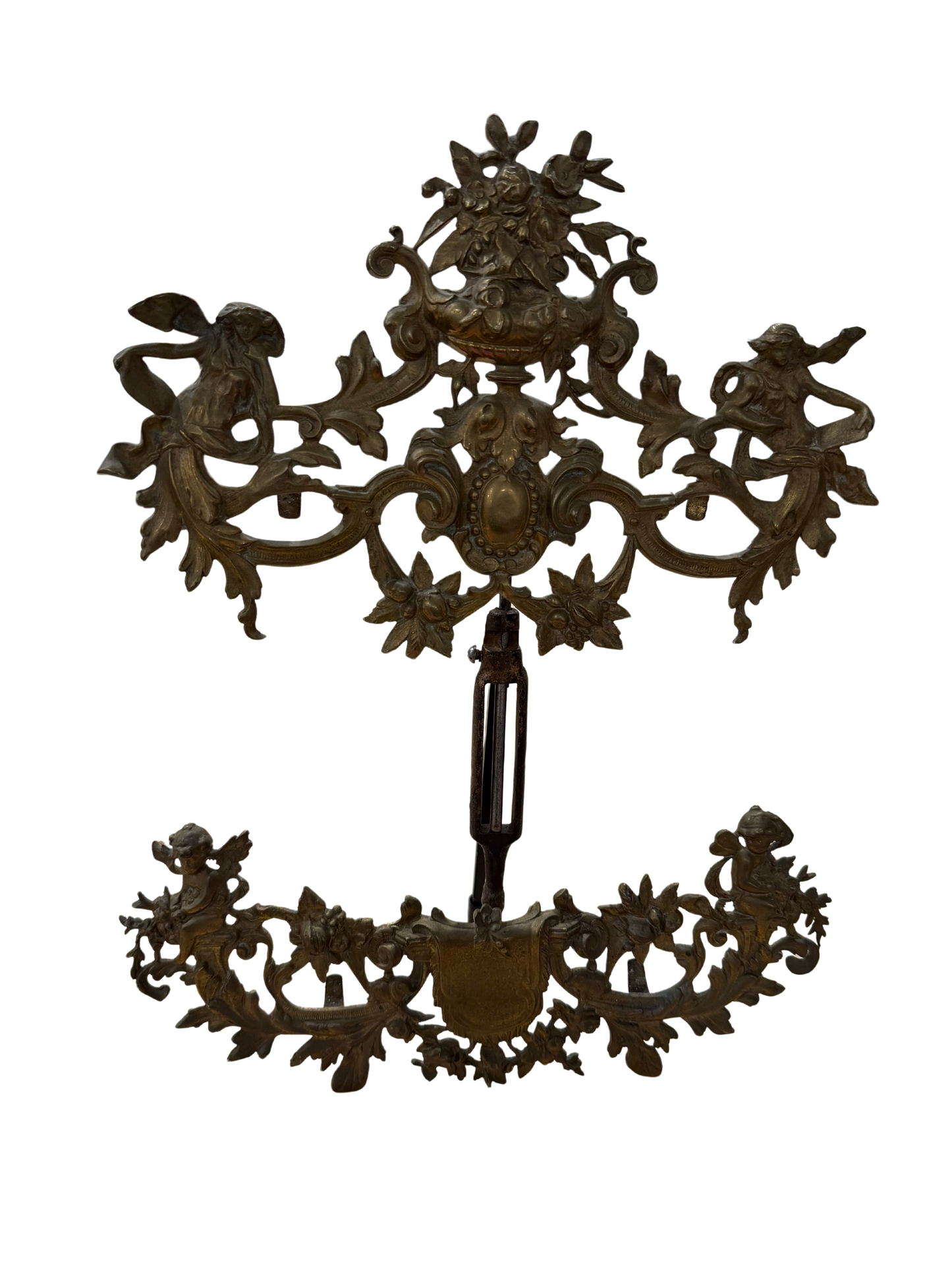
A charming antique adjustable tabletop picture easel or frame in the Rococo Revival taste, surmounted by a finely modeled putto nestled among an exuberant arrangement of roses, scrolling foliage, and pierced rocaille ornament.
The upper crest curves gracefully around the displayed artwork, while the substantial lower support is modeled as an ornate architectural base with draped fabric, scrolling foliage, shell ornament, and cabriole-style feet.
The reverse retains an ingenious period adjustment mechanism comprising a central metal standard, sliding support, decorative locking element, and U-shaped rear easel leg. The arrangement permits the upper and lower supports to secure a painting, photograph, devotional image, or other panel between them while allowing accommodation for works of varying heights.
The decorative cast metal retains a beautifully mellowed surface with traces of its earlier bronzed or gilt finish, giving the piece an especially appealing timeworn character. The original or period dark wooden backing panel complements the aged metalwork and provides a handsome presentation for small works of art.
A particularly decorative example of the elaborate picture and portrait stands fashionable in European interiors around the turn of the 20th century.
## Era
**Late 19th to early 20th century, approximately c. 1890–1910.**
## History
During the late Victorian and Belle Époque periods, decorative easel frames became popular accessories for displaying cherished portraits, photographs, small paintings, and devotional images on tables, mantels, cabinets, and sideboards.
This example draws upon the Rococo Revival vocabulary fashionable throughout Europe during the period, particularly the use of playful putti, abundant roses, scrolling foliage, drapery, shells, and curvilinear ornament inspired by 18th-century French decorative arts.
Unlike a conventional fixed picture frame, the adjustable structure allowed different panels or images to be inserted and displayed, making the object both decorative and functional.
## Provenance
**Continental European, possibly French.**
Specific maker and provenance presently unknown.
## Materials
Cast metal with remnants of gilt or bronzed finish; iron or steel adjustment mechanism and rear support; wood backing panel.
## Dimensions
**Dimensions forthcoming.**
## Condition / Disclaimers
Antique condition with expected wear from age and use. The cast-metal ornament displays rubbing, oxidation, discoloration, and areas of loss to the original surface finish, resulting in a naturally aged bronze-gray patina.
The wooden backing panel shows scratches, surface wear, minor edge losses, and age-related marks. The reverse hardware exhibits oxidation and wear consistent with an antique functional mechanism.
Minor casting irregularities, small bends, old adjustments, losses, or historic repairs may be present. Please review all photographs closely as they form an important part of the condition description.
The painting pictured is a separate work placed within the adjustable easel and should not be assumed original to the frame unless otherwise stated. Attribution and dating are based upon stylistic and construction characteristics; no maker's mark has presently been identified.
Additional Description
A charming antique adjustable tabletop picture easel or frame in the Rococo Revival taste, surmounted by a finely modeled putto nestled among an exuberant arrangement of roses, scrolling foliage, and pierced rocaille ornament.
The upper crest curves gracefully around the displayed artwork, while the substantial lower support is modeled as an ornate architectural base with draped fabric, scrolling foliage, shell ornament, and cabriole-style feet.
The reverse retains an ingenious period adjustment mechanism comprising a central metal standard, sliding support, decorative locking element, and U-shaped rear easel leg. The arrangement permits the upper and lower supports to secure a painting, photograph, devotional image, or other panel between them while allowing accommodation for works of varying heights.
The decorative cast metal retains a beautifully mellowed surface with traces of its earlier bronzed or gilt finish, giving the piece an especially appealing timeworn character. The original or period dark wooden backing panel complements the aged metalwork and provides a handsome presentation for small works of art.
A particularly decorative example of the elaborate picture and portrait stands fashionable in European interiors around the turn of the 20th century.
## Era
**Late 19th to early 20th century, approximately c. 1890–1910.**
## History
During the late Victorian and Belle Époque periods, decorative easel frames became popular accessories for displaying cherished portraits, photographs, small paintings, and devotional images on tables, mantels, cabinets, and sideboards.
This example draws upon the Rococo Revival vocabulary fashionable throughout Europe during the period, particularly the use of playful putti, abundant roses, scrolling foliage, drapery, shells, and curvilinear ornament inspired by 18th-century French decorative arts.
Unlike a conventional fixed picture frame, the adjustable structure allowed different panels or images to be inserted and displayed, making the object both decorative and functional.
## Provenance
**Continental European, possibly French.**
Specific maker and provenance presently unknown.
## Materials
Cast metal with remnants of gilt or bronzed finish; iron or steel adjustment mechanism and rear support; wood backing panel.
## Dimensions
**Dimensions forthcoming.**
## Condition / Disclaimers
Antique condition with expected wear from age and use. The cast-metal ornament displays rubbing, oxidation, discoloration, and areas of loss to the original surface finish, resulting in a naturally aged bronze-gray patina.
The wooden backing panel shows scratches, surface wear, minor edge losses, and age-related marks. The reverse hardware exhibits oxidation and wear consistent with an antique functional mechanism.
Minor casting irregularities, small bends, old adjustments, losses, or historic repairs may be present. Please review all photographs closely as they form an important part of the condition description.
The painting pictured is a separate work placed within the adjustable easel and should not be assumed original to the frame unless otherwise stated. Attribution and dating are based upon stylistic and construction characteristics; no maker's mark has presently been identified.