


Antique English Edwardian Oak Writing Compendium Box
Antique English Edwardian Oak Writing Compendium Box
Couldn't load pickup availability
Share


A handsome antique wooden correspondence box with writing slope constructed in richly figured tiger-grain oak with a warm hand-rubbed finish. The box features a gently sloped hinged lid, shield-form escutcheon, and decorative metal carrying handles on either side.
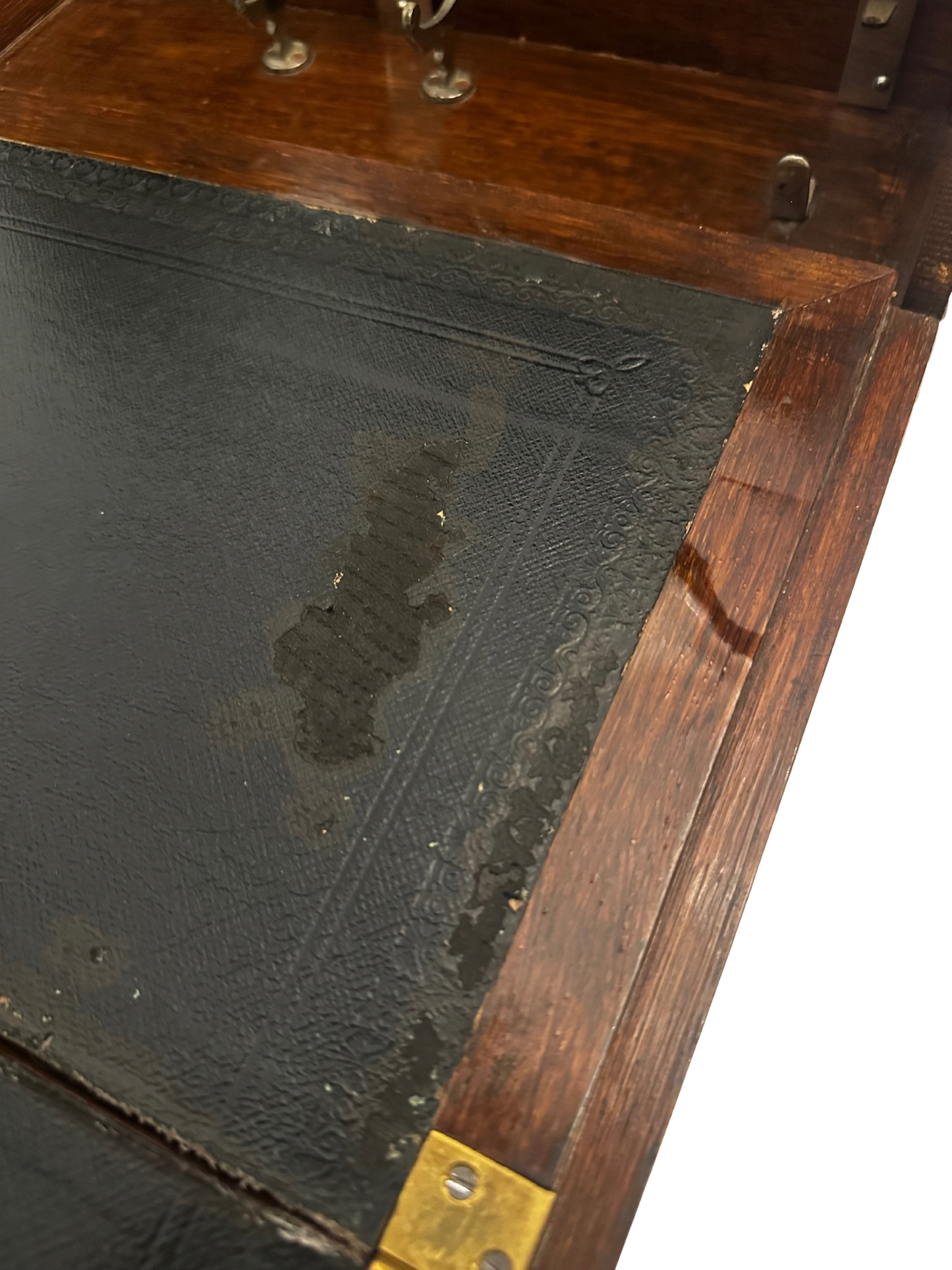
The interior opens to reveal a fitted stationery organizer with scalloped letter slots and adjustable dividers for correspondence storage. The fall-front writing surface is lined with black embossed leather, forming a traditional portable writing desk when opened. It also reveals an upper fitted writing utensil storage, memo display, and pen rest.
A functional and decorative desk object -- ideal for storing letters, documents, fountain pens, or small collectibles
A handsome antique wooden correspondence box with writing slope constructed in richly figured tiger-grain oak with a warm hand-rubbed finish. The box features a gently sloped hinged lid, shield-form escutcheon, and decorative metal carrying handles on either side.
The interior opens to reveal a fitted stationery organizer with scalloped letter slots and adjustable dividers for correspondence storage. The fall-front writing surface is lined with black embossed leather, forming a traditional portable writing desk when opened. It also reveals an upper fitted writing utensil storage, memo display, and pen rest.
A functional and decorative desk object -- ideal for storing letters, documents, fountain pens, or small collectibles
10.5"h x 13.75"w x 9"d (Closed)
10.5"h x 13.75"w x 9"d (Closed)
Writing slopes evolved in the 18th century as portable desks used for correspondence and record-keeping. By the Victorian period, literacy, business correspondence, and personal letter writing expanded dramatically, leading to more specialized stationary boxes with divided interiors for envelopes, paper, and writing tools.
Quarter-sawn oak with strong medullary ray and flame figuring became especially popular during the late Victorian period, particularly in England and the United States. The scalloped document slots and upright cabinet-style construction reflect this later Victorian stationery-box design rather than a flat campaign writing slope.
Writing slopes evolved in the 18th century as portable desks used for correspondence and record-keeping. By the Victorian period, literacy, business correspondence, and personal letter writing expanded dramatically, leading to more specialized stationary boxes with divided interiors for envelopes, paper, and writing tools.
Quarter-sawn oak with strong medullary ray and flame figuring became especially popular during the late Victorian period, particularly in England and the United States. The scalloped document slots and upright cabinet-style construction reflect this later Victorian stationery-box design rather than a flat campaign writing slope.
Early 20th C
Early 20th C
Oak, embossed leather writing surface, steel and brass hardware
Oak, embossed leather writing surface, steel and brass hardware
Likely English or American / Austin Auction House
Likely English or American / Austin Auction House
Wear consistent with age and use. Leather writing surface shows areas of wear and staining. Minor finish wear and surface marks throughout. Key present but lock does not function.
Wear consistent with age and use. Leather writing surface shows areas of wear and staining. Minor finish wear and surface marks throughout. Key present but lock does not function.