


Antique French Rococo Floral Gilt Metal Furniture Mount / Decorative Ormolu Appliqué
Antique French Rococo Floral Gilt Metal Furniture Mount / Decorative Ormolu Appliqué
Couldn't load pickup availability
Share


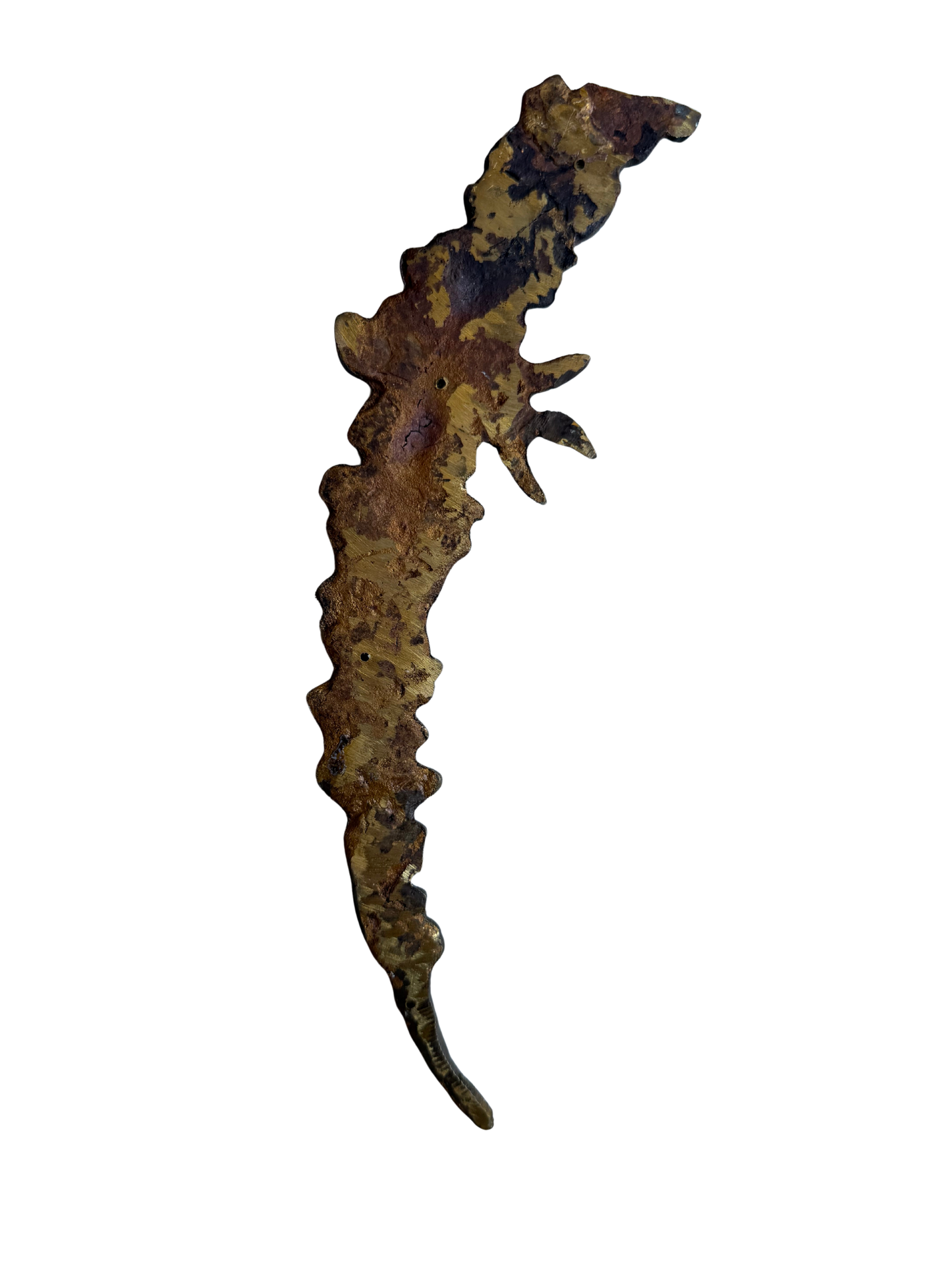
An elegant antique French Rococo Revival decorative furniture mount cast in richly scrolling floral relief, featuring a dynamic arrangement of blooming roses, curling foliage, and asymmetrical botanical ornament extending into a dramatic elongated flourish. The composition embodies the fluid movement and naturalistic ornament favored in Louis XV-inspired decorative arts.
The mount appears to have originally functioned as an applied decorative embellishment for fine furniture, a mirror frame, clock case, casket, or architectural paneling. Its elongated curved form suggests it may have adorned the corner or edge of a bombe commode, vitrine, or ornate salon furnishing. Multiple small mounting holes remain visible from its original installation.
The surface retains remnants of original gilding over a cast metal body, with beautiful age-darkened patina and areas of exposed underlying metal contributing to its authentic antique character. The reverse shows casting texture, oxidation, and traces of historic mounting residue consistent with 19th-century decorative hardware production.
Its sculptural floral arrangement gives it strong standalone decorative appeal, making it equally desirable as a collectible fragment of French decorative arts or as a restoration element.
An elegant antique French Rococo Revival decorative furniture mount cast in richly scrolling floral relief, featuring a dynamic arrangement of blooming roses, curling foliage, and asymmetrical botanical ornament extending into a dramatic elongated flourish. The composition embodies the fluid movement and naturalistic ornament favored in Louis XV-inspired decorative arts.
The mount appears to have originally functioned as an applied decorative embellishment for fine furniture, a mirror frame, clock case, casket, or architectural paneling. Its elongated curved form suggests it may have adorned the corner or edge of a bombe commode, vitrine, or ornate salon furnishing. Multiple small mounting holes remain visible from its original installation.
The surface retains remnants of original gilding over a cast metal body, with beautiful age-darkened patina and areas of exposed underlying metal contributing to its authentic antique character. The reverse shows casting texture, oxidation, and traces of historic mounting residue consistent with 19th-century decorative hardware production.
Its sculptural floral arrangement gives it strong standalone decorative appeal, making it equally desirable as a collectible fragment of French decorative arts or as a restoration element.
9” H x 2.5” W x 0.25" D
9” H x 2.5” W x 0.25" D
During the 19th century, the revival of Rococo and Louis XV styles in France led to widespread production of elaborate gilt metal mounts used to ornament luxury furniture and interior decorative objects. Such appliqués were frequently produced by bronze and ormolu workshops supplying cabinetmakers and decorators creating highly embellished interiors for affluent European households.
Decorative mounts of this type were often individually cast and hand-finished to accentuate flowing floral compositions and asymmetrical Rococo movement.
During the 19th century, the revival of Rococo and Louis XV styles in France led to widespread production of elaborate gilt metal mounts used to ornament luxury furniture and interior decorative objects. Such appliqués were frequently produced by bronze and ormolu workshops supplying cabinetmakers and decorators creating highly embellished interiors for affluent European households.
Decorative mounts of this type were often individually cast and hand-finished to accentuate flowing floral compositions and asymmetrical Rococo movement.
Late 19th century, likely circa 1870–1900
Late 19th century, likely circa 1870–1900
Cast gilt metal, likely brass or bronze with remnants of gilded finish.
Cast gilt metal, likely brass or bronze with remnants of gilded finish.
Likely French or Continental European origin
Likely French or Continental European origin
Antique condition with age-related wear including oxidation, surface scratches, rubbing and losses to gilded finish, minor casting irregularities, and evidence of previous mounting. Reverse exhibits oxidation and residue consistent with long-term use and age. Fragment piece.
Antique condition with age-related wear including oxidation, surface scratches, rubbing and losses to gilded finish, minor casting irregularities, and evidence of previous mounting. Reverse exhibits oxidation and residue consistent with long-term use and age. Fragment piece.