


Antique Gilt Metal Clover Shaped Vanity Box with Portrait of a Young Woman
Antique Gilt Metal Clover Shaped Vanity Box with Portrait of a Young Woman
Couldn't load pickup availability
Share


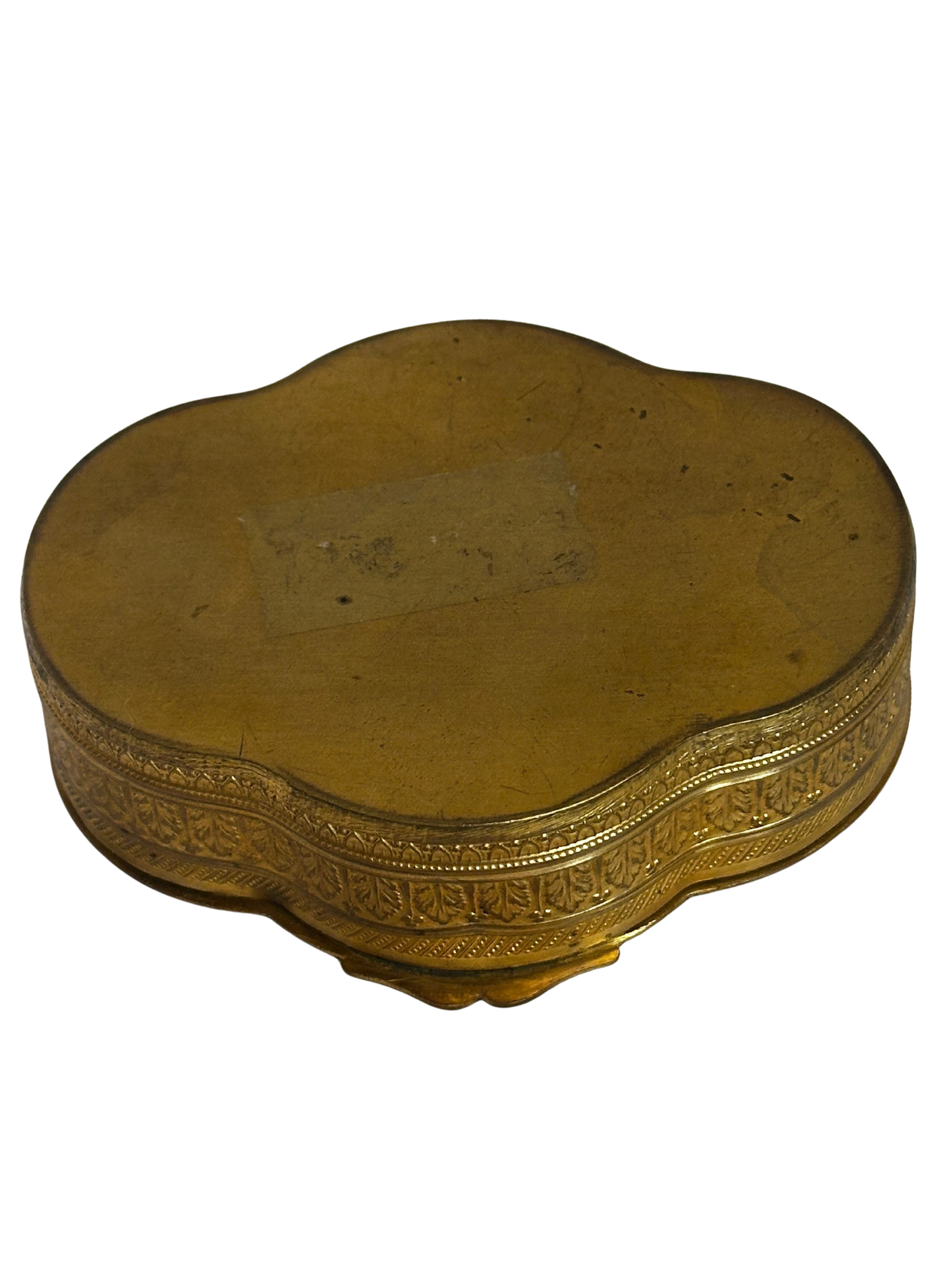
This antique box is constructed of gilt metal, formed in a softly contoured oval or quatrefoil shape, and richly decorated throughout with finely tooled and embossed ornament. The lid is centered with a circular miniature portrait depicting a young woman with curled hair, wearing a blue dress and a translucent white veil. The portrait is delicately hand-painted, with soft modeling of the face, subtle blush tones, and careful attention to expression, consistent with miniature painting traditions of the late 18th to early 19th century.
The miniature is set within a raised gilt bezel decorated with repeating floral and foliate motifs. Surrounding the portrait, the lid surface is densely patterned with vertical bands of floral punches and textured tooling, bordered by scrolling Rococo-inspired cartouches. The sides of the box continue this decorative program, featuring repeating leaf and palmette motifs in relief.
The interior is lined with pale silk or velvet fabric, now toned with age and showing staining, wear, and softening consistent with long use. The hinge is intact and functional. The underside is plain gilt metal, showing surface scratches, handling marks, and patina.
A small painted signature is visible at the lower edge of the miniature (appearing to read “Veguet” or similar).
This antique box is constructed of gilt metal, formed in a softly contoured oval or quatrefoil shape, and richly decorated throughout with finely tooled and embossed ornament. The lid is centered with a circular miniature portrait depicting a young woman with curled hair, wearing a blue dress and a translucent white veil. The portrait is delicately hand-painted, with soft modeling of the face, subtle blush tones, and careful attention to expression, consistent with miniature painting traditions of the late 18th to early 19th century.
The miniature is set within a raised gilt bezel decorated with repeating floral and foliate motifs. Surrounding the portrait, the lid surface is densely patterned with vertical bands of floral punches and textured tooling, bordered by scrolling Rococo-inspired cartouches. The sides of the box continue this decorative program, featuring repeating leaf and palmette motifs in relief.
The interior is lined with pale silk or velvet fabric, now toned with age and showing staining, wear, and softening consistent with long use. The hinge is intact and functional. The underside is plain gilt metal, showing surface scratches, handling marks, and patina.
A small painted signature is visible at the lower edge of the miniature (appearing to read “Veguet” or similar).
3.75"w x 3"d x 1"h
3.75"w x 3"d x 1"h
Veguet was a name associated with 19th c French miniature portraits known for refined courtly depictions in the style of the 18th c.
Boxes of this type were produced as luxury personal objects, often used to store snuff, keepsakes, love tokens, or small personal effects. The inclusion of a hand-painted portrait miniature elevated such boxes beyond purely decorative objects, often suggesting sentimental or commemorative intent.
Miniature portraits remained popular into the early 19th century, even as photography later replaced them. Gilt metal boxes with dense tooling and Rococo-influenced ornament were typically produced in France or neighboring continental workshops, intended for elite or upper-bourgeois clientele.
The combination of an individualized portrait miniature and a richly worked gilt body places this object firmly in the realm of personal luxury rather than mass production.
Veguet was a name associated with 19th c French miniature portraits known for refined courtly depictions in the style of the 18th c.
Boxes of this type were produced as luxury personal objects, often used to store snuff, keepsakes, love tokens, or small personal effects. The inclusion of a hand-painted portrait miniature elevated such boxes beyond purely decorative objects, often suggesting sentimental or commemorative intent.
Miniature portraits remained popular into the early 19th century, even as photography later replaced them. Gilt metal boxes with dense tooling and Rococo-influenced ornament were typically produced in France or neighboring continental workshops, intended for elite or upper-bourgeois clientele.
The combination of an individualized portrait miniature and a richly worked gilt body places this object firmly in the realm of personal luxury rather than mass production.
19th Century
19th Century
Gilt metal box (likely bronze or brass, mercury-gilt or fire-gilt originally)
Watercolor/Gouache miniature portrait
Gilt metal bezel and decorative mounts
Velvet interior lining
Gilt metal box (likely bronze or brass, mercury-gilt or fire-gilt originally)
Watercolor/Gouache miniature portrait
Gilt metal bezel and decorative mounts
Velvet interior lining
France
France
Wear, rubbing, and patina to gilding consistent with age
Interior fabric shows staining, discoloration, and wear
Miniature shows light age-related surface wear
No assay or maker’s marks observed on the metalwork
Wear, rubbing, and patina to gilding consistent with age
Interior fabric shows staining, discoloration, and wear
Miniature shows light age-related surface wear
No assay or maker’s marks observed on the metalwork