

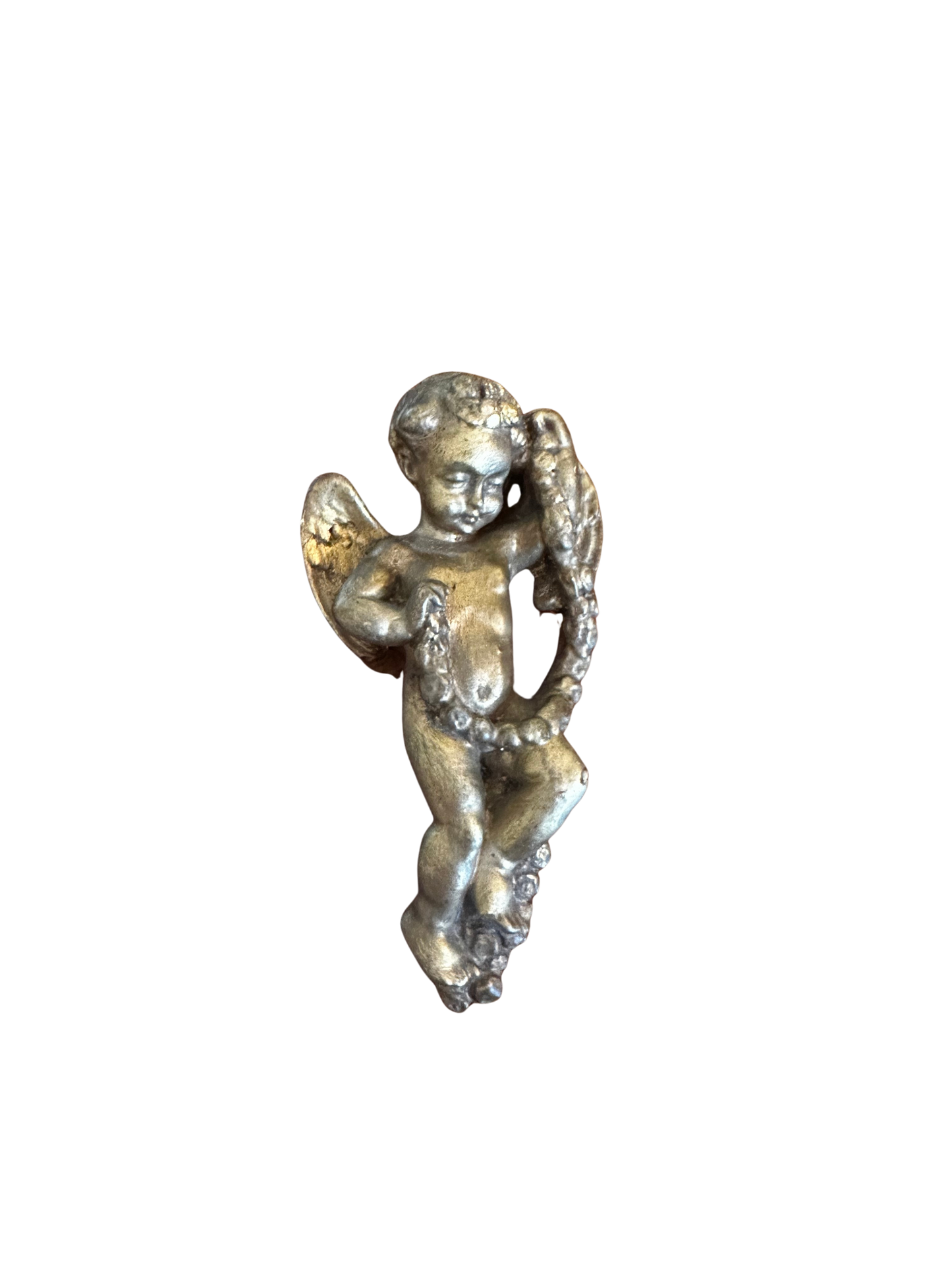
Antique Giltwood Composition Cherub Wall Appliqué / Furniture Mount
Antique Giltwood Composition Cherub Wall Appliqué / Furniture Mount
Couldn't load pickup availability
Share
Additional Description:
A charming antique figural ornament depicting a winged cherub or putto shown standing in contrapposto and holding a floral garland. The figure is modeled in high relief with softly rounded features, curled hair, and spread wings, finished in a warm gold surface over a carved or molded body. The reverse shows an old mounting system, suggesting it was originally attached as an appliqué rather than intended as a freestanding sculpture. Based on form and function, this appears to have served as a decorative architectural or furniture ornament—possibly from a mirror crest, frame, overdoor, bed, cabinet, or other decorative furnishing. The floral swags and playful putto motif are strongly associated with Rococo and Louis XVI Revival decorative arts, and pieces like this were widely used to embellish French and Continental interiors. The surface shows age, wear, and losses to the gilded finish, which contribute to its antique character.
Era:
Likely 19th century, possibly late 19th to early 20th century, in the French or Continental Rococo/Louis XVI Revival taste
History:
Cherubic putti were enduring decorative motifs in European decorative arts, especially in the 18th century and again during the revival styles of the 19th century. They appeared on furniture mounts, mirror crests, boiserie ornaments, bed appliqués, and wall decorations, symbolizing love, abundance, and lighthearted elegance. During the 19th century, French and Continental makers frequently revived earlier Louis XV and Louis XVI ornament, producing richly embellished decorative elements in giltwood, composition, plaster, or other molded materials for interiors seeking an aristocratic, Old World effect. This example reflects that tradition, with its garland motif and animated pose evoking neoclassical and Rococo decorative vocabulary.
Provenance:
Likely French or Continental European
Materials:
Giltwood, composition, or molded decorative material with gilded surface; metal mounting element to reverse
Dimensions:
Leave blank
Disclaimers:
Surface wear, rubbing, and scattered losses to gilding throughout. Age-related abrasions, minor chips, and small losses visible, especially around the hair, wings, garland, and edges. Reverse shows old attachment hardware and wear consistent with prior mounting. Exact original use cannot be confirmed from photos alone, but it was likely part of a larger decorative object or interior element. Material should be described cautiously unless examined in hand, as it may be carved wood, composition, or another molded medium.
Additional Description:
A charming antique figural ornament depicting a winged cherub or putto shown standing in contrapposto and holding a floral garland. The figure is modeled in high relief with softly rounded features, curled hair, and spread wings, finished in a warm gold surface over a carved or molded body. The reverse shows an old mounting system, suggesting it was originally attached as an appliqué rather than intended as a freestanding sculpture. Based on form and function, this appears to have served as a decorative architectural or furniture ornament—possibly from a mirror crest, frame, overdoor, bed, cabinet, or other decorative furnishing. The floral swags and playful putto motif are strongly associated with Rococo and Louis XVI Revival decorative arts, and pieces like this were widely used to embellish French and Continental interiors. The surface shows age, wear, and losses to the gilded finish, which contribute to its antique character.
Era:
Likely 19th century, possibly late 19th to early 20th century, in the French or Continental Rococo/Louis XVI Revival taste
History:
Cherubic putti were enduring decorative motifs in European decorative arts, especially in the 18th century and again during the revival styles of the 19th century. They appeared on furniture mounts, mirror crests, boiserie ornaments, bed appliqués, and wall decorations, symbolizing love, abundance, and lighthearted elegance. During the 19th century, French and Continental makers frequently revived earlier Louis XV and Louis XVI ornament, producing richly embellished decorative elements in giltwood, composition, plaster, or other molded materials for interiors seeking an aristocratic, Old World effect. This example reflects that tradition, with its garland motif and animated pose evoking neoclassical and Rococo decorative vocabulary.
Provenance:
Likely French or Continental European
Materials:
Giltwood, composition, or molded decorative material with gilded surface; metal mounting element to reverse
Dimensions:
Leave blank
Disclaimers:
Surface wear, rubbing, and scattered losses to gilding throughout. Age-related abrasions, minor chips, and small losses visible, especially around the hair, wings, garland, and edges. Reverse shows old attachment hardware and wear consistent with prior mounting. Exact original use cannot be confirmed from photos alone, but it was likely part of a larger decorative object or interior element. Material should be described cautiously unless examined in hand, as it may be carved wood, composition, or another molded medium.