

Antique Gothic Revival Carved Oak Heraldic Crest with Rampant Lions (Architectural Furniture Fragment)
Antique Gothic Revival Carved Oak Heraldic Crest with Rampant Lions (Architectural Furniture Fragment)
Couldn't load pickup availability
Share
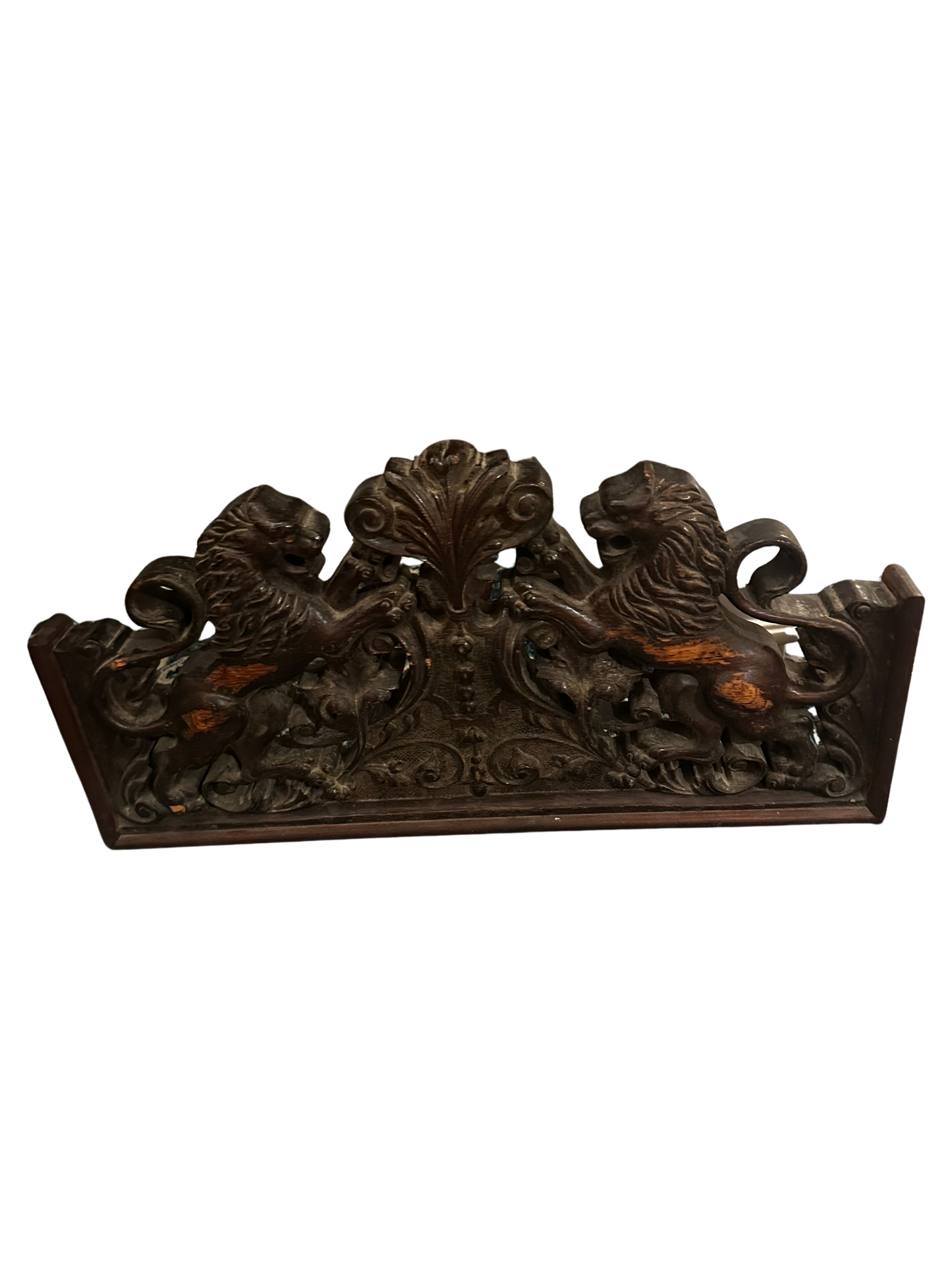
Additional Description: A striking hand-carved Gothic Revival oak crest or pediment fragment featuring a pair of rampant heraldic lions flanking a central foliate cartouche. The composition is symmetrical, with each lion rearing up and grapsing scrolling acanthus ornament that rises into a dramatic central flourish.
The carving displays strong medieval revival characteristics, including deeply cut relief, pierced openwork scrolls, and stylized heraldic beasts with exaggerated manes and curling tails. The lions appear in the traditional heraldic "rampant" pose commonly associated with British and European armorial imagery.
The reverse reveals hand-carved toolings and wear, indicating it was originally attached to a larger piece of furniture or architectural element. Pieces of the type commonly served as: cabinet or bookcase crests, sideboard or buffet pediments, hall bench or settee back panels, or deocrative architectural overdoors.
The scale, form, and dramatic heraldic motif suggest it once crowned a substational piece of Gothic Revival furniture, likely produced during the late 19th century when medieval design saw renewed popularity in England, France, and Continental Europe.
Era: Mid-Late 19th Century, Circa 1840-1890 (Gothic Revival Period)
History: The Gothic Revival movement swept through Europe and America during the 19th century, inspiring furniture makers to incoprporate medieval motifs such as heraldic animals, tracery, and carved crests. Lions were especially popular decorative elements, symbolizing strength, nobility, and royal authority.
Carved crest elements like this were often placed at the top of large furniture pieces, acting as architectural statements that echoed medieval interiors.
Provenance: Likely removed from a larger Gothic Revival furniture piece. Unknown Region.
Materials: Carved oak or walnut (likely oak), hand-carved relief work
Dimensions: 20"w x 10.25"h x 1.5"d
Disclaimers: Surface wear, rubbing, and loss to finish consistent with age and previous use. Areas of abrasion exposing light wood are visible on the lions. Minor surface wear and historic handling marks present.
Additional Description: A striking hand-carved Gothic Revival oak crest or pediment fragment featuring a pair of rampant heraldic lions flanking a central foliate cartouche. The composition is symmetrical, with each lion rearing up and grapsing scrolling acanthus ornament that rises into a dramatic central flourish.
The carving displays strong medieval revival characteristics, including deeply cut relief, pierced openwork scrolls, and stylized heraldic beasts with exaggerated manes and curling tails. The lions appear in the traditional heraldic "rampant" pose commonly associated with British and European armorial imagery.
The reverse reveals hand-carved toolings and wear, indicating it was originally attached to a larger piece of furniture or architectural element. Pieces of the type commonly served as: cabinet or bookcase crests, sideboard or buffet pediments, hall bench or settee back panels, or deocrative architectural overdoors.
The scale, form, and dramatic heraldic motif suggest it once crowned a substational piece of Gothic Revival furniture, likely produced during the late 19th century when medieval design saw renewed popularity in England, France, and Continental Europe.
Era: Mid-Late 19th Century, Circa 1840-1890 (Gothic Revival Period)
History: The Gothic Revival movement swept through Europe and America during the 19th century, inspiring furniture makers to incoprporate medieval motifs such as heraldic animals, tracery, and carved crests. Lions were especially popular decorative elements, symbolizing strength, nobility, and royal authority.
Carved crest elements like this were often placed at the top of large furniture pieces, acting as architectural statements that echoed medieval interiors.
Provenance: Likely removed from a larger Gothic Revival furniture piece. Unknown Region.
Materials: Carved oak or walnut (likely oak), hand-carved relief work
Dimensions: 20"w x 10.25"h x 1.5"d
Disclaimers: Surface wear, rubbing, and loss to finish consistent with age and previous use. Areas of abrasion exposing light wood are visible on the lions. Minor surface wear and historic handling marks present.