

Antique Victorian Ebonized Wood Jewelry Casket with Brass Strapwork, Studded Hardware
Antique Victorian Ebonized Wood Jewelry Casket with Brass Strapwork, Studded Hardware
Couldn't load pickup availability
Share
Item Title: Antique Victorian Ebonized Wood Jewelry Casket with Brass Strapwork, Studded Hardware, Original Key & Blue Moiré Interior, Circa 1870–1900
## Additional Description
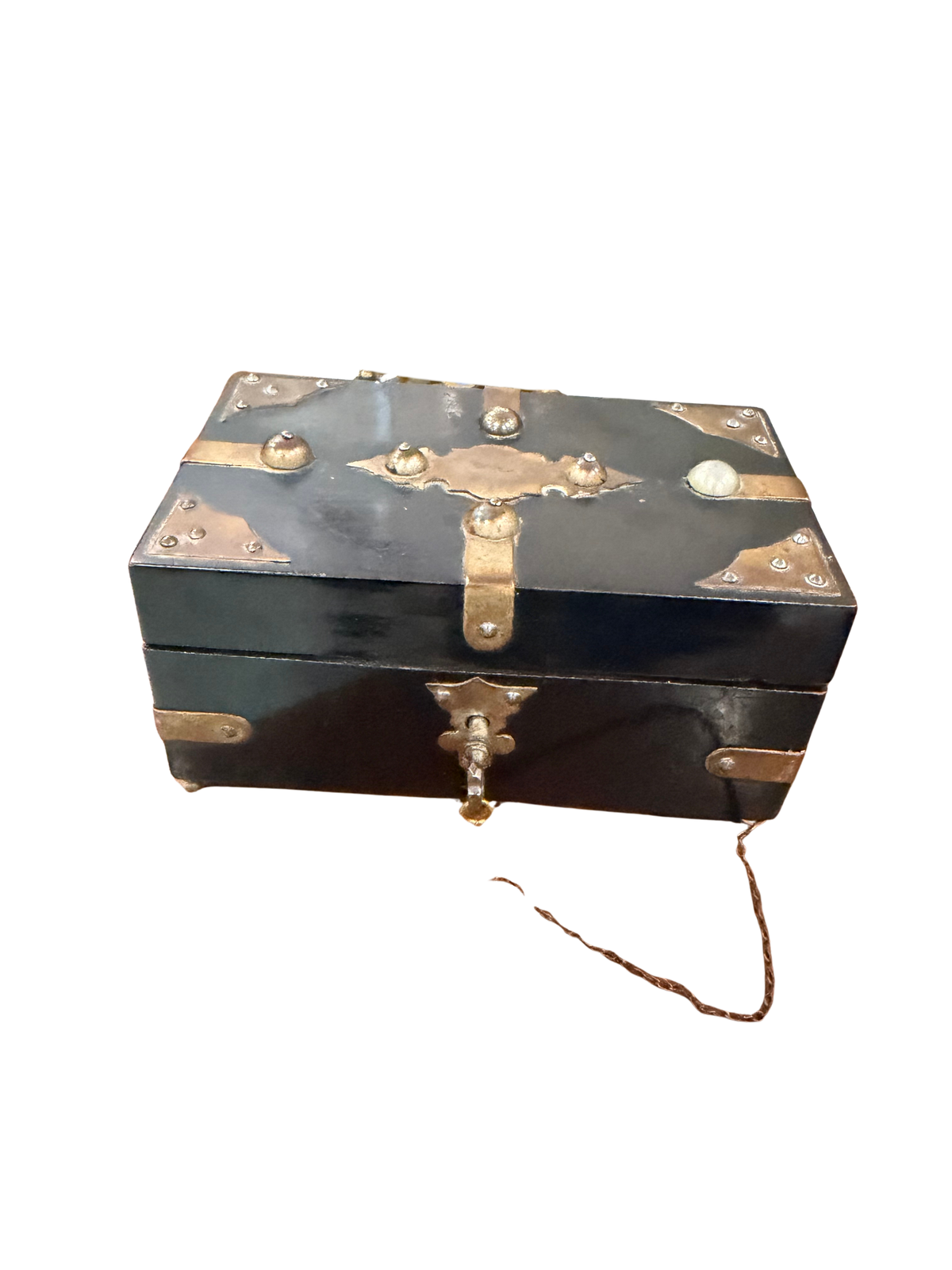
A beautifully crafted late 19th-century Victorian jewelry or keepsake casket, featuring a rich black ebonized wood exterior adorned with substantial brass strapwork, decorative metal studs, and protective corner mounts.
The rectangular box features a hinged lid decorated with an arrangement of brass bands secured by prominent domed rivets. Each corner is reinforced with shaped brass mounts, while a decorative central metal plaque adds architectural interest to the design.
The contrasting black exterior and warm, naturally patinated brass hardware evoke the appearance of a miniature antique strongbox, reflecting the Victorian fascination with historicist and Gothic Revival design.
The front retains its decorative brass lock escutcheon and an antique-style metal key suspended from a delicate chain, adding both functionality and decorative appeal.
Opening the box reveals a particularly beautiful interior lined in vibrant turquoise-blue moiré fabric. The distinctive watered texture of the lining catches the light in fine, rippling patterns, creating a striking contrast against the dark exterior.
The inside of the lid features a matching blue textile lining, finished with delicate braided trim. The lower compartment offers an open storage space, suitable for jewelry, treasured keepsakes, or personal correspondence.
Small rounded metal feet elevate the casket slightly from the surface beneath.
A wonderful example of Victorian decorative craftsmanship, particularly appealing for its striking combination of black ebonized wood, architectural brass hardware, and richly colored interior.
## Era
**Circa 1870–1900**
Late 19th century, Victorian period.
Gothic Revival and historicist influences.
The decorative metal strapping, domed rivets, ebonized finish, and textile-lined interior are consistent with European decorative boxes produced during the second half of the 19th century.
## History
During the Victorian era, decorative boxes and personal caskets became increasingly popular among affluent European households.
These objects were designed to store jewelry, correspondence, sentimental keepsakes, and other treasured possessions, often occupying prominent positions on dressing tables, writing desks, and bedroom furnishings.
The 19th century witnessed a renewed fascination with historical decorative styles, particularly Gothic Revival and Renaissance Revival design.
Cabinetmakers and decorative metalworkers incorporated architectural motifs, metal strapwork, protective corner fittings, and prominent rivets into domestic accessories, drawing inspiration from medieval coffers and historic strongboxes.
Although these decorative elements suggested security and permanence, they were frequently employed primarily for their visual appeal.
Ebonized wood was especially fashionable during the second half of the 19th century. The dark finish was often paired with brass or gilt metal mounts to create a dramatic contrast.
The present example reflects these design traditions through its rectangular form, bold brass hardware, and dark polished exterior.
The interior's vivid blue moiré lining is particularly characteristic of luxury 19th-century boxes, when silk and silk-like textiles were employed to protect delicate contents while creating an elegant presentation.
Comparable brass-mounted Victorian caskets were produced in both Britain and Continental Europe, including France, where similar boxes were used for jewelry and personal treasures.
Today, these decorative caskets are collected for their craftsmanship, original fittings, historical character, and versatility within traditional interiors.
## Provenance
European origin, possibly English or French.
The Victorian-style metal mounts, ebonized wood, and textile lining are consistent with late 19th-century European decorative box manufacture.
No maker's mark or documented ownership history has been conclusively identified.
## Materials
- Ebonized wood construction
- Black polished or lacquered finish
- Brass or brass-alloy strapwork and corner mounts
- Domed metal studs and decorative rivets
- Decorative metal lock escutcheon
- Metal key with attached chain
- Brass hinges
- Turquoise-blue moiré textile lining
- Decorative braided interior trim
- Rounded metal feet
## Dimensions
Dimensions to be confirmed.
## Condition/Disclaimers
Good antique condition consistent with age and historical use.
The black exterior retains its attractive polished finish, with scattered surface scratches, minor scuffs, and age-related wear.
The brass hardware exhibits natural patination, tarnishing, and minor discoloration, with areas of lighter metal visible along the raised details and edges.
The decorative metal straps, corner mounts, and domed studs appear largely intact.
The exterior retains its lock hardware and a metal key attached by a chain. The locking mechanism has not been independently tested.
The turquoise-blue interior lining remains particularly attractive, retaining much of its original color and distinctive moiré texture.
Minor areas of discoloration, small marks, and age-related wear are visible along the interior fabric, particularly on the underside of the lid.
The interior braided trim appears largely intact.
The lid opens on two brass hinges, which appear present and structurally intact in the photographs.
The original purpose and originality of the lining have not been conclusively established.
## Value
**Estimated Antique Retail Value: $150–$275 USD**
**Suggested Retail Listing Price: $225 USD**
The substantial decorative brass hardware, striking ebonized finish, blue moiré-lined interior, and surviving key make this an appealing example of late Victorian decorative box design.
Particularly suited to collectors of antique jewelry caskets, Gothic Revival accessories, historic writing and dressing table objects, and Victorian decorative arts.