

Art Nouveau–Style Gilt Bronze Wax Seal with Female Figure and Monogram
Art Nouveau–Style Gilt Bronze Wax Seal with Female Figure and Monogram
Couldn't load pickup availability
Share


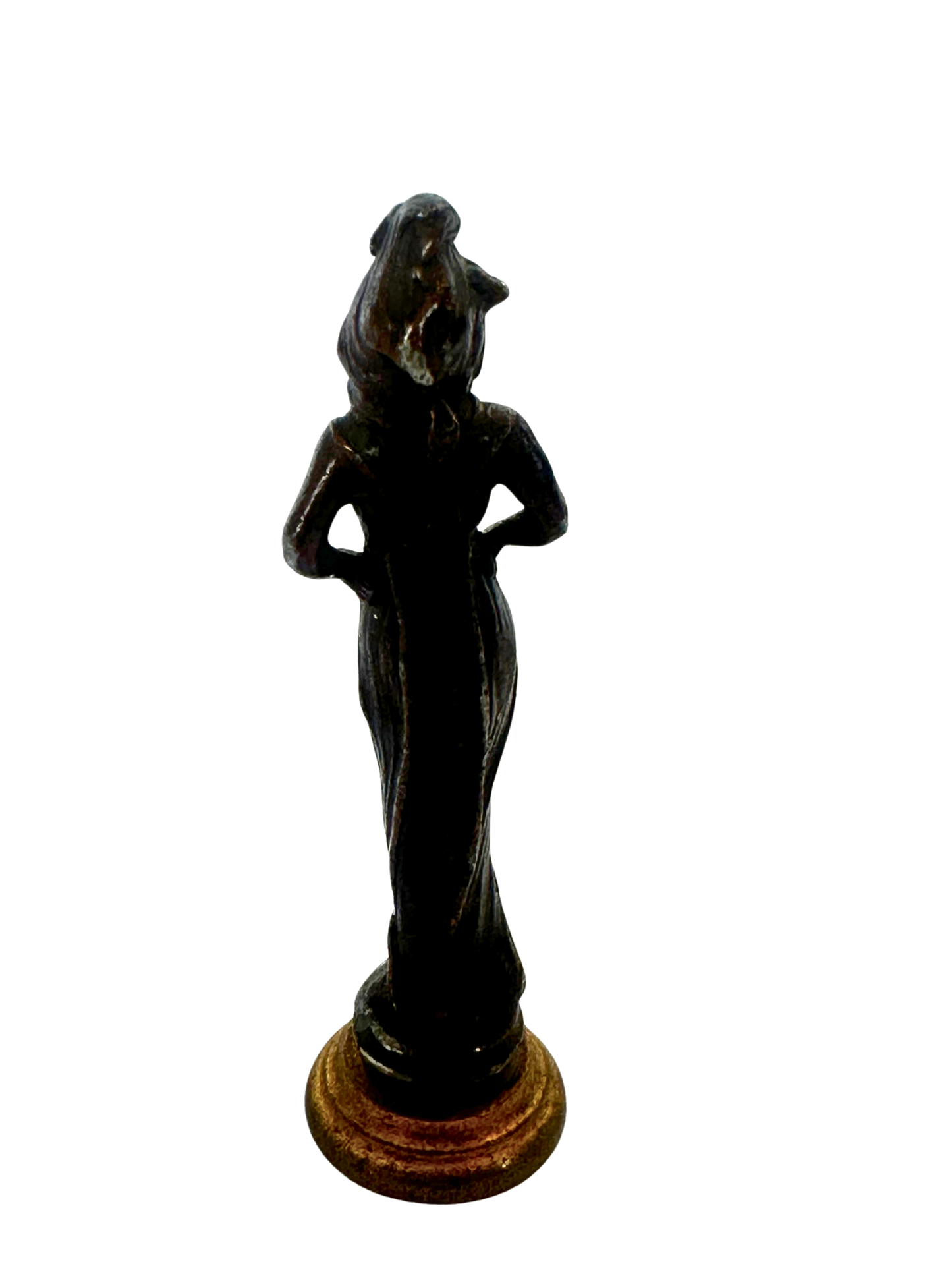
Gilt bronze wax seal featuring a full-length Art Nouveau–style female figure, modeled standing with hands at her hips and wearing a flowing, fitted garment with sinuous contours. The figure’s elongated proportions, softly stylized facial features, and fluid drapery are characteristic of Art Nouveau design. The figure rises from a circular gilt base and terminates in a flat circular sealing matrix engraved with a script monogram, composed of intertwined letters with decorative dots. The surface shows worn gilding and darkened patina consistent with age and use. The seal is well balanced and structurally intact.
Gilt bronze wax seal featuring a full-length Art Nouveau–style female figure, modeled standing with hands at her hips and wearing a flowing, fitted garment with sinuous contours. The figure’s elongated proportions, softly stylized facial features, and fluid drapery are characteristic of Art Nouveau design. The figure rises from a circular gilt base and terminates in a flat circular sealing matrix engraved with a script monogram, composed of intertwined letters with decorative dots. The surface shows worn gilding and darkened patina consistent with age and use. The seal is well balanced and structurally intact.
3"h x 0.75"w
3"h x 0.75"w
During the late 19th and early 20th centuries, the Art Nouveau movement emphasized organic forms, flowing lines, and idealized female figures inspired by nature and symbolism. These stylistic principles were widely applied to decorative arts, including personal desk accessories such as wax seals. Monogrammed seals of this period were commonly commissioned for private correspondence and served both practical and decorative purposes, reflecting the owner’s identity and contemporary artistic taste.
During the late 19th and early 20th centuries, the Art Nouveau movement emphasized organic forms, flowing lines, and idealized female figures inspired by nature and symbolism. These stylistic principles were widely applied to decorative arts, including personal desk accessories such as wax seals. Monogrammed seals of this period were commonly commissioned for private correspondence and served both practical and decorative purposes, reflecting the owner’s identity and contemporary artistic taste.
Late 19th to Early 20th Century (c. 1890–1910)
Late 19th to Early 20th Century (c. 1890–1910)
Gilt bronze
Gilt bronze
Europe
Exact origin unknown
Europe
Exact origin unknown
Surface wear, gilding loss, and patina consistent with age; light abrasions from handling and use; engraving and metal composition untested; no visible cracks or repairs observed.
Surface wear, gilding loss, and patina consistent with age; light abrasions from handling and use; engraving and metal composition untested; no visible cracks or repairs observed.