



Carved Baroque Giltwood Architectural Fragment
Carved Baroque Giltwood Architectural Fragment
Couldn't load pickup availability
Share


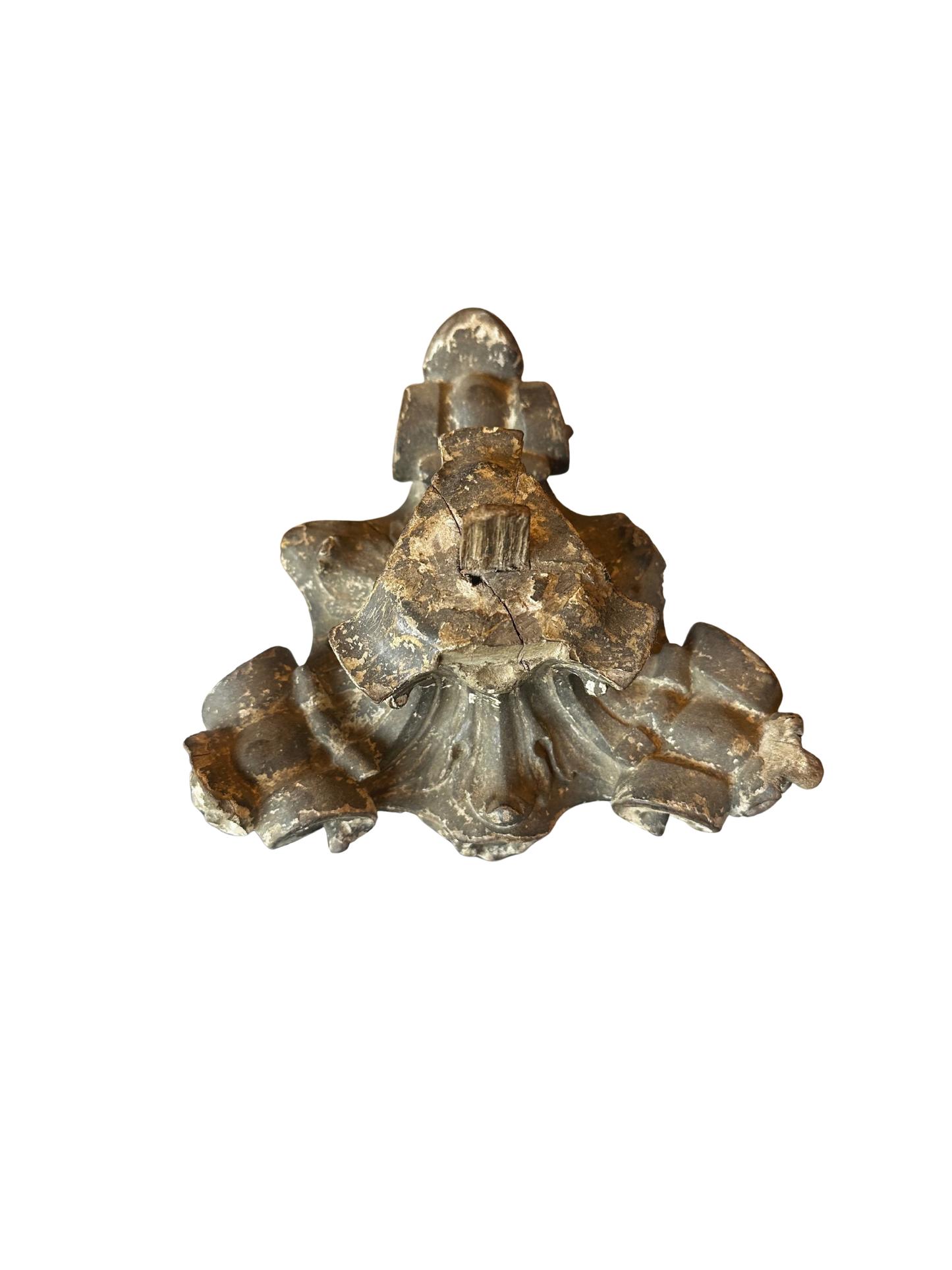
A richly carved architectural fragment in the Baroque taste, featuring bold, scrolling acanthus volutes radiating outward from a central cartouche. The carving exhibits deep undercutting and strong asymmetry typical of high Baroque ornament, with a pronounced central stem or tenon at the top indicating it was once integrated into a larger architectural or decorative scheme—possibly as an overdoor element, altar appliqué, console support, or large piece of furniture ornamentation. Traces of original gesso and gilt finish remain throughout, now softened and worn to a darkened, atmospheric patina that highlights the carving’s depth and age. The piece is now mounted on a later custom metal stand for sculptural display.
A richly carved architectural fragment in the Baroque taste, featuring bold, scrolling acanthus volutes radiating outward from a central cartouche. The carving exhibits deep undercutting and strong asymmetry typical of high Baroque ornament, with a pronounced central stem or tenon at the top indicating it was once integrated into a larger architectural or decorative scheme—possibly as an overdoor element, altar appliqué, console support, or large piece of furniture ornamentation. Traces of original gesso and gilt finish remain throughout, now softened and worn to a darkened, atmospheric patina that highlights the carving’s depth and age. The piece is now mounted on a later custom metal stand for sculptural display.
20"h x 7"w x 7"d
20"h x 7"w x 7"d
During the Baroque period, architectural and decorative wood carving flourished across Europe, particularly in France, Italy, Spain, and parts of Central Europe. Such carved fragments were integral to grand interiors—adorning churches, palaces, and aristocratic residences—where ornament served to convey drama, movement, and status. Over time, many architectural interiors were dismantled or remodeled, and fragments like this survived as standalone relics of their original grandeur.
During the Baroque period, architectural and decorative wood carving flourished across Europe, particularly in France, Italy, Spain, and parts of Central Europe. Such carved fragments were integral to grand interiors—adorning churches, palaces, and aristocratic residences—where ornament served to convey drama, movement, and status. Over time, many architectural interiors were dismantled or remodeled, and fragments like this survived as standalone relics of their original grandeur.
Late 17th to early 18th century (Baroque period)
Late 17th to early 18th century (Baroque period)
Carved wood (likely oak or walnut), gesso, remnants of gilt finish; later metal display stand
Carved wood (likely oak or walnut), gesso, remnants of gilt finish; later metal display stand
Continental Europe (likely French or Italian)
Continental Europe (likely French or Italian)
Wear consistent with age; losses to carving edges; surface abrasions; cracks and separations in the wood; significant loss of original gilding and gesso; later mounting hardware added for display.
Wear consistent with age; losses to carving edges; surface abrasions; cracks and separations in the wood; significant loss of original gilding and gesso; later mounting hardware added for display.