



Carved Wooden Cherub / Angel Architectural Salvage
Carved Wooden Cherub / Angel Architectural Salvage
Couldn't load pickup availability
Share


Hand-carved wooden architectural fragment depicting a cherub or angelic figure with softly modeled facial features, folded wings, and upward gaze. The figure appears to rest on crossed arms or drapery, with stylized feather carving along the sides.
The carving shows evidence of an older surface finish — possibly stained or originally polychromed and later darkened — with natural wear to high points revealing lighter wood beneath. Tool marks are visible in recessed areas, consistent with hand carving.
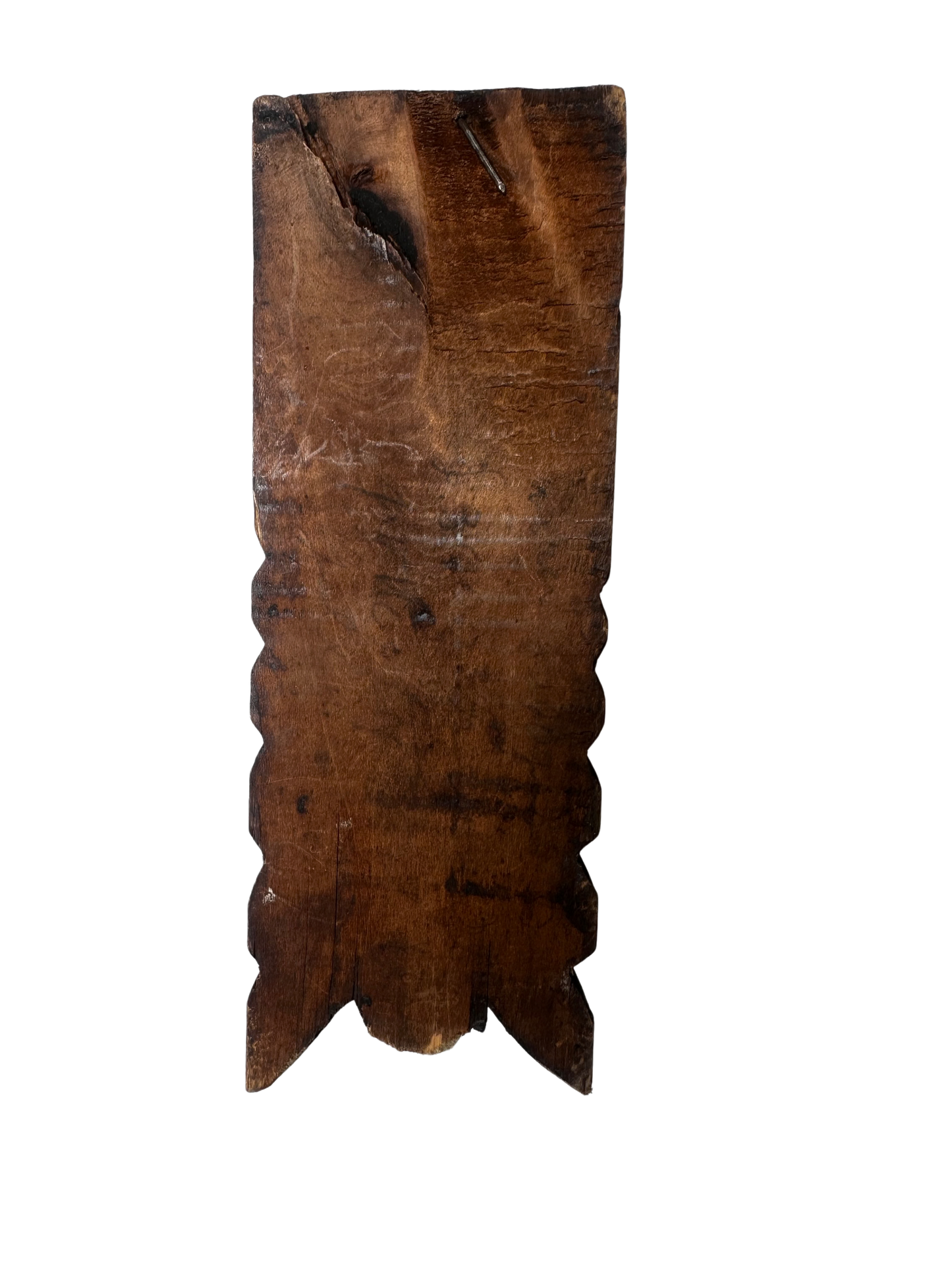
The back is flat and unfinished, with old mounting marks and cracks from wood movement over time, suggesting the piece was originally attached to a larger structure such as: a cabinet or bed pediment, church furnishing or altar element, architectural bracket or corbel, mirror or frame cresting element.
The carving style leans toward folk-Baroque / provincial devotional carving, rather than academic sculpture.
Hand-carved wooden architectural fragment depicting a cherub or angelic figure with softly modeled facial features, folded wings, and upward gaze. The figure appears to rest on crossed arms or drapery, with stylized feather carving along the sides.
The carving shows evidence of an older surface finish — possibly stained or originally polychromed and later darkened — with natural wear to high points revealing lighter wood beneath. Tool marks are visible in recessed areas, consistent with hand carving.
The back is flat and unfinished, with old mounting marks and cracks from wood movement over time, suggesting the piece was originally attached to a larger structure such as: a cabinet or bed pediment, church furnishing or altar element, architectural bracket or corbel, mirror or frame cresting element.
The carving style leans toward folk-Baroque / provincial devotional carving, rather than academic sculpture.
Carved cherub and angel motifs were widely used in European religious and decorative arts from the Baroque period onward. Smaller devotional or architectural carvings were often produced by regional craftsmen for furniture, altarpieces, or domestic religious interiors.
The simplified anatomy, expressive face, and wing carving suggest a provincial or workshop carving rather than a formal sculpture studio piece. These types of fragments often survive after larger furniture or architectural elements were dismantled.
This form of fragment collecting became especially popular in the late 19th and early 20th centuries, when decorative architectural salvage entered the antiques market.
Carved cherub and angel motifs were widely used in European religious and decorative arts from the Baroque period onward. Smaller devotional or architectural carvings were often produced by regional craftsmen for furniture, altarpieces, or domestic religious interiors.
The simplified anatomy, expressive face, and wing carving suggest a provincial or workshop carving rather than a formal sculpture studio piece. These types of fragments often survive after larger furniture or architectural elements were dismantled.
This form of fragment collecting became especially popular in the late 19th and early 20th centuries, when decorative architectural salvage entered the antiques market.
Likely 19th century (possibly late 18th–early 20th century range)
Likely 19th century (possibly late 18th–early 20th century range)
Carved wood (likely pine, walnut, or fruitwood)
Darkened surface finish or stain
Carved wood (likely pine, walnut, or fruitwood)
Darkened surface finish or stain
Continental Europe (likely French, Italian, or Central European)
Continental Europe (likely French, Italian, or Central European)
Surface wear and finish loss consistent with age
Stable age cracks visible, especially on the back
Evidence of prior mounting\
Minor losses to edges and carving details
Surface wear and finish loss consistent with age
Stable age cracks visible, especially on the back
Evidence of prior mounting\
Minor losses to edges and carving details