


Classical Male Torso Sculpture in White Plaster Composition
Classical Male Torso Sculpture in White Plaster Composition
Couldn't load pickup availability
Share
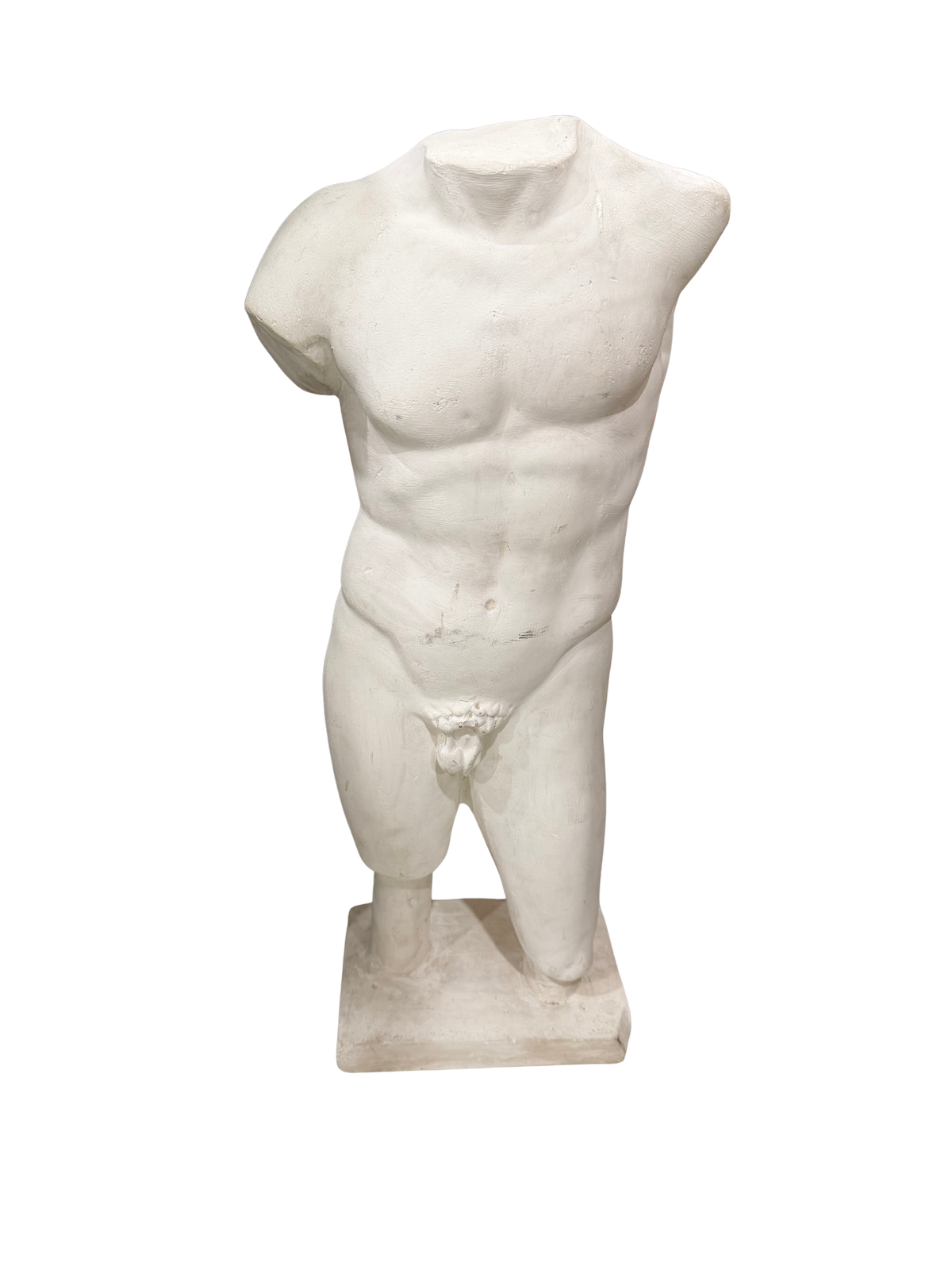
Additional Description: A striking classical male torso sculpture modeled after ancient Greco-Roman prototypes. The figure is presented as a fragmentary study, terminating at the shoulders and upper thighs in the manner of surviving antique sculptures. The muscular anatomy of the chest and abdomen is rendered with careful attention to classical proportion, reflecting the enduring influence of ancient sculpture on later academic and decorative works.
Fragmentary torsos such as this became especially popular in the 19th and 20th centuries as teaching models for artists and as decorative sculptures inspired by antiquity. The intentionally simplified treatment of the extremities and genital area reflects the tradition of displaying torso studies that emphasize anatomical form rather than complete figural detail.
The sculpture appears to be cast in plaster or plaster composition, a material commonly used for academic casts and decorative reproductions of classical works. Its elegant white surface and timeless classical form make it an attractive accent piece for interiors inspired by museum and Grand Tour aesthetics.
Era: 20th Century
History: Since the 18th century, casts of classical sculptures have been produced for artists’ studios, academies, and collectors interested in the art of antiquity. These reproductions allowed students and enthusiasts to study classical proportions and anatomy without traveling to European museums. Fragmentary torsos in particular became popular decorative objects reflecting the Romantic fascination with ancient ruins.
Provenance: France
Materials: Plaster or plaster composition
Dimensions: 23.5" H x 9.5" W x 6" D
Disclaimers: Surface wear, small abrasions, and imperfections consistent with age and material. Please review photographs carefully.
Additional Description: A striking classical male torso sculpture modeled after ancient Greco-Roman prototypes. The figure is presented as a fragmentary study, terminating at the shoulders and upper thighs in the manner of surviving antique sculptures. The muscular anatomy of the chest and abdomen is rendered with careful attention to classical proportion, reflecting the enduring influence of ancient sculpture on later academic and decorative works.
Fragmentary torsos such as this became especially popular in the 19th and 20th centuries as teaching models for artists and as decorative sculptures inspired by antiquity. The intentionally simplified treatment of the extremities and genital area reflects the tradition of displaying torso studies that emphasize anatomical form rather than complete figural detail.
The sculpture appears to be cast in plaster or plaster composition, a material commonly used for academic casts and decorative reproductions of classical works. Its elegant white surface and timeless classical form make it an attractive accent piece for interiors inspired by museum and Grand Tour aesthetics.
Era: 20th Century
History: Since the 18th century, casts of classical sculptures have been produced for artists’ studios, academies, and collectors interested in the art of antiquity. These reproductions allowed students and enthusiasts to study classical proportions and anatomy without traveling to European museums. Fragmentary torsos in particular became popular decorative objects reflecting the Romantic fascination with ancient ruins.
Provenance: France
Materials: Plaster or plaster composition
Dimensions: 23.5" H x 9.5" W x 6" D
Disclaimers: Surface wear, small abrasions, and imperfections consistent with age and material. Please review photographs carefully.