



Hand-Carved Wooden Devotional Cross Panel Marked VII
Hand-Carved Wooden Devotional Cross Panel Marked VII
Couldn't load pickup availability
Share


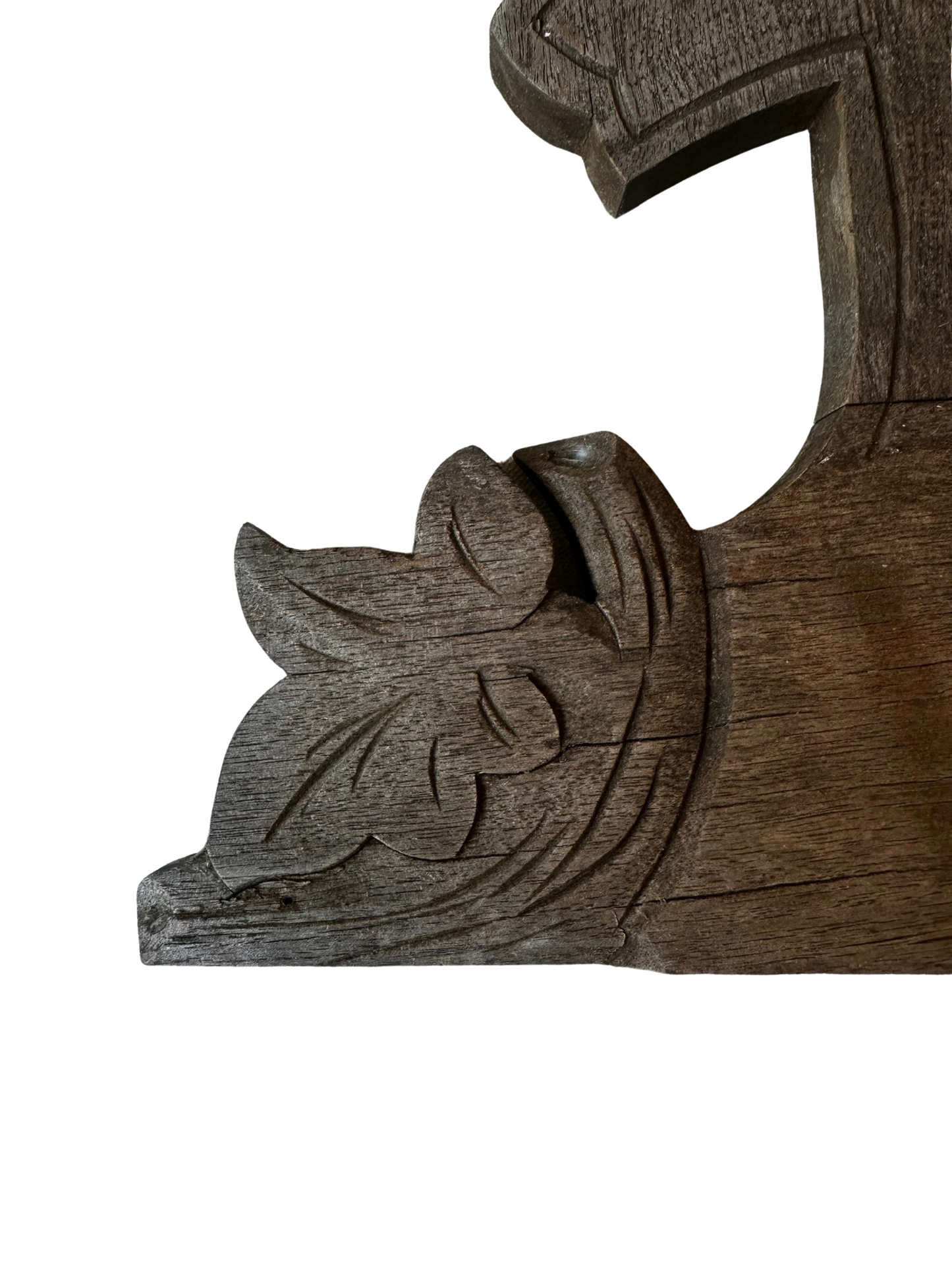
A hand-carved wooden devotional panel, each surmounted by a Latin cross rising from a stylized foliate base with scrolling leaf motifs carved in relief. The carving is naïve yet deliberate, with chamfered edges, incised outlining to the cross arms, and visible hand-tool marks throughout.
The panel bears a Roman numeral carved or stamped to the central field: marked “VII”. The numeral is worn but legible, integrated into the surface rather than later-added labels. The wood shows pronounced grain, age shrinkage, surface checking, and a dry, oxidized patina consistent with long-term ecclesiastical or devotional use.
The back is plain and unfinished, showing tool marks, oxidation, and handling wear. Construction suggests it was intended to be mounted with dowels and arranged sequentially, rather than as a freestanding object.
A hand-carved wooden devotional panel, each surmounted by a Latin cross rising from a stylized foliate base with scrolling leaf motifs carved in relief. The carving is naïve yet deliberate, with chamfered edges, incised outlining to the cross arms, and visible hand-tool marks throughout.
The panel bears a Roman numeral carved or stamped to the central field: marked “VII”. The numeral is worn but legible, integrated into the surface rather than later-added labels. The wood shows pronounced grain, age shrinkage, surface checking, and a dry, oxidized patina consistent with long-term ecclesiastical or devotional use.
The back is plain and unfinished, showing tool marks, oxidation, and handling wear. Construction suggests it was intended to be mounted with dowels and arranged sequentially, rather than as a freestanding object.
7.75"h x 9"w x 0.5"d
7.75"h x 9"w x 0.5"d
These panels are best understood as Stations of the Cross elements, with the Roman numerals corresponding to specific stations within the traditional Catholic devotional sequence. Stations VI and VII represent key moments in the Passion narrative and were often displayed as individual carved panels along church walls, cloisters, or chapels, particularly in rural or monastic settings.
Hand-carved wooden stations were common in regions where stone carving was impractical or cost-prohibitive, and they often exhibit regional folk-carving characteristics rather than academic refinement. Their purpose was devotional, instructional, and meditative rather than purely decorative.
These panels are best understood as Stations of the Cross elements, with the Roman numerals corresponding to specific stations within the traditional Catholic devotional sequence. Stations VI and VII represent key moments in the Passion narrative and were often displayed as individual carved panels along church walls, cloisters, or chapels, particularly in rural or monastic settings.
Hand-carved wooden stations were common in regions where stone carving was impractical or cost-prohibitive, and they often exhibit regional folk-carving characteristics rather than academic refinement. Their purpose was devotional, instructional, and meditative rather than purely decorative.
18th–19th century (likely late 18th to early 19th century)
18th–19th century (likely late 18th to early 19th century)
Solid carved wood (likely hardwood)
Hand-carved relief decoration
Natural aged surface patina
Solid carved wood (likely hardwood)
Hand-carved relief decoration
Natural aged surface patina
Continental Europe (likely Catholic region; exact country unspecified)
Continental Europe (likely Catholic region; exact country unspecified)
Surface wear, checking, and age cracks throughout
Losses and softening to carved details consistent with age
Uneven coloration and oxidation from long-term handling and exposure
Roman numerals worn but legible
No later mounting hardware observed
Sold as historic devotional objects, not modern reproductions
Surface wear, checking, and age cracks throughout
Losses and softening to carved details consistent with age
Uneven coloration and oxidation from long-term handling and exposure
Roman numerals worn but legible
No later mounting hardware observed
Sold as historic devotional objects, not modern reproductions