


Napoleon III Ebonized and Gilt Inlaid Display Riser / Clock Base (Socle)
Napoleon III Ebonized and Gilt Inlaid Display Riser / Clock Base (Socle)
Couldn't load pickup availability
Share
Additional Description:
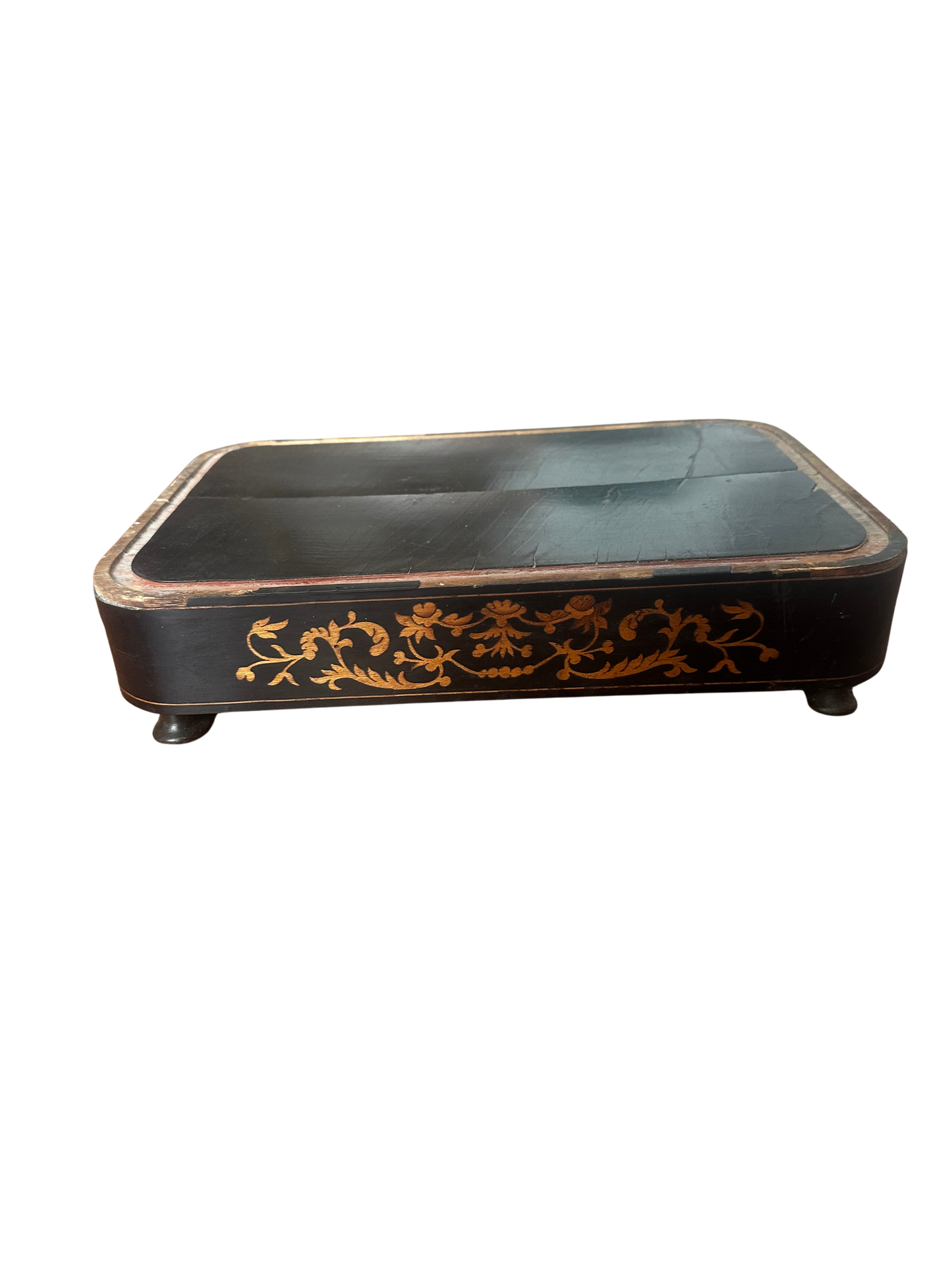
A refined 19th-century French Napoleon III display riser, or socle, designed to elevate and showcase a decorative object such as a clock, bust, urn, or sculpture. The piece features a rectangular form with softly rounded corners, resting on four small turned feet, and finished in a rich ebonized surface accented by delicate gilt foliate inlay along the frieze.
The top retains its original black surface—likely lacquered wood or leather—creating a dramatic contrast ideal for displaying lighter-toned objects such as marble, bronze, or porcelain. The subtle elevation and finished profile reflect its intended role as a presentation base, commonly paired with mantel clocks or decorative garnitures during the Napoleon III period.
The underside reveals traditional plank construction, consistent with mid-to-late 19th century craftsmanship. Wear along the edges and surface contributes to a desirable aged patina, reinforcing its authenticity and decorative charm.
A versatile and highly usable piece today—perfect for layering into vignettes, elevating a focal object, or adding depth to a curated antique display.
Era:
Mid to late 19th century (circa 1850–1880)
History:
During the Napoleon III period, decorative interiors emphasized layering, elevation, and presentation. Socles and risers were widely used to highlight prized objects—particularly clocks, bronzes, and porcelain—on mantels, consoles, and cabinets. Ebonized finishes with gilt decoration were especially popular, offering a sophisticated and cost-effective alternative to more elaborate boulle or ebony work.
Provenance:
France or French-influenced Continental Europe, acquired on the secondary market.
Materials:
Wood with ebonized finish, gilt-painted foliate decoration, black lacquered or leather inset top
Dimensions:
Leave blank
Disclaimers:
As found condition. Noticeable wear, surface scratching, and cracking to the top panel. Edge wear and minor losses to the ebonized finish and gilt decoration. Structurally sound and stable for display use.
Additional Description:
A refined 19th-century French Napoleon III display riser, or socle, designed to elevate and showcase a decorative object such as a clock, bust, urn, or sculpture. The piece features a rectangular form with softly rounded corners, resting on four small turned feet, and finished in a rich ebonized surface accented by delicate gilt foliate inlay along the frieze.
The top retains its original black surface—likely lacquered wood or leather—creating a dramatic contrast ideal for displaying lighter-toned objects such as marble, bronze, or porcelain. The subtle elevation and finished profile reflect its intended role as a presentation base, commonly paired with mantel clocks or decorative garnitures during the Napoleon III period.
The underside reveals traditional plank construction, consistent with mid-to-late 19th century craftsmanship. Wear along the edges and surface contributes to a desirable aged patina, reinforcing its authenticity and decorative charm.
A versatile and highly usable piece today—perfect for layering into vignettes, elevating a focal object, or adding depth to a curated antique display.
Era:
Mid to late 19th century (circa 1850–1880)
History:
During the Napoleon III period, decorative interiors emphasized layering, elevation, and presentation. Socles and risers were widely used to highlight prized objects—particularly clocks, bronzes, and porcelain—on mantels, consoles, and cabinets. Ebonized finishes with gilt decoration were especially popular, offering a sophisticated and cost-effective alternative to more elaborate boulle or ebony work.
Provenance:
France or French-influenced Continental Europe, acquired on the secondary market.
Materials:
Wood with ebonized finish, gilt-painted foliate decoration, black lacquered or leather inset top
Dimensions:
Leave blank
Disclaimers:
As found condition. Noticeable wear, surface scratching, and cracking to the top panel. Edge wear and minor losses to the ebonized finish and gilt decoration. Structurally sound and stable for display use.