



Pair of Antique Carved and Gilded Wooden Wing Fragments
Pair of Antique Carved and Gilded Wooden Wing Fragments
Couldn't load pickup availability
Share


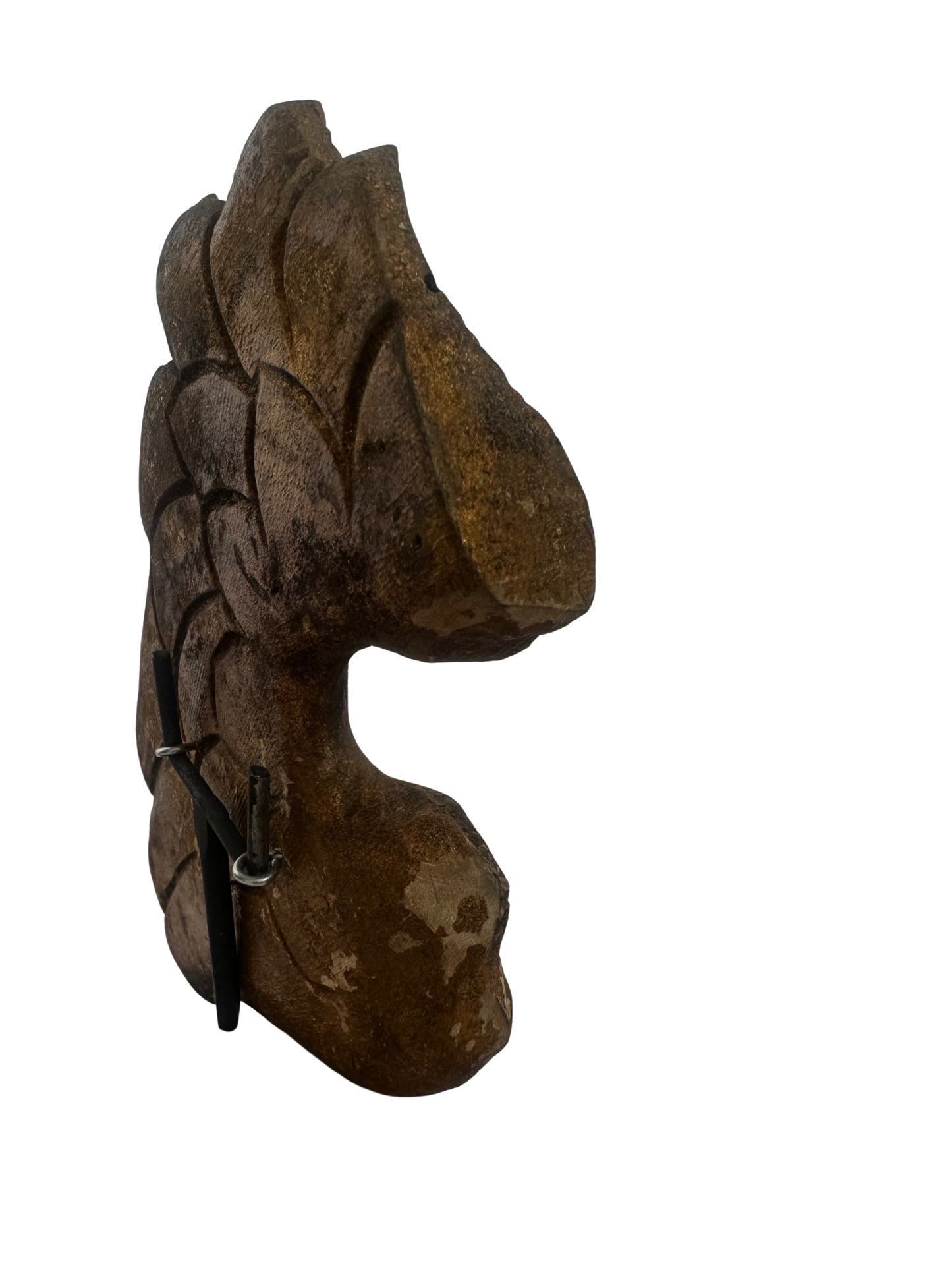
Pair of carved wooden wing fragments, each depicting layered, overlapping feathers with incised detailing. The surfaces retain traces of original gilding over a warm-toned ground, with areas of wear, loss, and patina consistent with age. The wings are asymmetrical and mirror-imaged, indicating they were originally intended as a matched pair. The backs show evidence of age and prior mounting. Currently mounted on modern metal display stands for presentation.
Pair of carved wooden wing fragments, each depicting layered, overlapping feathers with incised detailing. The surfaces retain traces of original gilding over a warm-toned ground, with areas of wear, loss, and patina consistent with age. The wings are asymmetrical and mirror-imaged, indicating they were originally intended as a matched pair. The backs show evidence of age and prior mounting. Currently mounted on modern metal display stands for presentation.
10.75"h x 5.75"w x 3.5"d (Taller) 9.5"h x 5.75"w x 3.5"d (Shorter)
10.75"h x 5.75"w x 3.5"d (Taller) 9.5"h x 5.75"w x 3.5"d (Shorter)
Carved wing motifs were commonly used in the 19th century as decorative elements in architectural, ecclesiastical, and furniture contexts. Wings frequently appeared in neoclassical and revival styles as symbols of divinity, protection, victory, or allegorical figures such as angels, cherubs, or personifications. Such fragments often survive as standalone decorative objects after removal from their original settings.
Carved wing motifs were commonly used in the 19th century as decorative elements in architectural, ecclesiastical, and furniture contexts. Wings frequently appeared in neoclassical and revival styles as symbols of divinity, protection, victory, or allegorical figures such as angels, cherubs, or personifications. Such fragments often survive as standalone decorative objects after removal from their original settings.
19th Century (likely mid to late 19th century)
19th Century (likely mid to late 19th century)
Carved wood with remnants of gilt finish
Carved wood with remnants of gilt finish
Europe
Exact origin unknown
Europe
Exact origin unknown
Wear, losses, and surface patina consistent with age; gilding partially worn; historic fragmentary condition; later display mounts; no visible modern repairs observed.
Wear, losses, and surface patina consistent with age; gilding partially worn; historic fragmentary condition; later display mounts; no visible modern repairs observed.