

Pair of Gilt Bronze Cherub Architectural Mounts or Furniture Ornaments
Pair of Gilt Bronze Cherub Architectural Mounts or Furniture Ornaments
Couldn't load pickup availability
Share
Additional Description:
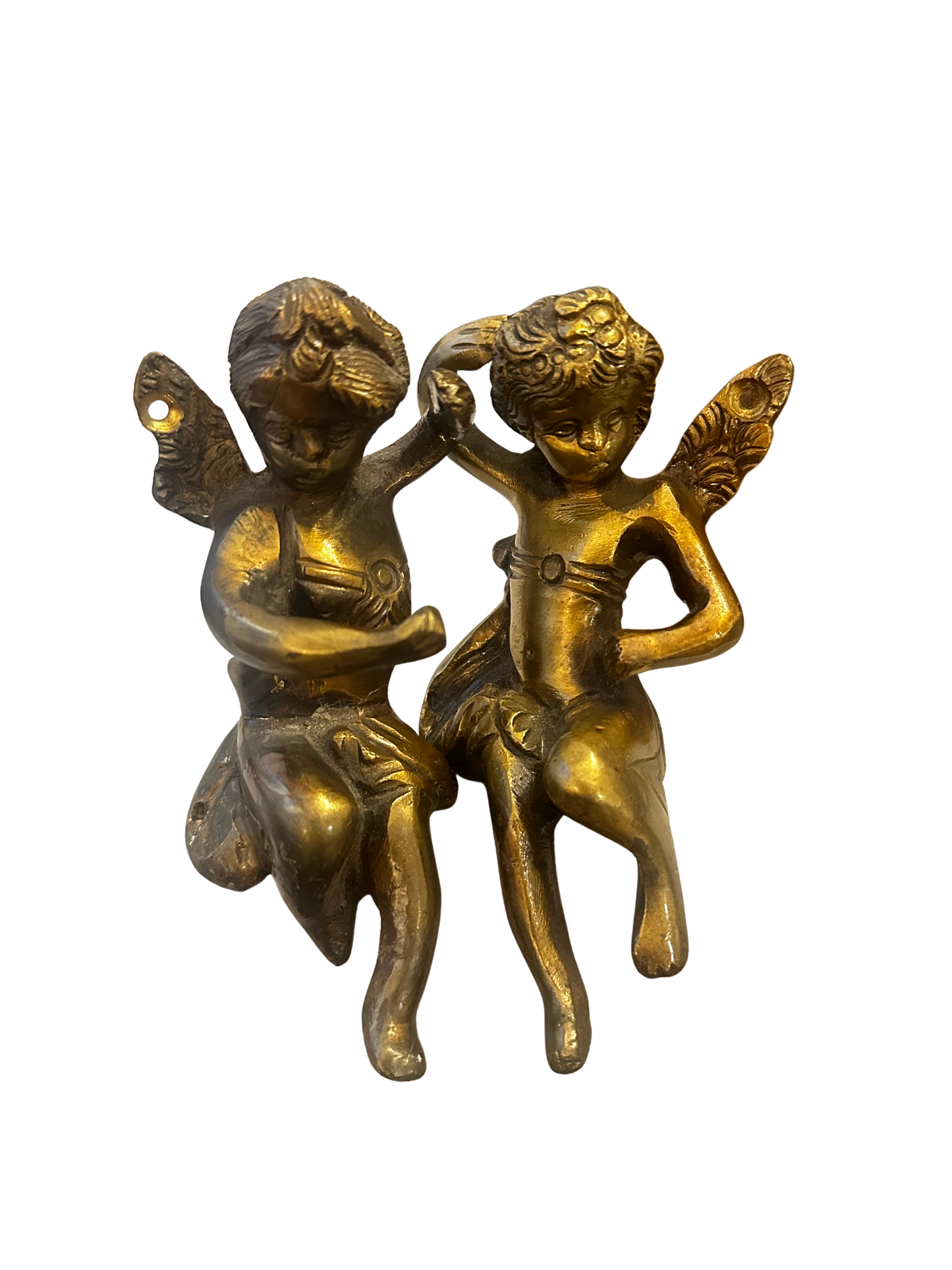
A charming pair of heavy cast gilt-metal cherubic figures modeled as seated winged putti in animated poses. Each figure is sculpted with softly modeled youthful features, curled coiffures, feathered wings, and flowing drapery gathered around the waist. Their raised arms and dynamic seated postures suggest they were originally mounted as decorative appliqués or ornamental mounts on a larger object such as furniture, mirrors, sconces, beds, frames, or architectural décor.
The figures retain a warm aged gilt-bronze toned surface with darker patinated recesses emphasizing the sculptural detail. Small mounting holes appear within the wings and backs, reinforcing their original function as mounted decorative elements. The substantial weight and casting quality give the pair an impressive tactile presence despite their relatively compact scale.
Era:
Late 19th to early 20th century.
History:
Cherubic and putti figures were highly favored decorative motifs in European decorative arts from the Renaissance onward and saw strong revival popularity during the Rococo Revival, Baroque Revival, and Belle Époque periods. Mounted gilt-metal cherubs frequently adorned luxury furnishings, mirrors, clock cases, sconces, and ecclesiastical decorative objects.
These figures likely once formed part of a larger ornamental composition and were intended to add movement, romance, and theatricality to an interior setting inspired by French and Continental European decorative traditions.
Provenance:
Likely Continental European or French-inspired decorative mounts; exact maker unknown.
Materials:
Heavy cast metal with gilt-toned finish and aged patination.
Dimensions:
Each approximately 6” H x 3” W x 3” D.
Disclaimers:
Vintage to antique condition with age-related wear including rubbing to gilt finish, oxidation/patina variation, surface scratches, casting irregularities, small areas of wear and pitting, and evidence of former mounting use. Scattered small losses and wear consistent with age and removal from a larger object.
Additional Description:
A charming pair of heavy cast gilt-metal cherubic figures modeled as seated winged putti in animated poses. Each figure is sculpted with softly modeled youthful features, curled coiffures, feathered wings, and flowing drapery gathered around the waist. Their raised arms and dynamic seated postures suggest they were originally mounted as decorative appliqués or ornamental mounts on a larger object such as furniture, mirrors, sconces, beds, frames, or architectural décor.
The figures retain a warm aged gilt-bronze toned surface with darker patinated recesses emphasizing the sculptural detail. Small mounting holes appear within the wings and backs, reinforcing their original function as mounted decorative elements. The substantial weight and casting quality give the pair an impressive tactile presence despite their relatively compact scale.
Era:
Late 19th to early 20th century.
History:
Cherubic and putti figures were highly favored decorative motifs in European decorative arts from the Renaissance onward and saw strong revival popularity during the Rococo Revival, Baroque Revival, and Belle Époque periods. Mounted gilt-metal cherubs frequently adorned luxury furnishings, mirrors, clock cases, sconces, and ecclesiastical decorative objects.
These figures likely once formed part of a larger ornamental composition and were intended to add movement, romance, and theatricality to an interior setting inspired by French and Continental European decorative traditions.
Provenance:
Likely Continental European or French-inspired decorative mounts; exact maker unknown.
Materials:
Heavy cast metal with gilt-toned finish and aged patination.
Dimensions:
Each approximately 6” H x 3” W x 3” D.
Disclaimers:
Vintage to antique condition with age-related wear including rubbing to gilt finish, oxidation/patina variation, surface scratches, casting irregularities, small areas of wear and pitting, and evidence of former mounting use. Scattered small losses and wear consistent with age and removal from a larger object.