



Stamped Paul Sormani Paris Louis XV Style Marquetry Vanity / Dressing Table with Mirror
Stamped Paul Sormani Paris Louis XV Style Marquetry Vanity / Dressing Table with Mirror
Couldn't load pickup availability
Share


A highly elegant 19th-century French Louis XV revival dressing table or petite vanity, stamped for Paul Sormani, Paris, and executed in richly figured veneer with refined marquetry throughout. The serpentine top opens to reveal a fitted interior with compartments and a rectangular mirror framed by a delicate gilt brass surround, creating the desirable combination of utility and decorative presence for which the finest Parisian cabinetmakers were celebrated. The case is veneered in warm-toned kingwood and burl woods, with chevron and parquetry patterning across the drawer front and lower shaped undertier, while the top displays an elaborate scrolling inlay design bordered by fine banding and a gilt metal edge trim.
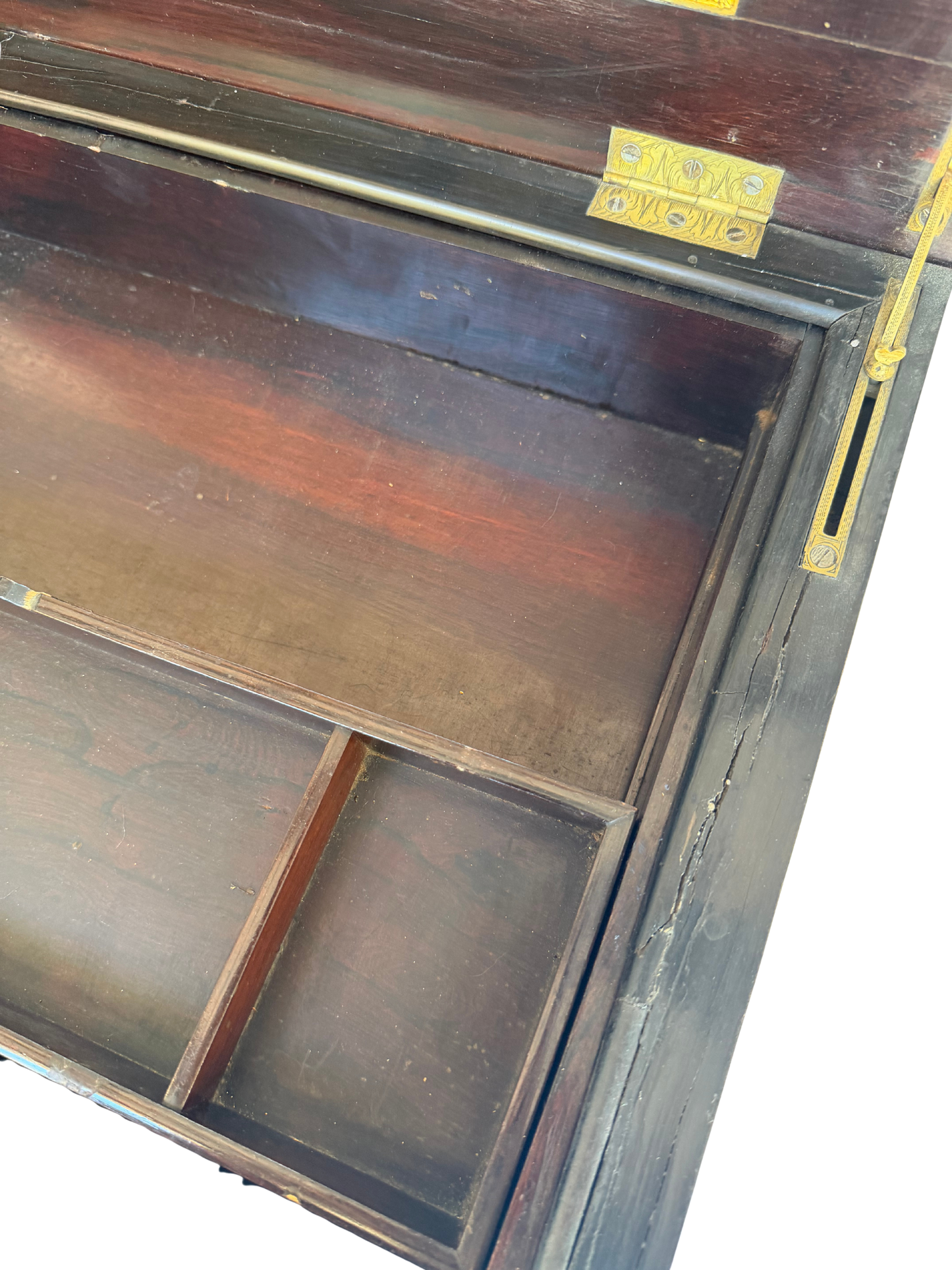
The piece is mounted with finely cast gilt bronze and brass hardware, including a Rococo-style central drawer pull, corner mounts, sabot feet, engraved hinges, and engraved interior lockplate/escutcheon. Of special note is the engraved interior plate reading “P. Sormani F.t / rue du Temple 114 / Paris,” a highly desirable maker’s signature associating the table with one of the most respected luxury furniture firms in 19th-century Paris. The form is especially attractive, with bombe shaping, long cabriole legs, a single frieze drawer, and a suspended shaped undertier or well below. The interior retains its fitted tray arrangement and mirror lid, making it a particularly romantic and functional example of a French dressing or writing table from the Second Empire period.
A highly elegant 19th-century French Louis XV revival dressing table or petite vanity, stamped for Paul Sormani, Paris, and executed in richly figured veneer with refined marquetry throughout. The serpentine top opens to reveal a fitted interior with compartments and a rectangular mirror framed by a delicate gilt brass surround, creating the desirable combination of utility and decorative presence for which the finest Parisian cabinetmakers were celebrated. The case is veneered in warm-toned kingwood and burl woods, with chevron and parquetry patterning across the drawer front and lower shaped undertier, while the top displays an elaborate scrolling inlay design bordered by fine banding and a gilt metal edge trim.
The piece is mounted with finely cast gilt bronze and brass hardware, including a Rococo-style central drawer pull, corner mounts, sabot feet, engraved hinges, and engraved interior lockplate/escutcheon. Of special note is the engraved interior plate reading “P. Sormani F.t / rue du Temple 114 / Paris,” a highly desirable maker’s signature associating the table with one of the most respected luxury furniture firms in 19th-century Paris. The form is especially attractive, with bombe shaping, long cabriole legs, a single frieze drawer, and a suspended shaped undertier or well below. The interior retains its fitted tray arrangement and mirror lid, making it a particularly romantic and functional example of a French dressing or writing table from the Second Empire period.
30"h x 24.5"w x 18"d
30"h x 24.5"w x 18"d
Paul Sormani (1817–1866) was among the foremost Parisian ébénistes of the mid-19th century and is widely admired today for luxurious revival furniture inspired by the Louis XV and Louis XVI periods. Born in Venice and active in Paris, Sormani established a reputation for superb craftsmanship, elaborate marquetry, and finely cast gilt bronze mounts. He exhibited successfully at major international expositions and became known for producing furniture and decorative objects of exceptional quality for an elite clientele. Pieces bearing his name are prized for their sophisticated design, technical refinement, and strong association with the golden age of French decorative arts in the Second Empire. This vanity table reflects that legacy through its refined marquetry, elegant silhouette, fitted interior, and signed Sormani plate.
Paul Sormani (1817–1866) was among the foremost Parisian ébénistes of the mid-19th century and is widely admired today for luxurious revival furniture inspired by the Louis XV and Louis XVI periods. Born in Venice and active in Paris, Sormani established a reputation for superb craftsmanship, elaborate marquetry, and finely cast gilt bronze mounts. He exhibited successfully at major international expositions and became known for producing furniture and decorative objects of exceptional quality for an elite clientele. Pieces bearing his name are prized for their sophisticated design, technical refinement, and strong association with the golden age of French decorative arts in the Second Empire. This vanity table reflects that legacy through its refined marquetry, elegant silhouette, fitted interior, and signed Sormani plate.
19th Century, likely Second Empire / Napoleon III period, circa 1855–1870
19th Century, likely Second Empire / Napoleon III period, circa 1855–1870
Kingwood, burl wood veneer, secondary woods, marquetry, gilt bronze, brass, mirror glass
Kingwood, burl wood veneer, secondary woods, marquetry, gilt bronze, brass, mirror glass
French, Paris. Stamped interior plate: “P. Sormani F.t / rue du Temple 114 / Paris.”
French, Paris. Stamped interior plate: “P. Sormani F.t / rue du Temple 114 / Paris.”
Observed age-appropriate wear throughout, including surface scratches, finish wear, veneer stress lines, edge wear, and scattered marks consistent with use and age. Interior shows wear and finish rubbing. There are visible cracks and old separation to portions of the interior upper frame/case surround, along with wear and loss to the dark interior finish at points. Lower drawer/interior surfaces show scuffs and residue from use. Metal mounts show tarnish and wear to gilding/patination. Mirror and interior fittings should be considered as seen; full originality of all small hardware and interior elements cannot be guaranteed without hands-on examination. Attribution is based on the engraved interior Sormani plate and overall quality and form.
Observed age-appropriate wear throughout, including surface scratches, finish wear, veneer stress lines, edge wear, and scattered marks consistent with use and age. Interior shows wear and finish rubbing. There are visible cracks and old separation to portions of the interior upper frame/case surround, along with wear and loss to the dark interior finish at points. Lower drawer/interior surfaces show scuffs and residue from use. Metal mounts show tarnish and wear to gilding/patination. Mirror and interior fittings should be considered as seen; full originality of all small hardware and interior elements cannot be guaranteed without hands-on examination. Attribution is based on the engraved interior Sormani plate and overall quality and form.