


Victorian Silverplate Magnifying Glass with Repoussé Nautilus Shell Handle
Victorian Silverplate Magnifying Glass with Repoussé Nautilus Shell Handle
Couldn't load pickup availability
Share
Additional Description:
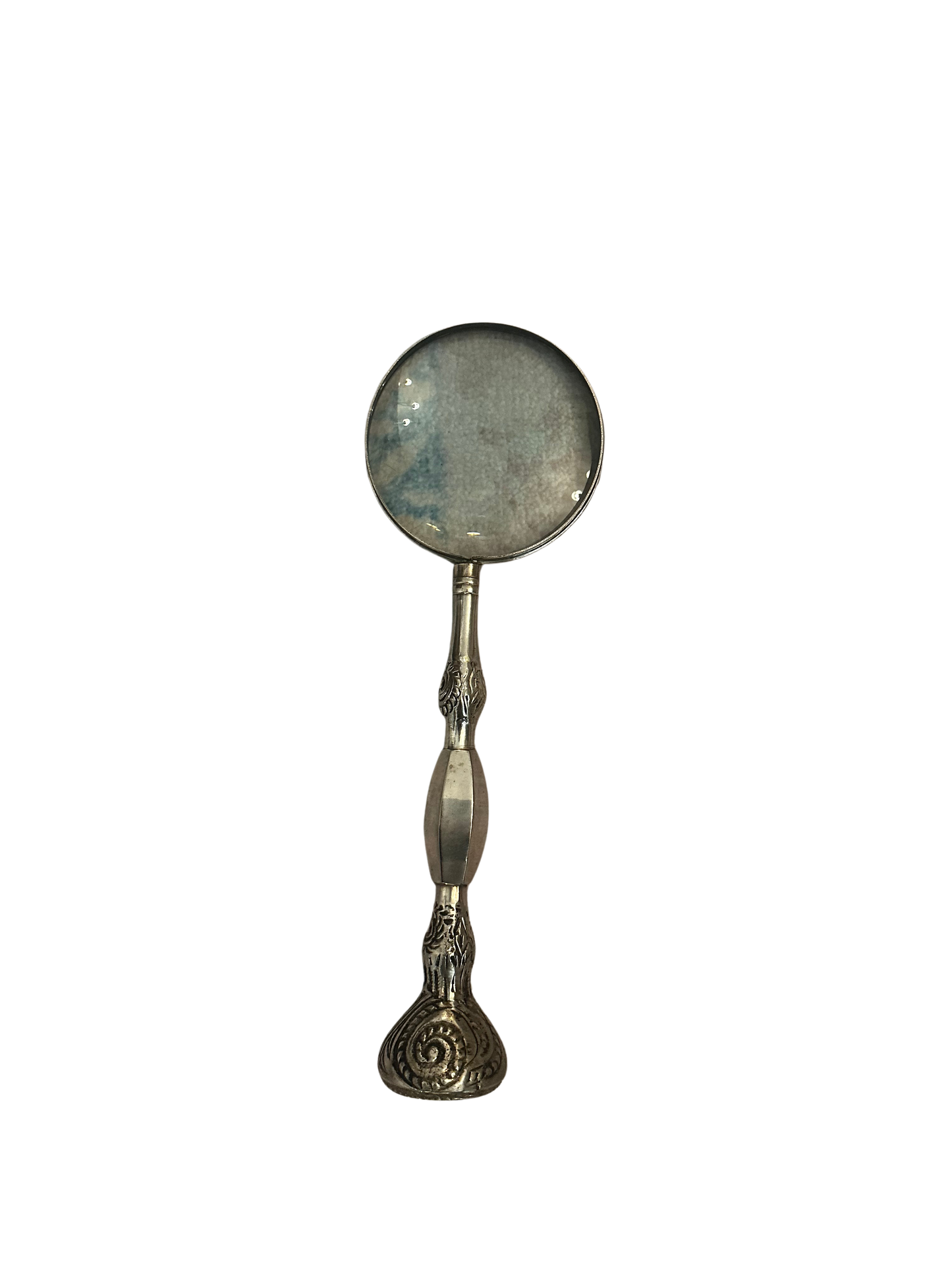
A striking late Victorian silverplate magnifying glass featuring an unusually sculptural handle inspired by a nautilus shell or spiral marine form. The handle terminates in a richly cast bulbous knop decorated with swirling shell motifs, foliate ornament, and deeply chased repoussé-style detailing evocative of the Aesthetic Movement and naturalistic design trends popular in the late 19th century.
The elongated faceted central grip transitions elegantly into the decorative upper and lower mounts, giving the piece a refined architectural silhouette. The circular magnifying lens is housed within a silverplate bezel and remains functional, making the object both decorative and practical.
Pieces such as this would have graced a Victorian writing desk, gentleman’s library, or collector’s cabinet, where magnifiers were essential tools for reading fine print, examining engravings, maps, manuscripts, or natural curiosities. The shell-inspired ornament aligns beautifully with the Victorian fascination for the natural world, oceanic forms, and organic decorative motifs.
Its dramatic scale and highly decorative handle make this an especially display-worthy desk accessory for interiors emphasizing old-world scholarship, cabinet-of-curiosities aesthetics, or Gothic and Aesthetic Movement décor.
Era:
Late 19th century, circa 1880–1900.
History:
During the Victorian era, magnifying glasses became both functional instruments and ornamental luxury desk objects. Wealthy households and collectors often commissioned or purchased elaborately designed desk accessories reflecting contemporary artistic movements. Naturalistic marine and botanical motifs became especially fashionable during the Aesthetic Movement period, when designers drew inspiration from shells, flora, and exotic organic forms.
Provenance:
Likely European or American manufacture.
Materials:
Silverplate, glass lens.
Dimensions:
[Insert dimensions]
Disclaimers:
Surface wear, scratches, tarnish, and silverplate loss consistent with age and use. Minor oxidation and finish wear visible throughout the handle and bezel. Lens may show light age-related imperfections or scratches. Please review photographs carefully for overall condition details.
Additional Description:
A striking late Victorian silverplate magnifying glass featuring an unusually sculptural handle inspired by a nautilus shell or spiral marine form. The handle terminates in a richly cast bulbous knop decorated with swirling shell motifs, foliate ornament, and deeply chased repoussé-style detailing evocative of the Aesthetic Movement and naturalistic design trends popular in the late 19th century.
The elongated faceted central grip transitions elegantly into the decorative upper and lower mounts, giving the piece a refined architectural silhouette. The circular magnifying lens is housed within a silverplate bezel and remains functional, making the object both decorative and practical.
Pieces such as this would have graced a Victorian writing desk, gentleman’s library, or collector’s cabinet, where magnifiers were essential tools for reading fine print, examining engravings, maps, manuscripts, or natural curiosities. The shell-inspired ornament aligns beautifully with the Victorian fascination for the natural world, oceanic forms, and organic decorative motifs.
Its dramatic scale and highly decorative handle make this an especially display-worthy desk accessory for interiors emphasizing old-world scholarship, cabinet-of-curiosities aesthetics, or Gothic and Aesthetic Movement décor.
Era:
Late 19th century, circa 1880–1900.
History:
During the Victorian era, magnifying glasses became both functional instruments and ornamental luxury desk objects. Wealthy households and collectors often commissioned or purchased elaborately designed desk accessories reflecting contemporary artistic movements. Naturalistic marine and botanical motifs became especially fashionable during the Aesthetic Movement period, when designers drew inspiration from shells, flora, and exotic organic forms.
Provenance:
Likely European or American manufacture.
Materials:
Silverplate, glass lens.
Dimensions:
[Insert dimensions]
Disclaimers:
Surface wear, scratches, tarnish, and silverplate loss consistent with age and use. Minor oxidation and finish wear visible throughout the handle and bezel. Lens may show light age-related imperfections or scratches. Please review photographs carefully for overall condition details.