



Vintage Upholstered Fringe Footstool
Vintage Upholstered Fringe Footstool
Couldn't load pickup availability
Share


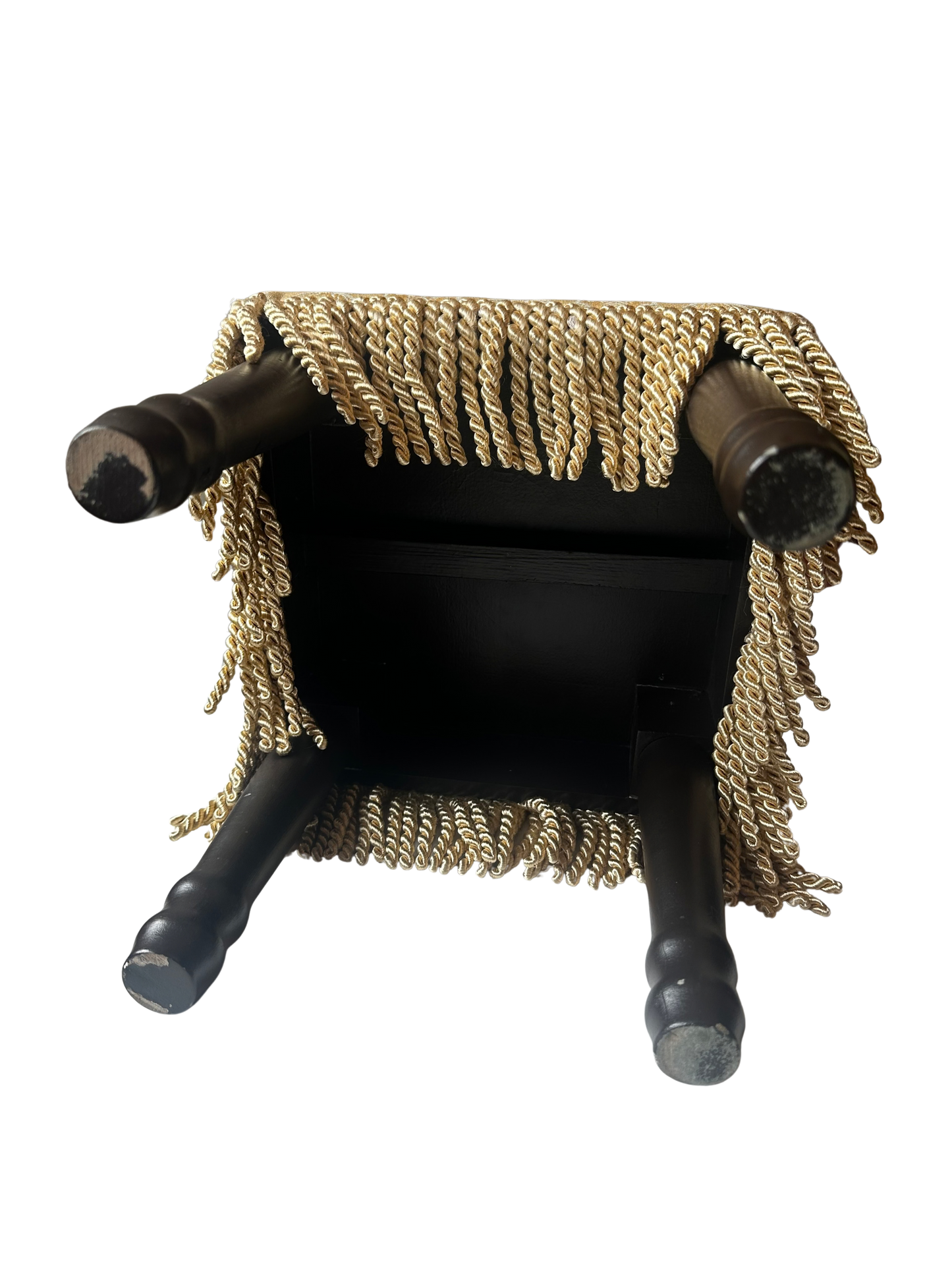
A decorative upholstered footstool featuring a gold damask-patterned textile seat with twisted fringe trim. The stool stands on four turned wooden legs finished in dark paint, creating a strong contrast with the light upholstery.
The seat fabric shows a traditional European-inspired woven motif, reminiscent of classical upholstery textiles used in neoclassical and Louis XVI–inspired interiors. The rope fringe with decorative nailhead-style fasteners adds a theatrical, old-world decorative element.
Compact in size, this piece works beautifully as: a footrest, a decorative riser for antiques, a boudoir or dressing-room accent, or a library styling piece. It has a strong traditional decorator aesthetic, even though it is a later production piece.
A decorative upholstered footstool featuring a gold damask-patterned textile seat with twisted fringe trim. The stool stands on four turned wooden legs finished in dark paint, creating a strong contrast with the light upholstery.
The seat fabric shows a traditional European-inspired woven motif, reminiscent of classical upholstery textiles used in neoclassical and Louis XVI–inspired interiors. The rope fringe with decorative nailhead-style fasteners adds a theatrical, old-world decorative element.
Compact in size, this piece works beautifully as: a footrest, a decorative riser for antiques, a boudoir or dressing-room accent, or a library styling piece. It has a strong traditional decorator aesthetic, even though it is a later production piece.
Approx 10" x 10" x 10"
Approx 10" x 10" x 10"
Small upholstered stools like this became popular decorative accessories in the mid-to-late 20th century, particularly in traditional interiors influenced by European historic styles. Fringe-trimmed stools were often produced by upholstery workrooms and furniture manufacturers as accent pieces rather than formal seating furniture.
The damask-style textile reflects historic European textile patterns but appears to be modern upholstery fabric rather than antique silk or brocade.
Small upholstered stools like this became popular decorative accessories in the mid-to-late 20th century, particularly in traditional interiors influenced by European historic styles. Fringe-trimmed stools were often produced by upholstery workrooms and furniture manufacturers as accent pieces rather than formal seating furniture.
The damask-style textile reflects historic European textile patterns but appears to be modern upholstery fabric rather than antique silk or brocade.
Late 20th century (decorator furniture)
Late 20th century (decorator furniture)
Upholstery fabric (damask-style woven textile)
Wood frame
Painted turned wood legs
Rope fringe trim
Upholstery tacks
Upholstery fabric (damask-style woven textile)
Wood frame
Painted turned wood legs
Rope fringe trim
Upholstery tacks
Dallas TX Antique Dealer
Dallas TX Antique Dealer
Minor wear to fabric consistent with use
Light scuffing to leg paint
Fringe shows minor irregularity in places
Decorative stool; not intended for heavy seating use
Minor wear to fabric consistent with use
Light scuffing to leg paint
Fringe shows minor irregularity in places
Decorative stool; not intended for heavy seating use