



18th C Engraving of the Goddess Juno
18th C Engraving of the Goddess Juno
Impossible de charger la disponibilité du service de retrait
Partager


Engraving of Classical Sculpture & Architecture - Bernardina Genga-Guione
Roman Goddess Juno
18th C
15.75" x 10.75"
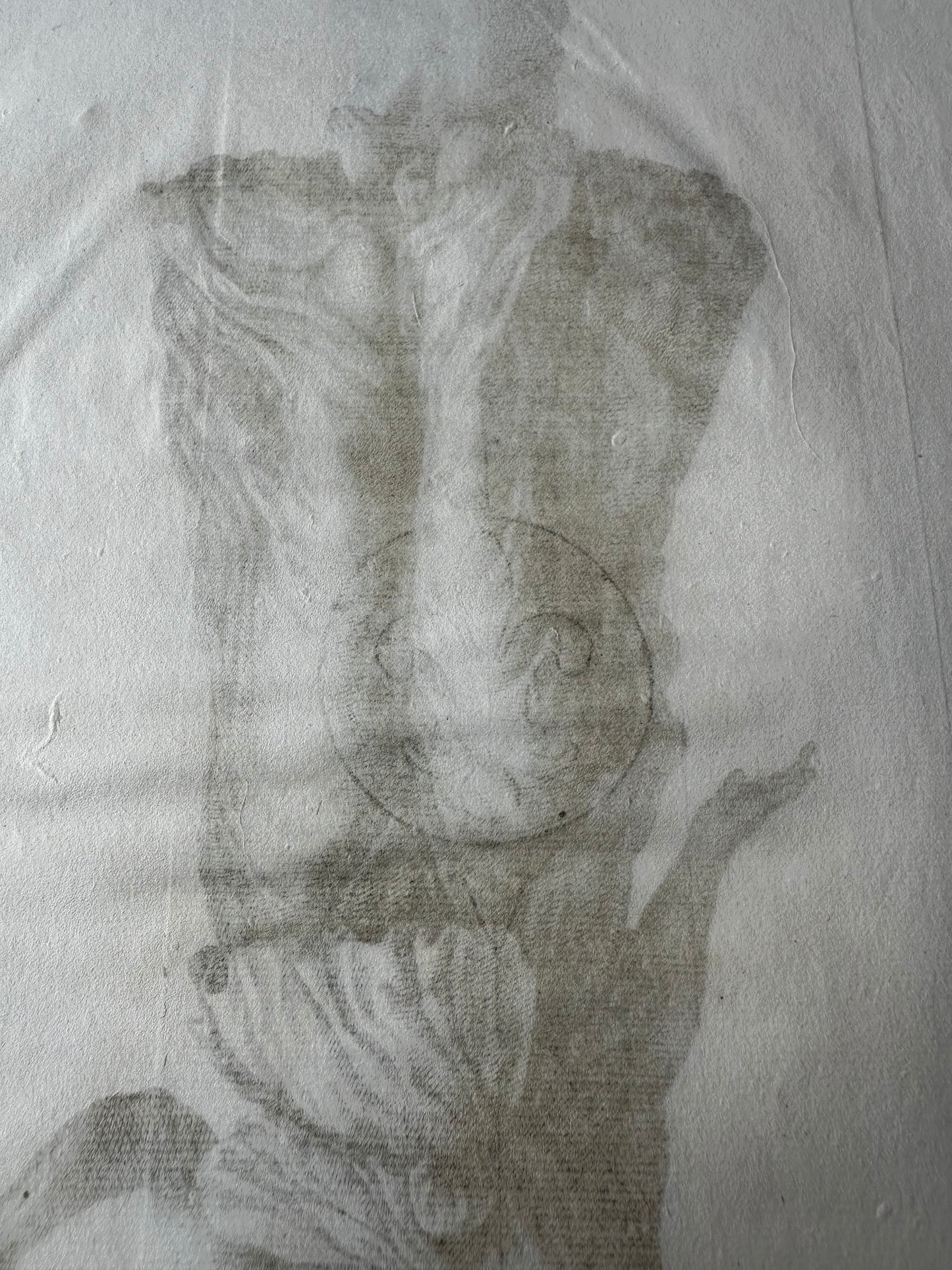
Roman goddess Juno, inscribed Giunone (Italian), and labeled in the upper right as Tav. II p. 17, indicating it comes from Plate 2, page 17 of a larger publication.
The figure is classically draped, barefoot, and holds a torch, which could suggest association with ritual, illumination, or divine guidance. While Juno (Greek Hera) is not typically shown with a torch, this version may reflect local iconographic interpretations — or possibly confusion with goddesses like Vesta or Hecate. The torch-bearing female could also symbolize an allegorical figure rather than a strict mythological rendering.
execution style is very consistent with Campanella or his contemporaries:
Fine stippling and crosshatching
Laid paper with visible plate impression
Clean classical lines and symmetrical posture
Possibly from a Neoclassical antiquities series published in Rome or Naples
Engraving of Classical Sculpture & Architecture - Bernardina Genga-Guione
Roman Goddess Juno
18th C
15.75" x 10.75"
Roman goddess Juno, inscribed Giunone (Italian), and labeled in the upper right as Tav. II p. 17, indicating it comes from Plate 2, page 17 of a larger publication.
The figure is classically draped, barefoot, and holds a torch, which could suggest association with ritual, illumination, or divine guidance. While Juno (Greek Hera) is not typically shown with a torch, this version may reflect local iconographic interpretations — or possibly confusion with goddesses like Vesta or Hecate. The torch-bearing female could also symbolize an allegorical figure rather than a strict mythological rendering.
execution style is very consistent with Campanella or his contemporaries:
Fine stippling and crosshatching
Laid paper with visible plate impression
Clean classical lines and symmetrical posture
Possibly from a Neoclassical antiquities series published in Rome or Naples