

Antique Brass Serpent-Handled Doorstop
Antique Brass Serpent-Handled Doorstop
Impossible de charger la disponibilité du service de retrait
Partager
Additional Description:
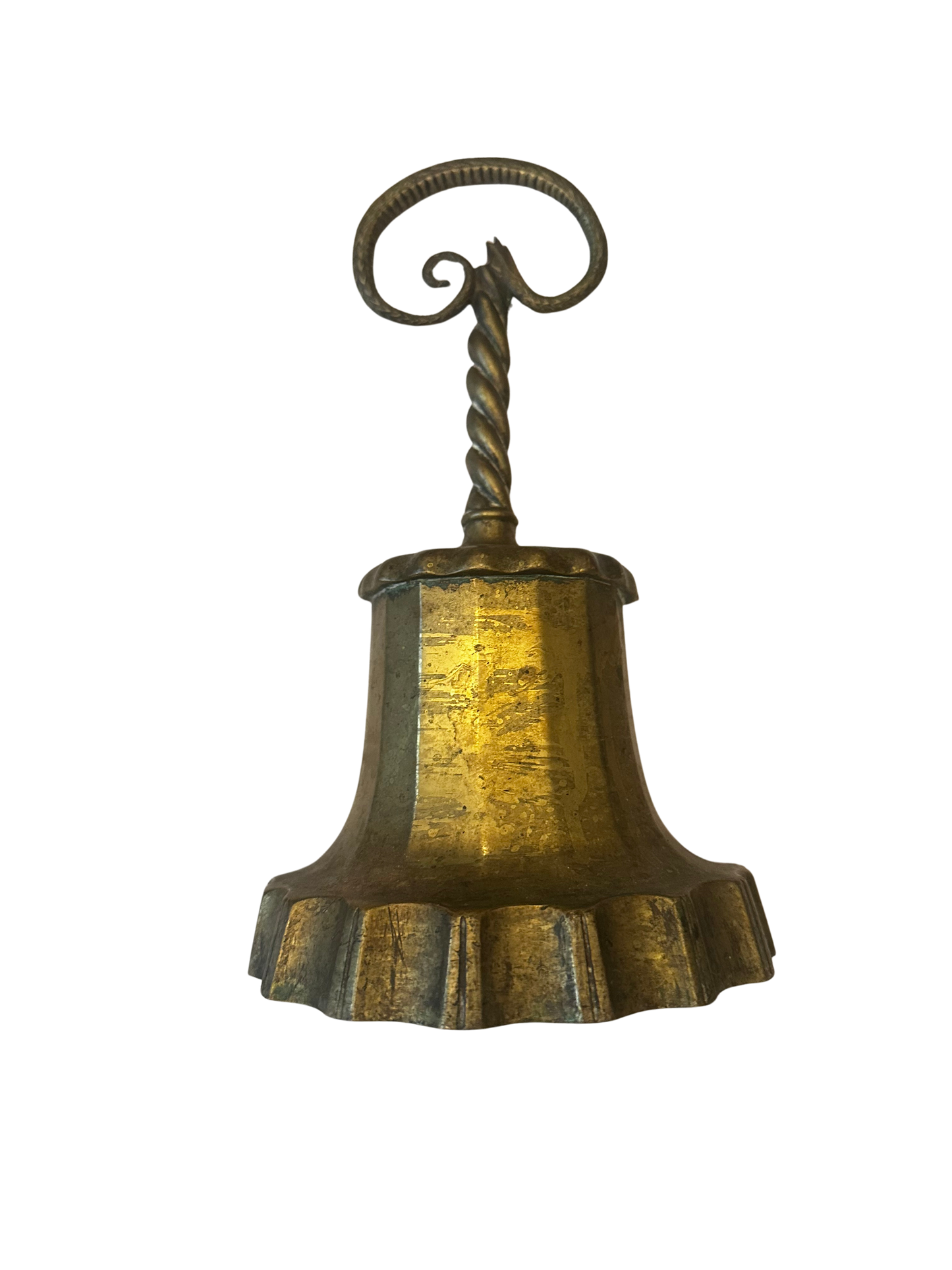
An unusual and sculptural antique brass doorstop featuring a dramatic serpent-form handle rising from a heavy flared base. The handle is designed as a coiled serpent with engraved scale-like decoration wrapping into an elegant looping form, terminating in a stylized serpent head and tight spiral curl. The twisted central stem adds further movement and visual tension to the design, giving the piece a distinctly Gothic Revival or Arts & Crafts sensibility.
The lower section consists of a weighty flared brass housing encasing a substantial iron core, providing the mass necessary for functional use as a doorstop. The underside and interior reveal heavy oxidation and age-related wear consistent with long-term practical use. The brass exterior has developed a rich aged patina with areas of darkening and verdigris that enhance its antique character.
Its blend of functional utility and zoomorphic decorative design makes it particularly compelling as a statement object for maximalist, Victorian, Gothic, or old-world interiors.
Era:
Late 19th to early 20th century, likely circa 1880–1920.
History:
Decorative brass doorstops became increasingly popular during the Victorian era when even practical household objects were designed with artistic embellishment. Serpent motifs carried symbolic associations ranging from protection and wisdom to eternity and rebirth, and were frequently incorporated into Gothic Revival and Art Nouveau decorative arts.
Heavy metal doorstops such as this were commonly used in grand homes, hotels, libraries, and institutional interiors where substantial doors required weighted stops.
Provenance:
Likely European or English in origin.
Materials:
Cast brass, iron-weighted interior core.
Dimensions:
9.5” H x 5.5” W x 3” D.
Disclaimers:
Antique condition with age-related wear throughout including oxidation, verdigris, scratches, rubbing to high points, and rusting to the iron interior core. Surface irregularities and casting variations consistent with antique manufacture. Wear commensurate with age and use.
Additional Description:
An unusual and sculptural antique brass doorstop featuring a dramatic serpent-form handle rising from a heavy flared base. The handle is designed as a coiled serpent with engraved scale-like decoration wrapping into an elegant looping form, terminating in a stylized serpent head and tight spiral curl. The twisted central stem adds further movement and visual tension to the design, giving the piece a distinctly Gothic Revival or Arts & Crafts sensibility.
The lower section consists of a weighty flared brass housing encasing a substantial iron core, providing the mass necessary for functional use as a doorstop. The underside and interior reveal heavy oxidation and age-related wear consistent with long-term practical use. The brass exterior has developed a rich aged patina with areas of darkening and verdigris that enhance its antique character.
Its blend of functional utility and zoomorphic decorative design makes it particularly compelling as a statement object for maximalist, Victorian, Gothic, or old-world interiors.
Era:
Late 19th to early 20th century, likely circa 1880–1920.
History:
Decorative brass doorstops became increasingly popular during the Victorian era when even practical household objects were designed with artistic embellishment. Serpent motifs carried symbolic associations ranging from protection and wisdom to eternity and rebirth, and were frequently incorporated into Gothic Revival and Art Nouveau decorative arts.
Heavy metal doorstops such as this were commonly used in grand homes, hotels, libraries, and institutional interiors where substantial doors required weighted stops.
Provenance:
Likely European or English in origin.
Materials:
Cast brass, iron-weighted interior core.
Dimensions:
9.5” H x 5.5” W x 3” D.
Disclaimers:
Antique condition with age-related wear throughout including oxidation, verdigris, scratches, rubbing to high points, and rusting to the iron interior core. Surface irregularities and casting variations consistent with antique manufacture. Wear commensurate with age and use.