


Antique Continental Bronze Sporting Dog Figure, Spaniel or Setter
Antique Continental Bronze Sporting Dog Figure, Spaniel or Setter
Impossible de charger la disponibilité du service de retrait
Partager
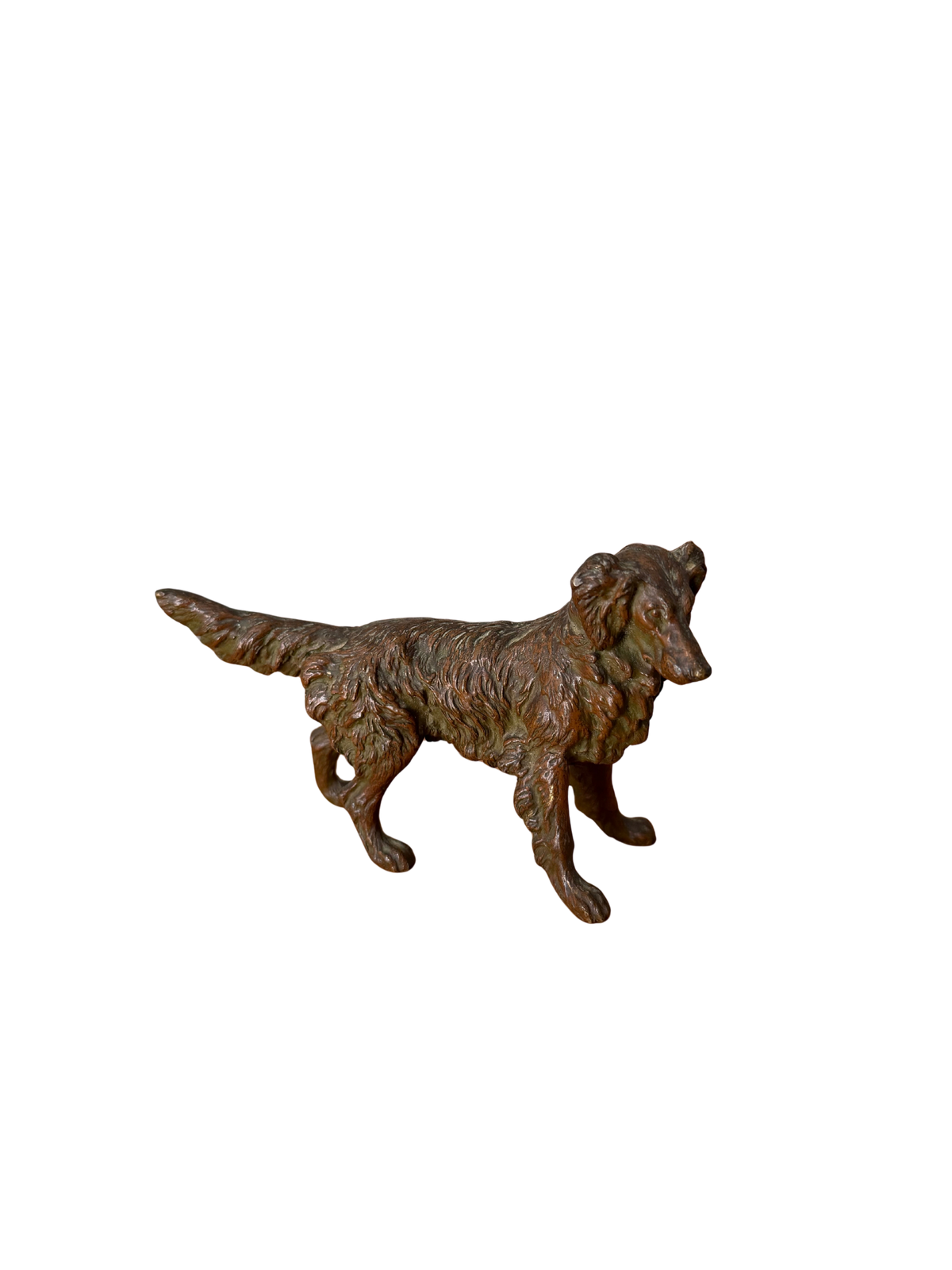
Item: Antique Continental Patinated Metal Sporting Dog Figure, Spaniel or Setter, Late 19th / Early 20th Century
Additional Description
A charming antique Continental figural sculpture of a sporting dog, modeled standing alert with head slightly turned, long pendant ears, an expressive face, and a richly textured, feathered coat.
The dog is rendered with particularly nice attention to the fur, with individually worked strands along the body, chest, ears, legs, and tail. Its proportions and long, wavy coat suggest a spaniel or setter-type sporting breed, likely inspired by the hunting dogs that became especially popular subjects in European decorative arts during the 19th century.
The sculpture has a warm brown-green patinated surface that gives it the appearance of aged bronze. Based on the photographs alone, however, I would describe the material conservatively as patinated cast metal, possibly bronze or spelter, unless weight, a scratch test in an inconspicuous area, or additional construction details confirm bronze.
The underside remains open and unfinished, revealing the hollow cast construction typical of small decorative animal sculptures of the period.
Era
Likely circa 1880–1920
Origin
Continental European, likely French
Subject
Sporting dog, probably a spaniel or setter
Style
Naturalistic / Animalier
Materials
Patinated cast metal, possibly bronze or spelter
Dimensions
Please add:
___” H × ___” W × ___” D
History
Animal sculpture became enormously popular in Europe during the 19th century, particularly in France, where the Animalier tradition elevated depictions of horses, dogs, wild animals, and livestock into a major category of decorative sculpture.
Sporting dogs were especially favored subjects, reflecting the popularity of hunting culture and the close association of breeds such as setters and spaniels with country estates and aristocratic sporting life. Small cast-metal examples like this were produced both as standalone cabinet sculptures and as decorative accessories for desks, mantels, libraries, and hunting-themed interiors.
The alert stance and carefully modeled coat give this example considerably more character than a purely generic decorative dog.
Marks / Signature
No visible maker’s signature or foundry mark observed in the photographs provided.
Condition
Good antique condition with wear consistent with age and use. The patinated surface shows expected rubbing, oxidation, color variation, minor surface marks, and scattered wear to raised areas. The underside is open from the original hollow-casting process and shows age-related surface oxidation and casting irregularities.
The figure appears structurally intact from the photographs provided.
Please review all photographs closely as they form part of the condition description.
Provenance
Continental Europe, likely France, late 19th to early 20th century.
Disclaimers
The breed identification is approximate and based upon the figure’s physical characteristics.
The metal has not been scientifically tested. It is therefore described conservatively as patinated cast metal, possibly bronze or spelter, rather than definitively as bronze.
Dating and geographic attribution are based on style, construction, materials, and visible age and should be considered approximate unless additional markings are discovered.
Item: Antique Continental Patinated Metal Sporting Dog Figure, Spaniel or Setter, Late 19th / Early 20th Century
Additional Description
A charming antique Continental figural sculpture of a sporting dog, modeled standing alert with head slightly turned, long pendant ears, an expressive face, and a richly textured, feathered coat.
The dog is rendered with particularly nice attention to the fur, with individually worked strands along the body, chest, ears, legs, and tail. Its proportions and long, wavy coat suggest a spaniel or setter-type sporting breed, likely inspired by the hunting dogs that became especially popular subjects in European decorative arts during the 19th century.
The sculpture has a warm brown-green patinated surface that gives it the appearance of aged bronze. Based on the photographs alone, however, I would describe the material conservatively as patinated cast metal, possibly bronze or spelter, unless weight, a scratch test in an inconspicuous area, or additional construction details confirm bronze.
The underside remains open and unfinished, revealing the hollow cast construction typical of small decorative animal sculptures of the period.
Era
Likely circa 1880–1920
Origin
Continental European, likely French
Subject
Sporting dog, probably a spaniel or setter
Style
Naturalistic / Animalier
Materials
Patinated cast metal, possibly bronze or spelter
Dimensions
Please add:
___” H × ___” W × ___” D
History
Animal sculpture became enormously popular in Europe during the 19th century, particularly in France, where the Animalier tradition elevated depictions of horses, dogs, wild animals, and livestock into a major category of decorative sculpture.
Sporting dogs were especially favored subjects, reflecting the popularity of hunting culture and the close association of breeds such as setters and spaniels with country estates and aristocratic sporting life. Small cast-metal examples like this were produced both as standalone cabinet sculptures and as decorative accessories for desks, mantels, libraries, and hunting-themed interiors.
The alert stance and carefully modeled coat give this example considerably more character than a purely generic decorative dog.
Marks / Signature
No visible maker’s signature or foundry mark observed in the photographs provided.
Condition
Good antique condition with wear consistent with age and use. The patinated surface shows expected rubbing, oxidation, color variation, minor surface marks, and scattered wear to raised areas. The underside is open from the original hollow-casting process and shows age-related surface oxidation and casting irregularities.
The figure appears structurally intact from the photographs provided.
Please review all photographs closely as they form part of the condition description.
Provenance
Continental Europe, likely France, late 19th to early 20th century.
Disclaimers
The breed identification is approximate and based upon the figure’s physical characteristics.
The metal has not been scientifically tested. It is therefore described conservatively as patinated cast metal, possibly bronze or spelter, rather than definitively as bronze.
Dating and geographic attribution are based on style, construction, materials, and visible age and should be considered approximate unless additional markings are discovered.