


Antique Enamel Rectangular Box with Hand-Painted Pastoral Scene and Floral Decoration
Antique Enamel Rectangular Box with Hand-Painted Pastoral Scene and Floral Decoration
Impossible de charger la disponibilité du service de retrait
Partager


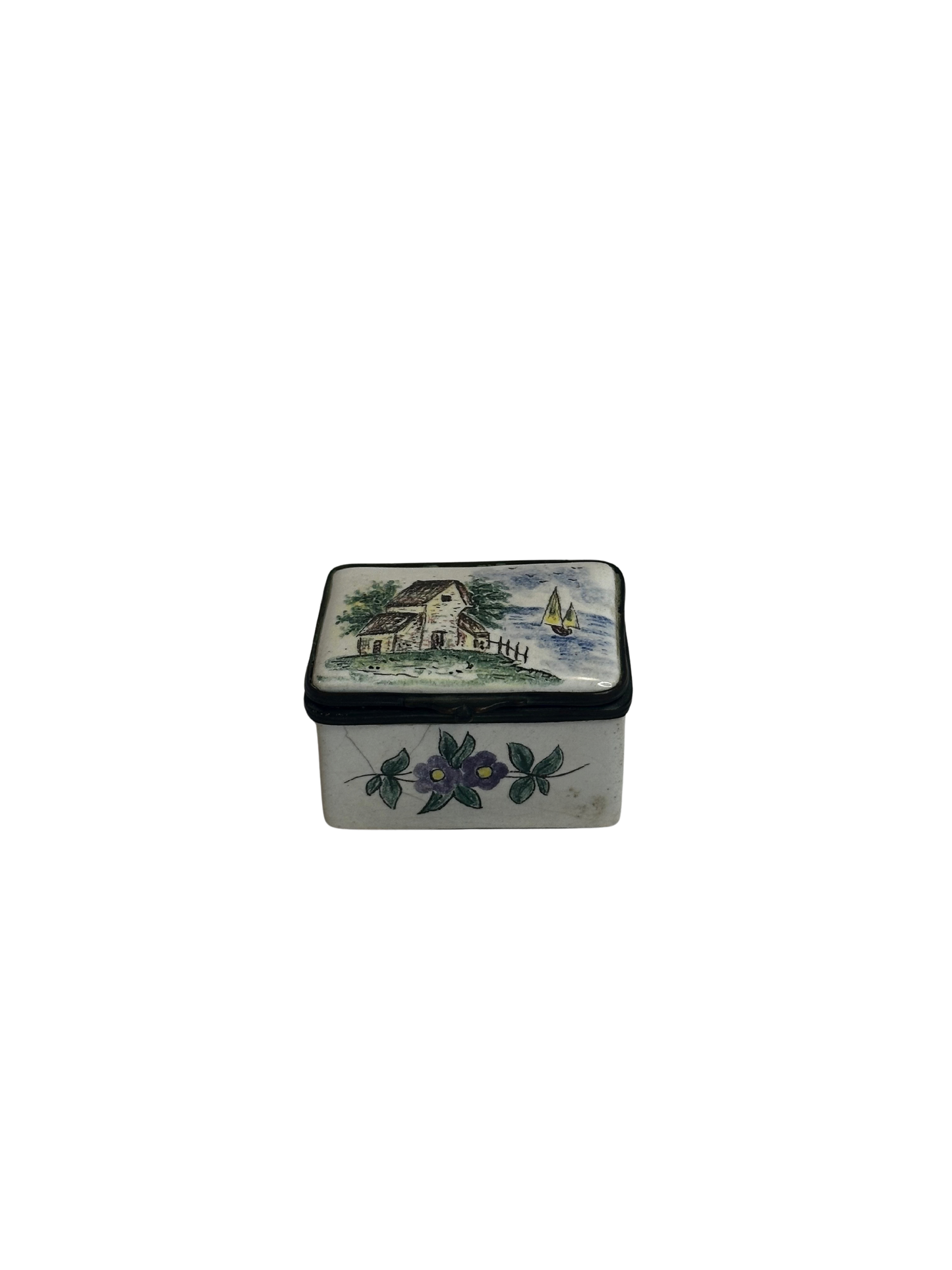
This antique rectangular box is constructed with a ceramic or enamel body set within a dark metal rim and hinge mount. The lid is decorated with a hand-painted pastoral scene depicting a rustic house near water, with sailing boats in the distance and birds in flight. The scene is rendered in soft, painterly strokes with a restrained palette of greens, browns, blues, and yellows, consistent with hand-painted enamel decoration rather than transfer ware.
The sides of the box are decorated with delicate floral motifs, including stylized blossoms and trailing leaves painted directly onto the light ground. The interior is plain and undecorated, showing age-related staining, fine crazing, and wear consistent with long-term use. The lid interior retains a small painted floral element, a detail often seen on earlier hand-decorated boxes.
The metal mount shows oxidation and patination, particularly at the hinge and edges, consistent with age. Fine hairline cracks and surface wear are visible throughout the enamel body, particularly at corners and edges, all of which are consistent with an early utilitarian decorative object.
This antique rectangular box is constructed with a ceramic or enamel body set within a dark metal rim and hinge mount. The lid is decorated with a hand-painted pastoral scene depicting a rustic house near water, with sailing boats in the distance and birds in flight. The scene is rendered in soft, painterly strokes with a restrained palette of greens, browns, blues, and yellows, consistent with hand-painted enamel decoration rather than transfer ware.
The sides of the box are decorated with delicate floral motifs, including stylized blossoms and trailing leaves painted directly onto the light ground. The interior is plain and undecorated, showing age-related staining, fine crazing, and wear consistent with long-term use. The lid interior retains a small painted floral element, a detail often seen on earlier hand-decorated boxes.
The metal mount shows oxidation and patination, particularly at the hinge and edges, consistent with age. Fine hairline cracks and surface wear are visible throughout the enamel body, particularly at corners and edges, all of which are consistent with an early utilitarian decorative object.
2.25" x 1.25" x 1.25"
2.25" x 1.25" x 1.25"
Small enamel boxes of this type were produced in continental Europe as personal or domestic containers, used for items such as snuff, sweets, sewing notions, or keepsakes. Pastoral imagery was especially popular during the late 18th and early 19th centuries, reflecting Enlightenment-era taste for rural idylls and picturesque landscapes.
Unlike later mass-produced decorative boxes, earlier examples often display irregular brushwork, uneven glaze pooling, and subtle asymmetry, all of which are visible here and support an early date of manufacture.
Small enamel boxes of this type were produced in continental Europe as personal or domestic containers, used for items such as snuff, sweets, sewing notions, or keepsakes. Pastoral imagery was especially popular during the late 18th and early 19th centuries, reflecting Enlightenment-era taste for rural idylls and picturesque landscapes.
Unlike later mass-produced decorative boxes, earlier examples often display irregular brushwork, uneven glaze pooling, and subtle asymmetry, all of which are visible here and support an early date of manufacture.
19th Century
19th Century
Enamel or glazed ceramic body
Hand-painted enamel decoration
Dark metal rim and hinge mount
Enamel or glazed ceramic body
Hand-painted enamel decoration
Dark metal rim and hinge mount
Likely Continental European
Likely Continental European
Hairline cracks, surface wear, and glaze imperfections consistent with age
Interior shows staining and wear from use
Metal mount shows oxidation and patina
No maker’s marks observed
Antique object; imperfections are inherent and expected
Hairline cracks, surface wear, and glaze imperfections consistent with age
Interior shows staining and wear from use
Metal mount shows oxidation and patina
No maker’s marks observed
Antique object; imperfections are inherent and expected