

Antique Figural Putto Lamp Finial or Furniture Mount with Gilt Acanthus Crest
Antique Figural Putto Lamp Finial or Furniture Mount with Gilt Acanthus Crest
Impossible de charger la disponibilité du service de retrait
Partager
Additional Description:
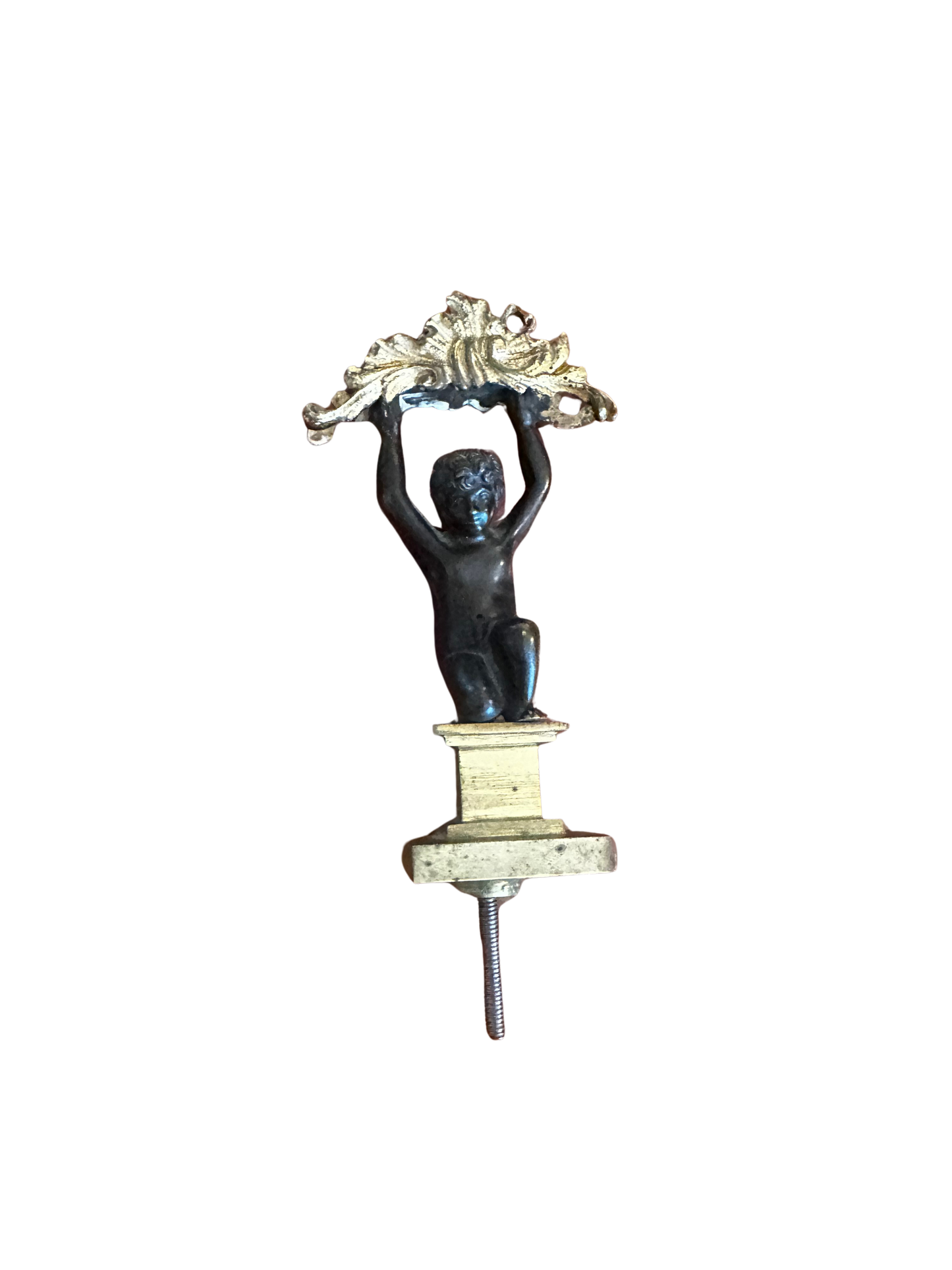
A finely modeled figural putto (cherub) mount, cast in darkened metal, depicted kneeling on one knee with arms raised to support an ornate gilt acanthus-leaf crest. The putto’s anatomy is classically proportioned, with softly rendered musculature and expressive facial features, contrasting with the richly textured, scrolling foliage above.
The figure is mounted on an integral stepped plinth and retains its original threaded iron mounting rod, indicating it was intended as an applied finial, architectural, or furniture element—likely a decorative mount for a lamp, mirror, console, overdoor, clock case, or ecclesiastical furnishing. The gilding shows age-softened wear, revealing the underlying metal in high points, consistent with authentic period finish rather than later reproduction.
Era:
Late 18th to early 19th century (Louis XVI to early Empire influence)
History:
Putti and cherubic figures were central decorative motifs in late 18th-century French and Continental design, symbolizing abundance, innocence, and divine support. Such figural mounts were commonly used in luxury furniture, mirrors, and religious or palatial interiors, where sculptural elements blurred the line between fine art and decorative arts. The combination of dark-patinated figure and gilded foliage reflects neoclassical taste, emphasizing contrast and refined ornament over Rococo excess.
Provenance:
Likely Continental Europe (France or Italy)
Materials:
Bronze, gilt metal acanthus crest, iron threaded mounting rod
Dimensions:
5.75"h x 2.5"w x 1"d
Disclaimers:
Surface wear and rubbing to gilding; oxidation and patina consistent with age; possible historic loss or reduction from a larger assemblage; original function inferred; no visible maker’s mark.
Additional Description:
A finely modeled figural putto (cherub) mount, cast in darkened metal, depicted kneeling on one knee with arms raised to support an ornate gilt acanthus-leaf crest. The putto’s anatomy is classically proportioned, with softly rendered musculature and expressive facial features, contrasting with the richly textured, scrolling foliage above.
The figure is mounted on an integral stepped plinth and retains its original threaded iron mounting rod, indicating it was intended as an applied finial, architectural, or furniture element—likely a decorative mount for a lamp, mirror, console, overdoor, clock case, or ecclesiastical furnishing. The gilding shows age-softened wear, revealing the underlying metal in high points, consistent with authentic period finish rather than later reproduction.
Era:
Late 18th to early 19th century (Louis XVI to early Empire influence)
History:
Putti and cherubic figures were central decorative motifs in late 18th-century French and Continental design, symbolizing abundance, innocence, and divine support. Such figural mounts were commonly used in luxury furniture, mirrors, and religious or palatial interiors, where sculptural elements blurred the line between fine art and decorative arts. The combination of dark-patinated figure and gilded foliage reflects neoclassical taste, emphasizing contrast and refined ornament over Rococo excess.
Provenance:
Likely Continental Europe (France or Italy)
Materials:
Bronze, gilt metal acanthus crest, iron threaded mounting rod
Dimensions:
5.75"h x 2.5"w x 1"d
Disclaimers:
Surface wear and rubbing to gilding; oxidation and patina consistent with age; possible historic loss or reduction from a larger assemblage; original function inferred; no visible maker’s mark.