

Antique French Louis XVI Style Gilt Brass Triptych Frame with Handwritten French Manuscript and Wax Seal, Circa 1900
Antique French Louis XVI Style Gilt Brass Triptych Frame with Handwritten French Manuscript and Wax Seal, Circa 1900
Impossible de charger la disponibilité du service de retrait
Partager
Additional Description
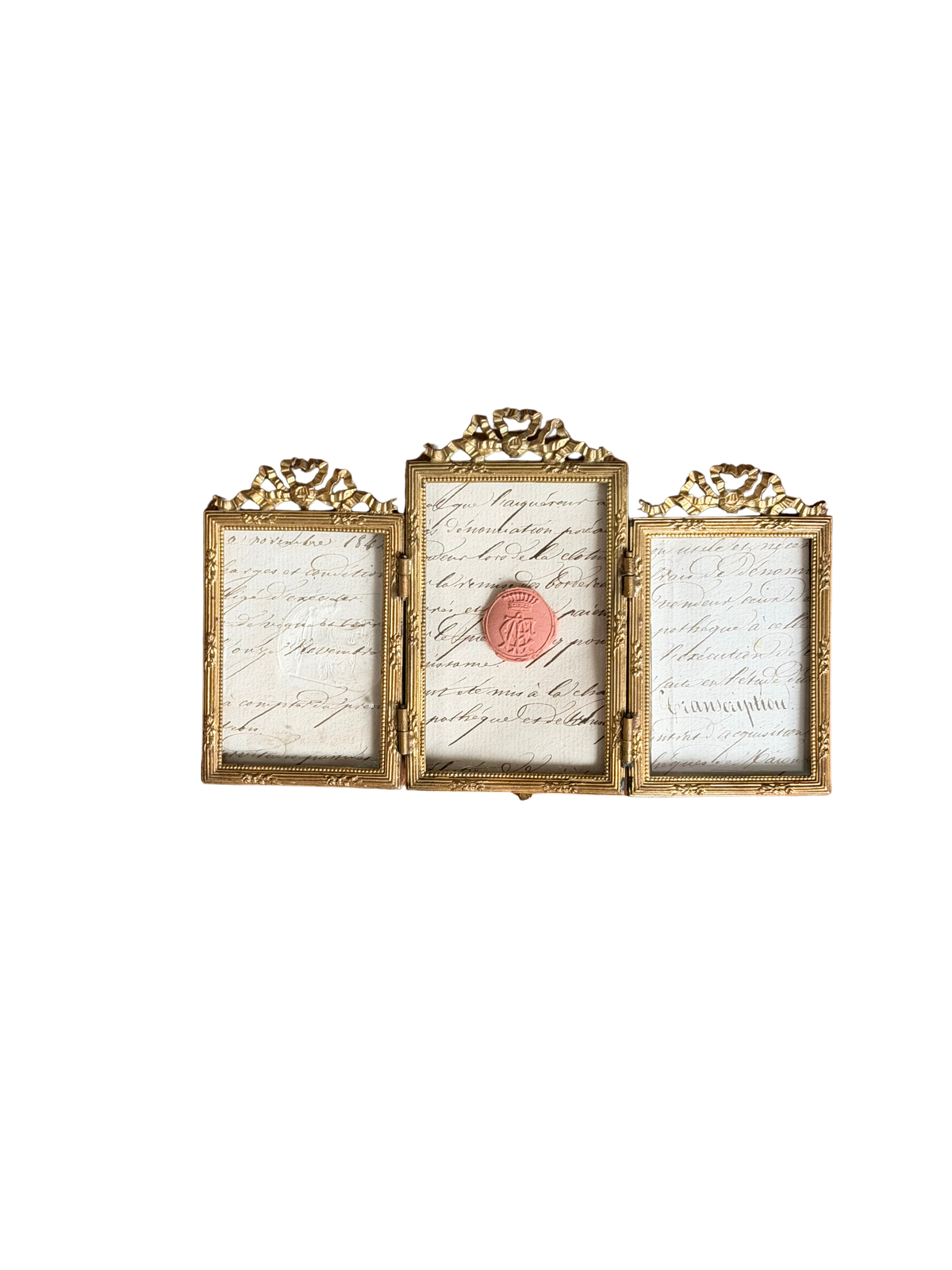
An elegant antique French triptych frame featuring three hinged rectangular panels, each surmounted by an elaborate ribbon bow and finished in beautifully detailed gilt metalwork.
Designed in the Louis XVI Revival style, the frame incorporates delicate beaded borders, finely cast floral ornamentation, and decorative ribbon crests reminiscent of the refined neoclassical interiors of 18th-century France.
The three panels unfold to display a historical handwritten French manuscript in flowing cursive, with a distinctive red wax seal positioned prominently within the central panel. The manuscript includes decorative penmanship, period French script, and what appear to be formal documentary references, lending the piece a particularly romantic and historical character.
The central panel is supported by a folding easel stand, while individual hanging rings on the reverse allow the frame to be displayed on a wall. Its hinged construction permits the outer panels to be adjusted at different angles or folded inward.
A beautiful decorative accessory for a French-inspired salon, writing desk, library, or collection of antique curiosities. The combination of delicate gilt ornamentation, historical manuscript, and wax seal makes this a particularly evocative piece.
## Era
Late 19th to Early 20th Century, circa 1890–1910.
French Louis XVI Revival / Belle Époque Style.
The enclosed manuscript may predate the frame, although its precise date has not yet been established.
## History
The Louis XVI Revival movement became especially fashionable in France during the late 19th century, drawing inspiration from the elegant neoclassical designs associated with the reign of Louis XVI and Marie Antoinette.
Decorative motifs such as tied ribbon bows, delicate floral garlands, beaded borders, and symmetrical ornamentation were widely incorporated into furnishings, picture frames, and small decorative accessories.
By the Belle Époque period, gilt brass and bronze tabletop frames were particularly popular for displaying family photographs, miniature portraits, sentimental correspondence, and cherished personal keepsakes.
Triptych frames, consisting of three hinged panels, offered an especially elegant way to display related images or documents together. Their folding construction allowed them to function as both practical display objects and decorative furnishings.
This example retains a handwritten French manuscript accompanied by a red wax seal. Such seals were historically used to authenticate documents or signify personal and official correspondence.
Although the inscription has not been fully deciphered, the document appears to contain formal French language and references to an earlier historical period. Its presence creates an intriguing connection between French documentary history and the decorative arts.
## Provenance
France, attributed.
The frame retains a handwritten French manuscript extending across its three panels, with a red wax seal bearing an indistinct impressed device or monogram.
The manuscript appears to contain a date in November, although the year and exact context require further examination.
Original ownership and the relationship between the manuscript and frame are unknown.
No identifiable maker's mark is visible in the supplied photographs.
## Materials
- Gilt brass or bronze-tone metal
- Three hinged rectangular frames
- Cast ribbon bow and floral crest decorations
- Beaded ornamental borders
- Handwritten ink manuscript on aged paper
- Red wax seal with impressed design
- Metal backing plates
- Folding easel support and hanging rings
## Dimensions
Measurements to be confirmed.
## Condition/Disclaimers
Good antique condition with wear consistent with age and historical use.
The gilt-metal frame retains attractive surface detail, with minor patination, surface abrasions, and areas of wear to the gilded finish. The ribbon ornaments appear largely intact, and the hinged panels remain connected.
The reverse retains its central folding easel support and individual hanging rings.
The handwritten manuscript exhibits age-related toning, discoloration, and faint areas of writing. The red wax seal remains present, although the impressed design is difficult to decipher.
The manuscript has not been fully translated or authenticated, and its original association with the frame has not been established.
The precise metal composition, originality of the glazing, and date of the enclosed manuscript remain unverified.
As with all antique objects, minor imperfections associated with age and historical use should be expected.
## Value
**Estimated Antique Retail Value: $175–$325**
**Suggested Website Price: $285**
Valuation reflects the unusual three-panel construction, decorative ribbon crests, attractive gilt-metal finish, and historical manuscript with wax seal. The handwritten document adds visual interest, although its monetary significance cannot be established without further identification.