


Fine Syrian or Moorish (Damascus) Micro-Mosaic Inlaid Jewelry or Document Box
Fine Syrian or Moorish (Damascus) Micro-Mosaic Inlaid Jewelry or Document Box
Impossible de charger la disponibilité du service de retrait
Partager


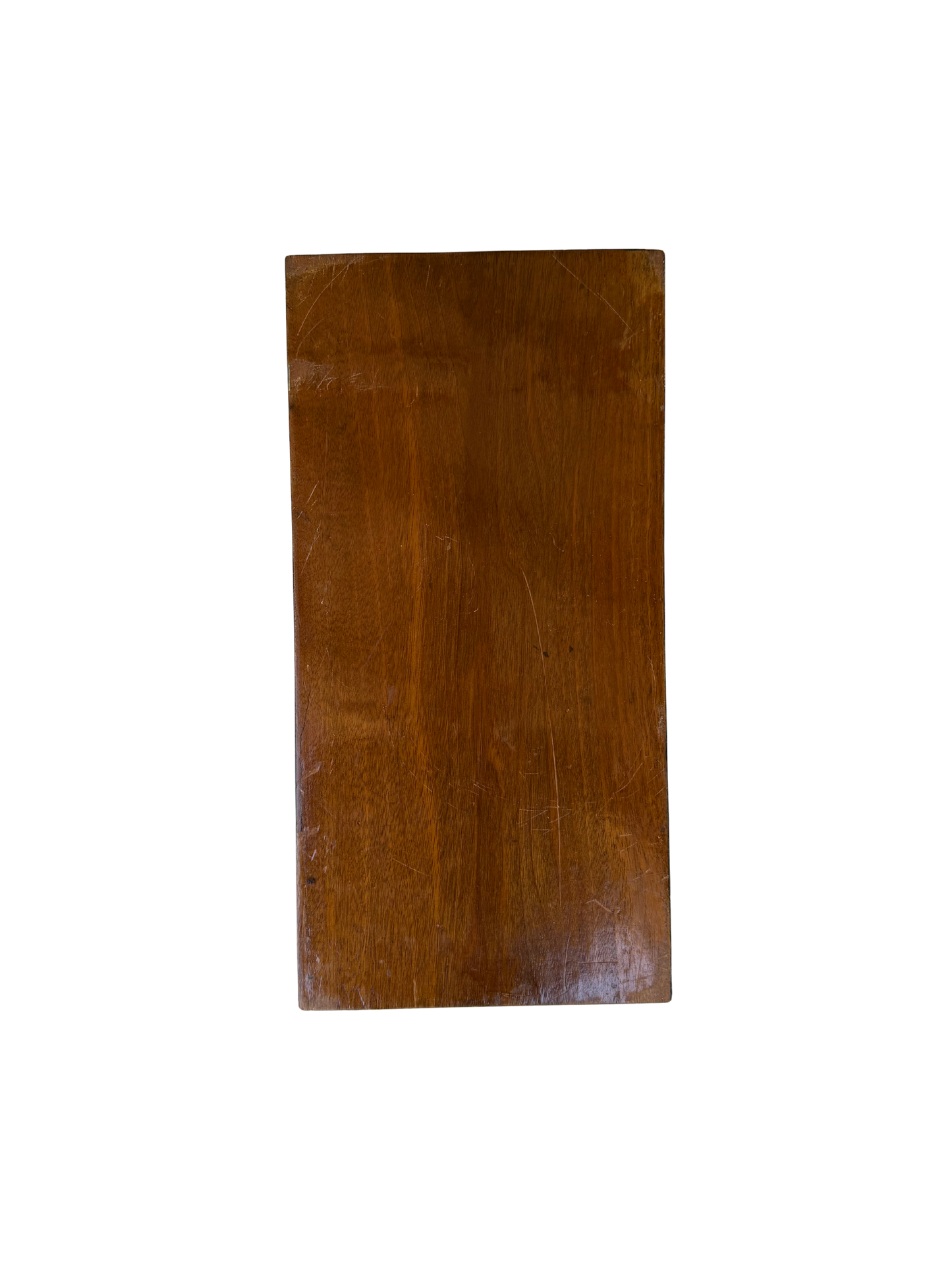
A finely handcrafted rectangular jewelry or document box featuring exceptionally intricate Middle Eastern geometric micro-mosaic marquetry. The exterior is decorated with thousands of individually cut pieces of walnut, fruitwood, ebony-stained wood, camel bone, and colored inlays arranged in traditional star and polygon motifs. The interior has been professionally relined in vibrant red velvet and retains a decorative inlaid panel inside the lid. The lock mechanism is present, though the key is absent.
The extraordinary density and precision of the mosaic work indicate a higher-quality example than typical tourist pieces, likely produced in one of the renowned Damascus workshops.
A finely handcrafted rectangular jewelry or document box featuring exceptionally intricate Middle Eastern geometric micro-mosaic marquetry. The exterior is decorated with thousands of individually cut pieces of walnut, fruitwood, ebony-stained wood, camel bone, and colored inlays arranged in traditional star and polygon motifs. The interior has been professionally relined in vibrant red velvet and retains a decorative inlaid panel inside the lid. The lock mechanism is present, though the key is absent.
The extraordinary density and precision of the mosaic work indicate a higher-quality example than typical tourist pieces, likely produced in one of the renowned Damascus workshops.
3.25"h x 14.5"w x 7.5"d
3.25"h x 14.5"w x 7.5"d
This style of micro-mosaic marquetry traces its origins to Damascus, Syria, where craftsmen perfected the labor-intensive technique during the Ottoman period. Using tiny rods of contrasting woods, bone, and occasionally mother-of-pearl, artisans assembled geometric canes that were sliced into veneers and meticulously applied to furniture, boxes, writing slopes, and luxury objects.
These boxes became highly sought after by travelers during the mid-20th century and were exported throughout Europe and North America. Better examples, like this one, feature exceptionally dense geometric fields, crisp border work, and carefully matched veneers requiring many hours of skilled hand craftsmanship.
This style of micro-mosaic marquetry traces its origins to Damascus, Syria, where craftsmen perfected the labor-intensive technique during the Ottoman period. Using tiny rods of contrasting woods, bone, and occasionally mother-of-pearl, artisans assembled geometric canes that were sliced into veneers and meticulously applied to furniture, boxes, writing slopes, and luxury objects.
These boxes became highly sought after by travelers during the mid-20th century and were exported throughout Europe and North America. Better examples, like this one, feature exceptionally dense geometric fields, crisp border work, and carefully matched veneers requiring many hours of skilled hand craftsmanship.
Mid-20th Century, likely circa 1950–1975
Mid-20th Century, likely circa 1950–1975
Walnut and other hardwoods
Camel bone inlay
Ebonized wood
Colored wood veneers
Possible mother-of-pearl accent inlays
Red velvet lining (later replacement or professionally refreshed)
Brass lock and hinges
Walnut and other hardwoods
Camel bone inlay
Ebonized wood
Colored wood veneers
Possible mother-of-pearl accent inlays
Red velvet lining (later replacement or professionally refreshed)
Brass lock and hinges
Private collection; acquired from an Austin, TX estate
Private collection; acquired from an Austin, TX estate
Handcrafted with natural variations in wood and bone.
Presents beautifully with only light, age-appropriate wear to the exterior.
Interior velvet appears to have been professionally relined and is clean and ready for use.
Key is not present; lock mechanism remains installed.
Minor scattered losses and wear to a few small inlaid elements consistent with age, but the overall geometric decoration remains remarkably complete.
Handcrafted with natural variations in wood and bone.
Presents beautifully with only light, age-appropriate wear to the exterior.
Interior velvet appears to have been professionally relined and is clean and ready for use.
Key is not present; lock mechanism remains installed.
Minor scattered losses and wear to a few small inlaid elements consistent with age, but the overall geometric decoration remains remarkably complete.