



Hand-Painted KPM-Style Porcelain Plaque After F. Coomans — “Une Voile Attendue”
Hand-Painted KPM-Style Porcelain Plaque After F. Coomans — “Une Voile Attendue”
Impossible de charger la disponibilité du service de retrait
Partager


A finely hand-painted porcelain plaque depicting a classical figural scene of a draped allegorical woman reaching toward a seated child/putto beside a stone block and vessel in a pastoral landscape. The painting is executed in soft academic tones with delicate modeling and smooth enamel surface typical of late 19th-century European porcelain plaque painting.
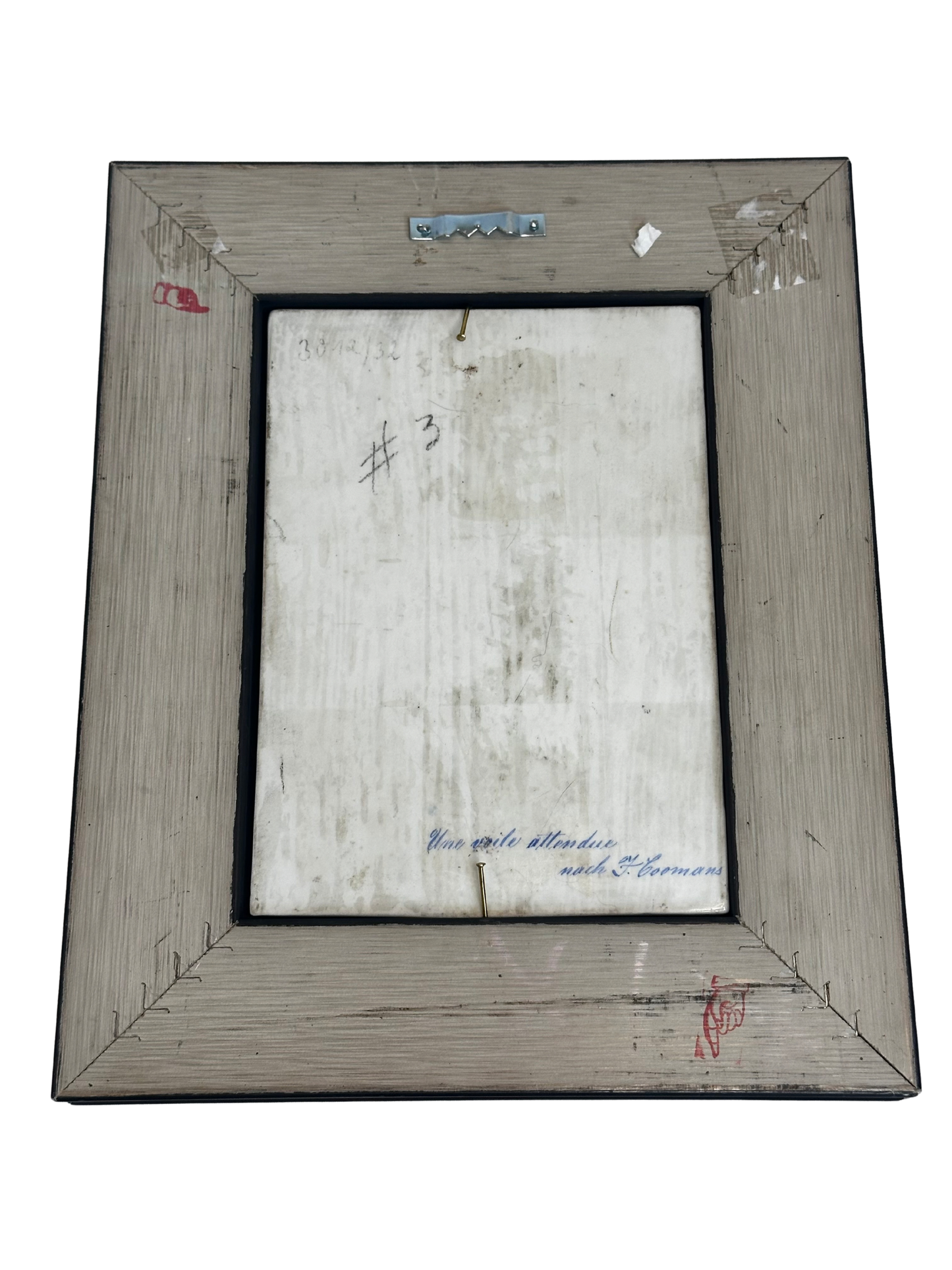
The lower edge of the plaque bears a painted signature that appears to read “Bridel” (likely the porcelain painter). The reverse is inscribed in blue script:
“Une voile attendue — nach F. Coomans.”
The inscription indicates the composition is after a work by F. Coomans, meaning the plaque reproduces a known academic or neoclassical composition rather than being an original painting by the artist.
The plaque is housed in a later dark wood frame. The plaque itself appears to be mounted securely with pins.
The porcelain surface shows the smooth, luminous finish associated with European plaque painting traditions, likely produced for the decorative art market rather than as a factory-marked porcelain object.
A finely hand-painted porcelain plaque depicting a classical figural scene of a draped allegorical woman reaching toward a seated child/putto beside a stone block and vessel in a pastoral landscape. The painting is executed in soft academic tones with delicate modeling and smooth enamel surface typical of late 19th-century European porcelain plaque painting.
The lower edge of the plaque bears a painted signature that appears to read “Bridel” (likely the porcelain painter). The reverse is inscribed in blue script:
“Une voile attendue — nach F. Coomans.”
The inscription indicates the composition is after a work by F. Coomans, meaning the plaque reproduces a known academic or neoclassical composition rather than being an original painting by the artist.
The plaque is housed in a later dark wood frame. The plaque itself appears to be mounted securely with pins.
The porcelain surface shows the smooth, luminous finish associated with European plaque painting traditions, likely produced for the decorative art market rather than as a factory-marked porcelain object.
10.75"h x 8.75"w (Sight: 5" x 7")
10.75"h x 8.75"w (Sight: 5" x 7")
Porcelain plaque painting became popular in Europe during the 19th century, especially in Germany, France, and Austria. Artists frequently copied or adapted academic paintings and classical genre scenes for decorative plaques intended for framing.
The inscription referencing F. Coomans likely refers to Frans (or François) Coomans, a 19th-century Belgian academic painter known for sentimental and classical figural compositions. Works “after” academic painters were commonly reproduced by trained porcelain painters working independently or for studios supplying the decorative art market.
Unlike factory-marked plaques (such as KPM Berlin), many studio-painted plaques were unsigned on the porcelain body itself but inscribed on the backing.
Porcelain plaque painting became popular in Europe during the 19th century, especially in Germany, France, and Austria. Artists frequently copied or adapted academic paintings and classical genre scenes for decorative plaques intended for framing.
The inscription referencing F. Coomans likely refers to Frans (or François) Coomans, a 19th-century Belgian academic painter known for sentimental and classical figural compositions. Works “after” academic painters were commonly reproduced by trained porcelain painters working independently or for studios supplying the decorative art market.
Unlike factory-marked plaques (such as KPM Berlin), many studio-painted plaques were unsigned on the porcelain body itself but inscribed on the backing.
Late 19th to early 20th century (circa 1880–1910) / Later Framing
Late 19th to early 20th century (circa 1880–1910) / Later Framing
Hand-painted porcelain plaque
Wood frame
Metal hanging hardware
Hand-painted porcelain plaque
Wood frame
Metal hanging hardware
European origin (likely Belgium, France, or Germany)
European origin (likely Belgium, France, or Germany)
Light surface wear consistent with age.
Back of porcelain shows age toning and handling marks.
Frame appears later / modern.
No visible porcelain cracks observed in provided photos.
Minor surface grime visible on the reverse.
Light surface wear consistent with age.
Back of porcelain shows age toning and handling marks.
Frame appears later / modern.
No visible porcelain cracks observed in provided photos.
Minor surface grime visible on the reverse.